EcologyDiagram

The Carbon Cycle — Visual Overview

Part of Carbon CycleGCSE Biology

This diagram covers The Carbon Cycle — Visual Overview within Carbon Cycle for GCSE Biology. Topic 3: Carbon Cycle It is section 2 of 11 in this topic. Focus on the labels, the relationships between parts, and the explanation that turns the diagram into an exam-ready answer.

Topic position

Section 2 of 11

Practice

15 questions

Recall

20 flashcards

🔄 The Carbon Cycle — Visual Overview
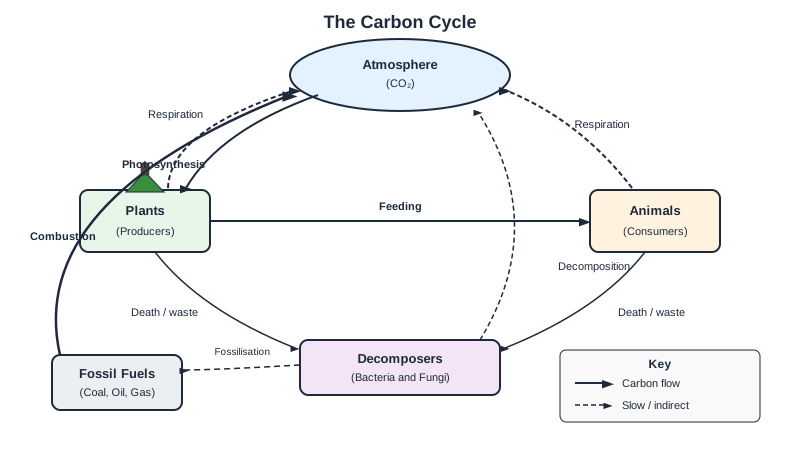
Complete carbon cycle diagram showing carbon dioxide in the atmosphere, and how it moves through photosynthesis to plants, through eating to animals, through death and waste to decomposers, through fossil fuel formation, and back to atmosphere via respiration and combustion. Arrows show CO2 being removed (green) and released (red).

Figure 1: The carbon cycle — showing how carbon moves between the atmosphere, living organisms, soil, and geological stores.

Keep building this topic

Read this section alongside the surrounding pages in Carbon Cycle. That gives you the full topic sequence instead of a single isolated revision point.

Practice Questions for Carbon Cycle

Which process removes CO₂ from the atmosphere?

  • A. Respiration
  • B. Photosynthesis
  • C. Combustion
  • D. Decomposition
1 markfoundation

Explain how decomposers return carbon to the atmosphere.

3 marksstandard

Quick Recall Flashcards

How does decomposition return carbon to the atmosphere?
Decomposers (bacteria and fungi) break down dead organisms. They respire, releasing CO₂ back into the atmosphere. Without decomposers, carbon would be locked in dead material forever.
What does the carbon cycle do?
The carbon cycle continuously moves carbon between the atmosphere (as CO₂), living organisms, the soil, and fossil fuels. Carbon is never created or destroyed — it is recycled.

15 questions on Carbon Cycle — practise free

Instant marking, adaptive difficulty, and 20 spaced repetition flashcards. Free until your GCSEs.

Try PrepWise Free