Atomic StructureDiagram

Timeline: Development of the Periodic Table

Part of Development of Periodic TableGCSE Chemistry

This diagram covers Timeline: Development of the Periodic Table within Development of Periodic Table for GCSE Chemistry. Revise Development of Periodic Table in Atomic Structure for GCSE Chemistry with 20 exam-style questions and 20 flashcards. This topic appears less often, but it can still be a useful differentiator on mixed-topic papers. It is section 2 of 13 in this topic. Focus on the labels, the relationships between parts, and the explanation that turns the diagram into an exam-ready answer.

Topic position

Section 2 of 13

Practice

20 questions

Recall

20 flashcards

📊 Timeline: Development of the Periodic Table
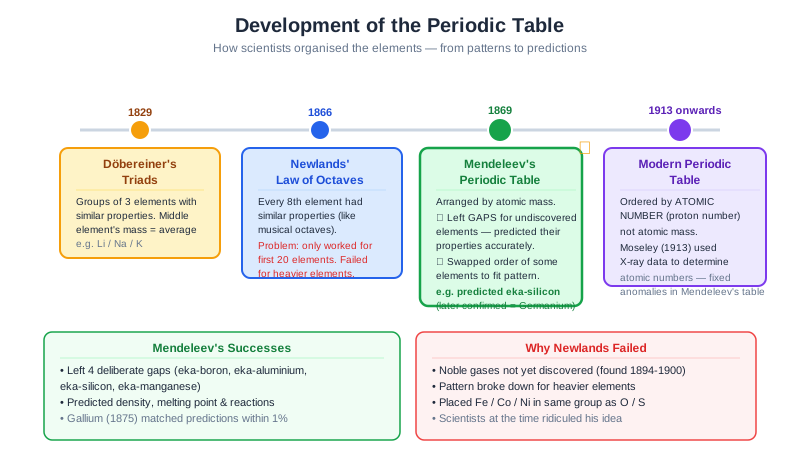
Timeline showing development of the periodic table from Döbereiner through Newlands to Mendeleev and the modern table

Figure 1: Key milestones in the development of the periodic table from 1817 to the modern arrangement.

Keep building this topic

Read this section alongside the surrounding pages in Development of Periodic Table. That gives you the full topic sequence instead of a single isolated revision point.

Practice Questions for Development of Periodic Table

John Newlands proposed the Law of Octaves in 1866. What did he notice about the elements?

  • A. Every seventh element had similar properties to the first
  • B. Every eighth element had similar properties to the first
  • C. Elements repeated properties every tenth element
  • D. Elements only showed patterns when arranged by atomic number
1 markfoundation

Give two reasons why Newlands' Law of Octaves was not accepted by the scientific community at the time.

2 marksstandard

Quick Recall Flashcards

When were noble gases discovered?
1890s — added as Group 0
How is the modern table arranged?
By atomic number (protons), not atomic weight

Want to test your knowledge?

PrepWise has 20 exam-style questions and 20 flashcards for Development of Periodic Table — with adaptive difficulty and instant feedback.

Join Alpha