Chemical ChangesDiagram

Reactivity Series Overview

Part of The Reactivity SeriesGCSE Chemistry

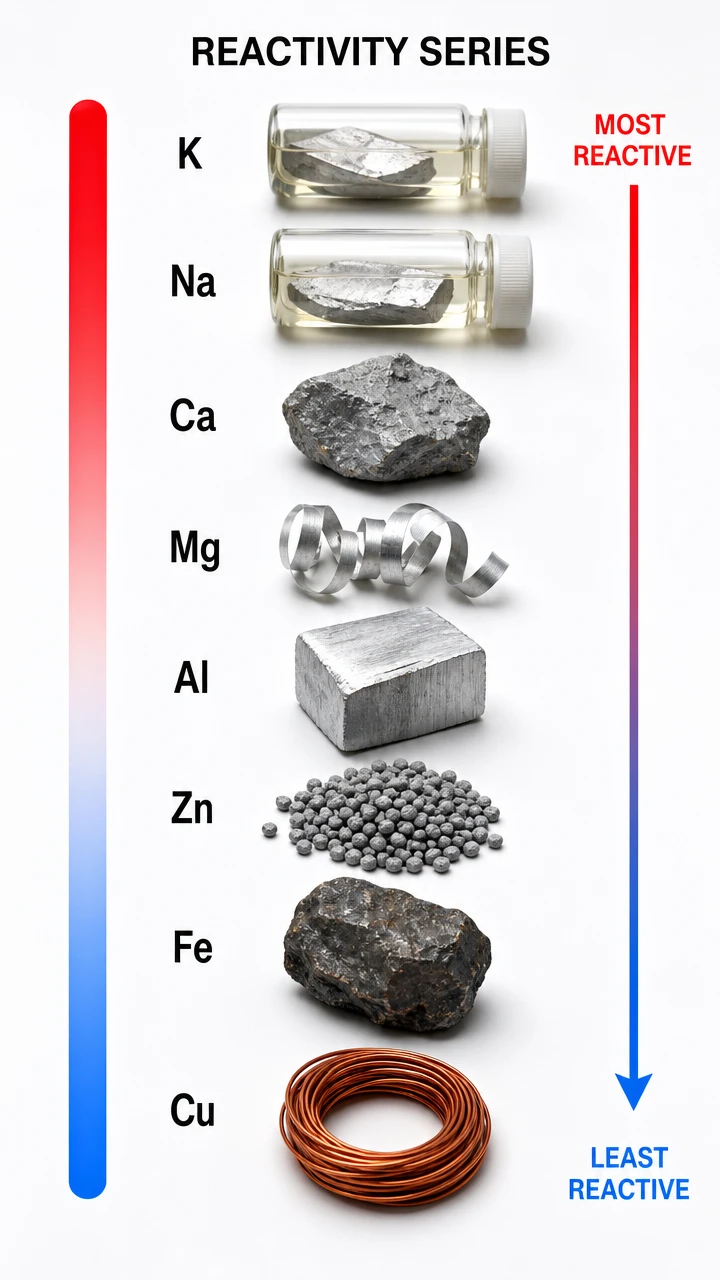
This diagram covers Reactivity Series Overview within The Reactivity Series for GCSE Chemistry. Revise The Reactivity Series in Chemical Changes for GCSE Chemistry with 20 exam-style questions and 20 flashcards. This topic appears regularly enough that it should still be part of a steady revision cycle. It is section 2 of 11 in this topic. Focus on the labels, the relationships between parts, and the explanation that turns the diagram into an exam-ready answer.

Topic position

Section 2 of 11

Practice

20 questions

Recall

20 flashcards

🧭 Reactivity Series Overview

Reactivity series of metals from potassium to gold with extraction methods

Figure 1: The reactivity series from most reactive (top) to least reactive (bottom)

Keep building this topic

Read this section alongside the surrounding pages in The Reactivity Series. That gives you the full topic sequence instead of a single isolated revision point.

Practice Questions for The Reactivity Series

Which of the following shows metals listed in order from MOST reactive to LEAST reactive?

  • A. Copper > Iron > Zinc > Magnesium > Potassium
  • B. Potassium > Sodium > Calcium > Magnesium > Aluminium
  • C. Potassium > Sodium > Magnesium > Calcium > Aluminium
  • D. Potassium > Sodium > Calcium > Aluminium > Zinc
1 markfoundation

Iron filings are added to copper sulfate solution. Explain what happens, including what is observed and why the reaction occurs.

3 marksstandard

Quick Recall Flashcards

How do you test for hydrogen gas?
Hold a lighted splint near the gas — makes a 'squeaky pop' sound
General equation for metal + acid
Metal + Acid → Salt + Hydrogen

Want to test your knowledge?

PrepWise has 20 exam-style questions and 20 flashcards for The Reactivity Series — with adaptive difficulty and instant feedback.

Join Alpha