America 1920-1973Diagram

The Wall Street Crash & Great Depression

Part of Causes of the DepressionGCSE History

This diagram covers The Wall Street Crash & Great Depression within Causes of the Depression for GCSE History. Revise Causes of the Depression in America 1920-1973 for GCSE History with 10 exam-style questions and 5 flashcards. This is a high-frequency topic, so it is worth revising until the explanation feels precise and repeatable. It is section 3 of 12 in this topic. Focus on the labels, the relationships between parts, and the explanation that turns the diagram into an exam-ready answer.

Topic position

Section 3 of 12

Practice

10 questions

Recall

5 flashcards

📊 The Wall Street Crash & Great Depression
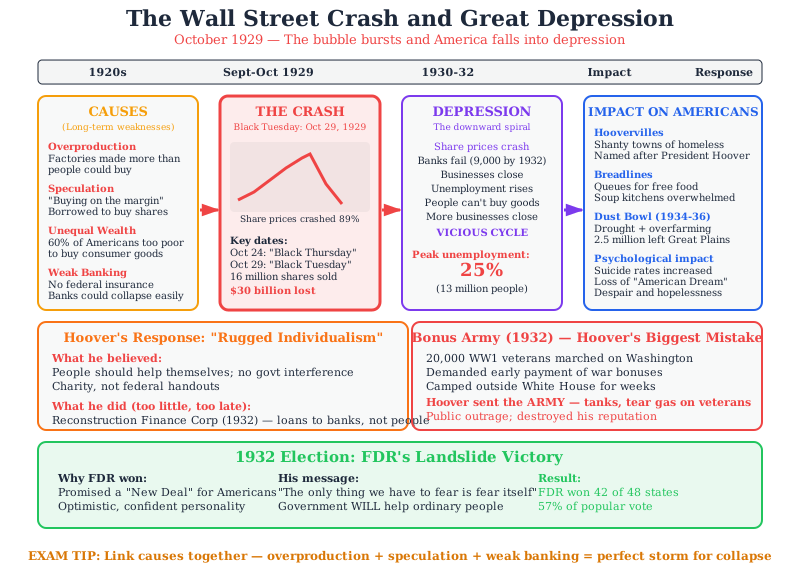
Detailed diagram of the Wall Street Crash and Great Depression showing: long-term causes (overproduction, speculation, unequal wealth, weak banking), the crash itself (Black Tuesday October 1929), the vicious cycle of depression, impact on Americans (Hoovervilles, breadlines, Dust Bowl), Hoover's response, the Bonus Army incident, and FDR's 1932 election victory

Black Tuesday 1929 → The vicious cycle of depression → FDR's 1932 victory

Keep building this topic

Read this section alongside the surrounding pages in Causes of the Depression. That gives you the full topic sequence instead of a single isolated revision point.

Practice Questions for Causes of the Depression

On which date did 'Black Tuesday' occur, marking the worst day of the Wall Street Crash?

  • A. 24 October 1929
  • B. 29 October 1929
  • C. 24 October 1933
  • D. 29 October 1933
1 markfoundation

By 1933, approximately what percentage of the American workforce was unemployed?

  • A. 10%
  • B. 15%
  • C. 25%
  • D. 40%
1 markfoundation

Quick Recall Flashcards

Peak unemployment?
25% (1933) — 1 in 4 workers
How many banks failed?
5,000 (1929-1932)

Want to test your knowledge?

PrepWise has 10 exam-style questions and 5 flashcards for Causes of the Depression — with adaptive difficulty and instant feedback.

Join Alpha