Inheritance & EvolutionKey Facts

Binomial Naming System

Part of ClassificationGCSE Biology

This key facts covers Binomial Naming System within Classification for GCSE Biology. Classification systems, taxonomy, and evolutionary relationships It is section 3 of 11 in this topic. Use this key facts to connect the idea to the wider topic before moving on to questions and flashcards.

Topic position

Section 3 of 11

Practice

25 questions

Recall

20 flashcards

Binomial Naming System

  • Two-part Latin name: Genus + species
  • Written in italics or underlined
  • Genus has capital letter; species is lowercase
  • Example: Homo sapiens (humans)

Visual: Classification of Living Organisms
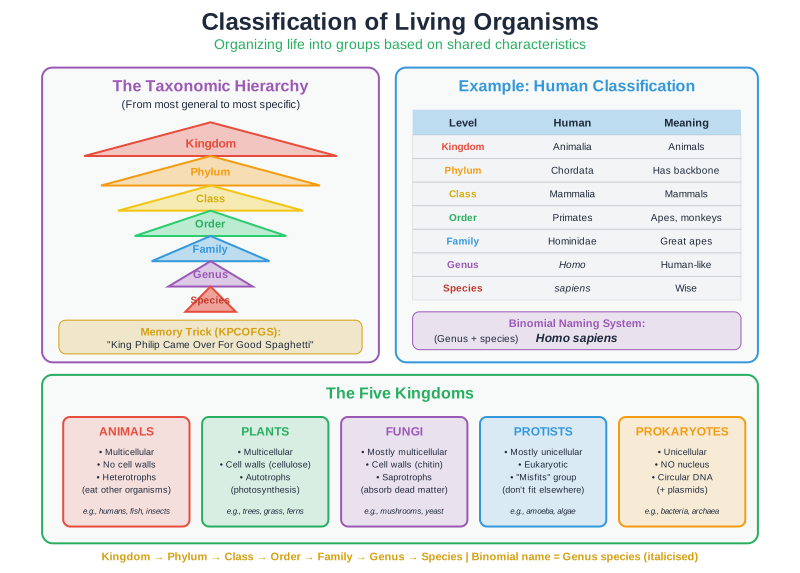
Classification diagram showing the taxonomic hierarchy (Kingdom, Phylum, Class, Order, Family, Genus, Species), human classification example, the five kingdoms, and binomial naming system

Remember: King Philip Came Over For Good Spaghetti | Binomial name = Genus species (italicised)

Visual: Evidence for Evolution
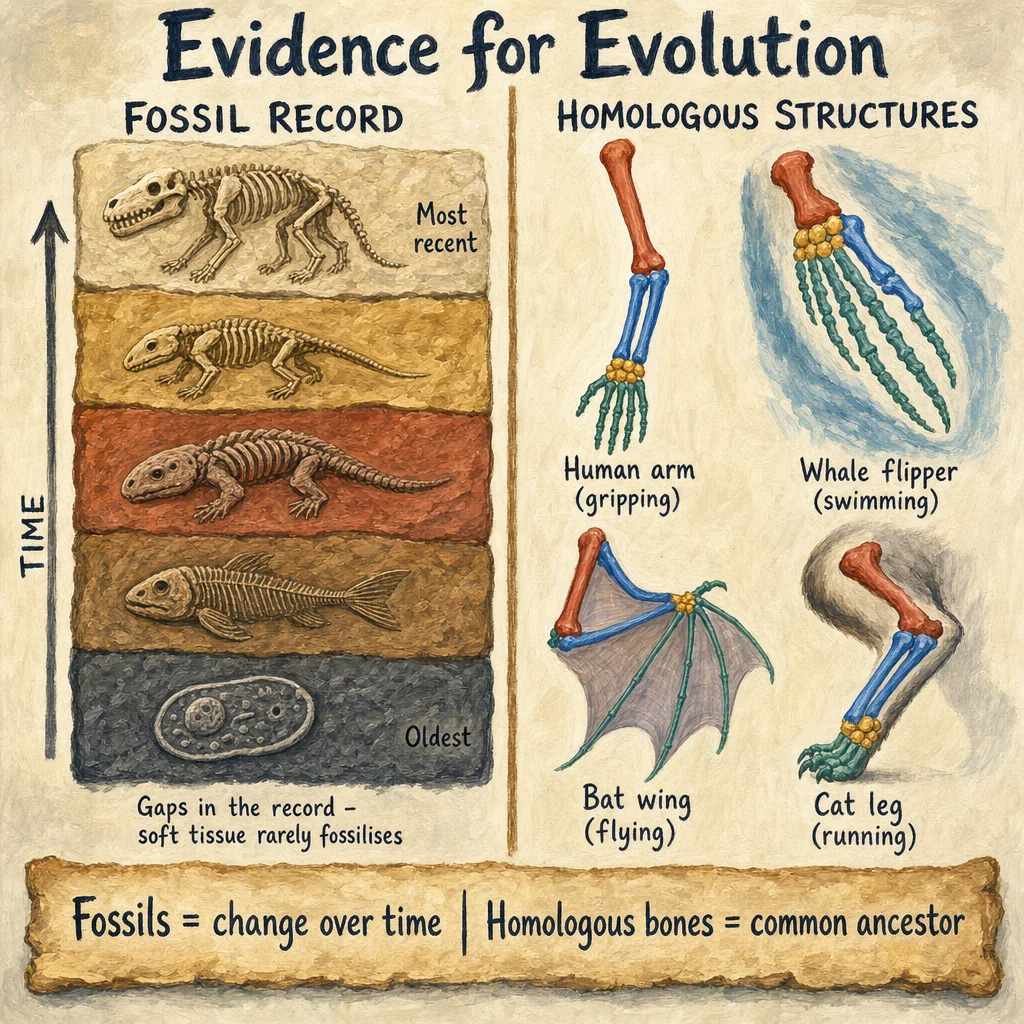
Evidence for evolution diagram showing 5 types of evidence: fossils, comparative anatomy (homologous structures), DNA/molecular evidence, embryology, and observed evolution (antibiotic resistance)

Remember: 5 types of evidence: Fossils | Comparative anatomy | DNA similarity | Embryology | Observed resistance

Visual: Speciation

Speciation diagram showing how one species becomes two through geographic isolation, different selection pressures, accumulation of genetic differences, and eventual reproductive isolation

Remember: Isolation → Different mutations + Different selection → Genetic changes → Can't interbreed = NEW SPECIES

Keep building this topic

Read this section alongside the surrounding pages in Classification. That gives you the full topic sequence instead of a single isolated revision point.

Practice Questions for Classification

What is the highest level in the Linnaean classification system?

  • A. Species
  • B. Kingdom
  • C. Phylum
  • D. Class
1 markfoundation

What is the purpose of classifying living things based on their DNA and genome characteristics?

2 marksstandard

Quick Recall Flashcards

What is biological classification?
The process of sorting organisms into groups based on shared characteristics and evolutionary relationships. Classification helps scientists name, study, and communicate about the huge variety of life on Earth.
How do you correctly write a binomial (scientific) name?
Genus name first with CAPITAL letter, species name second in lower case — e.g. Homo sapiens. Both words are italicised when typed or underlined when handwritten. Example: Felis catus (domestic cat), Panthera leo (lion).

25 questions on Classification — practise free

Instant marking, adaptive difficulty, and 20 spaced repetition flashcards. Free until your GCSEs.

Try PrepWise Free