| Benefits | Concerns |
|---|---|
|
Higher crop yields Pest/disease resistance Vitamin enrichment Less pesticide use |
Unknown long-term effects Could affect wild populations Biodiversity concerns Ethical issues |
Visual: Genetic Engineering Process
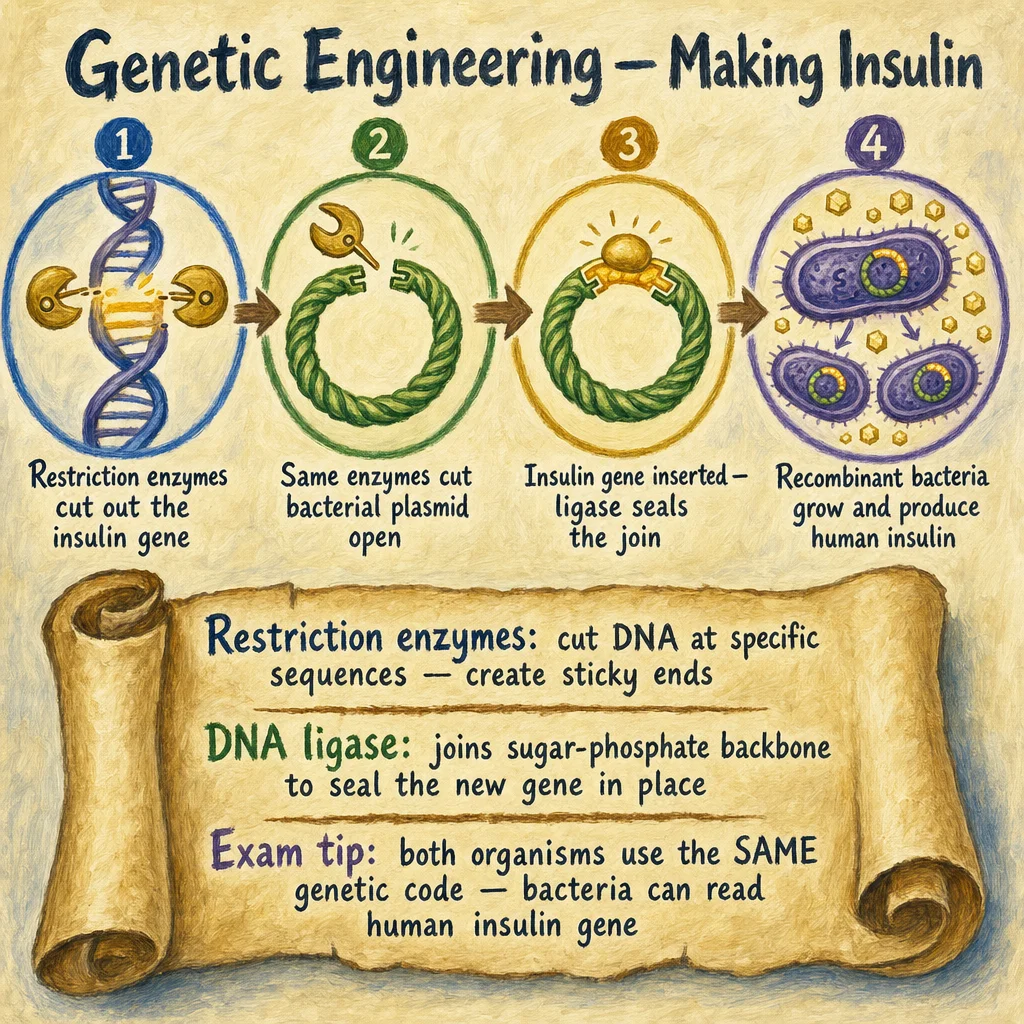
Remember: Cut gene (restriction enzyme) → Insert into vector/plasmid (ligase) → Transform bacteria → Bacteria multiply → Harvest product
This comparison covers GM Crops: Benefits and Concerns within Genetic Engineering for GCSE Biology. Genetic modification, gene therapy, and biotechnology applications It is section 3 of 11 in this topic. Use this comparison to connect the idea to the wider topic before moving on to questions and flashcards.
Practice questions for Genetic Engineering
Which of the following is a benefit of genetic engineering?
A genetic engineer uses a gene from one organism to introduce a desirable characteristic into another organism. This process is an example of which type of genetic engineering?
Quick recall flashcards
What is genetic engineering?
The direct modification of an organism's genome by inserting a gene from another organism (or a modified gene) to give it a new or altered characteristic. The resulting organism is called a genetically modified (GM) organism.
How is insulin produced using genetic engineering?
The human insulin gene is inserted into bacterial plasmids. The bacteria are grown in large fermenters and produce human insulin protein. This insulin is then purified for use by diabetics. Before this, pig or cow insulin (slightly different) was used.