The small intestine is where most digestion is completed and absorption occurs. Its structure is a perfect example of adaptation for function:
Surface Area Adaptations
Three levels of surface area increase:
- Folds: The intestine wall is folded to increase surface area
- Villi: Finger-like projections cover the folds (visible to naked eye)
- Microvilli: Tiny projections on each villus cell (microscopic)
Result: Surface area increases from ~0.4m² to ~200m² - that's the size of a tennis court!
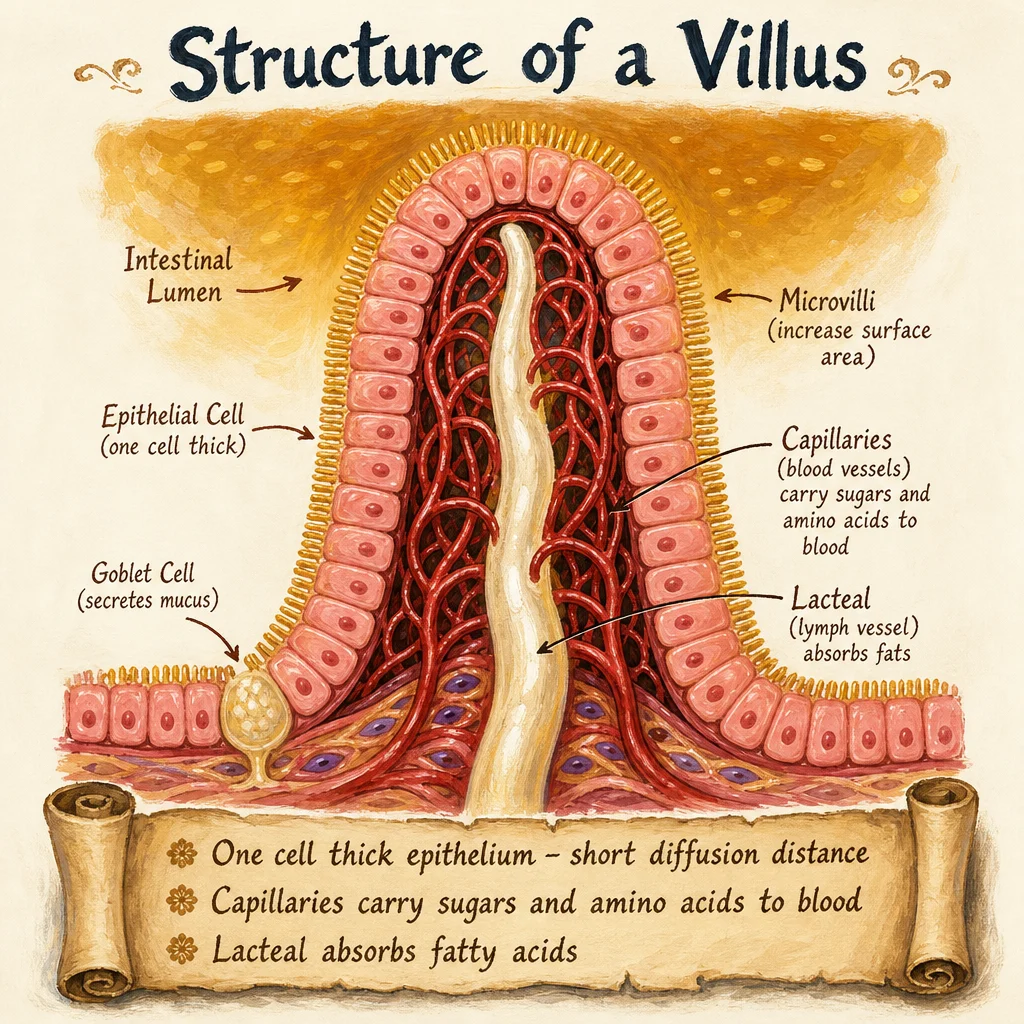
Villus Structure and Function
Functions in the Small Intestine
- Chemical Digestion: Pancreatic enzymes complete breakdown of proteins, fats, and carbohydrates
- Absorption: Nutrients pass through the villus wall into blood capillaries
- Fat Transport: Fats enter lacteals (lymph vessels) before reaching blood
- Enzyme Action: This is where many enzymes from topic 10 do their work!
This deep dive covers Small Intestine: The Absorption Specialist within The Human Digestive System for GCSE Biology. Structure and function of digestive organs, mechanical and chemical digestion, enzymes, absorption, and practical investigations It is section 4 of 15 in this topic. Use this deep dive to connect the idea to the wider topic before moving on to questions and flashcards.
Practice questions for The Human Digestive System
Which organ produces hydrochloric acid to kill bacteria in food?
Explain the role of bile in the digestive system.