Chemical ChangesDiagram

Exothermic vs Endothermic Energy Diagrams

Part of Displacement ReactionsGCSE Chemistry

This diagram covers Exothermic vs Endothermic Energy Diagrams within Displacement Reactions for GCSE Chemistry. Revise Displacement Reactions in Chemical Changes for GCSE Chemistry with 20 exam-style questions and 20 flashcards. This topic appears regularly enough that it should still be part of a steady revision cycle. It is section 6 of 12 in this topic. Focus on the labels, the relationships between parts, and the explanation that turns the diagram into an exam-ready answer.

Topic position

Section 6 of 12

Practice

20 questions

Recall

20 flashcards

🔥 Exothermic vs Endothermic Energy Diagrams
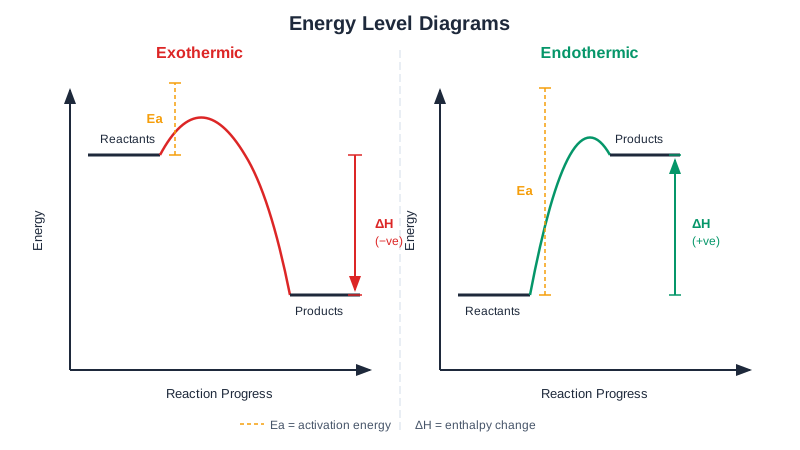
Energy level diagrams comparing exothermic and endothermic reactions. Exothermic shows reactants higher than products with energy released (negative delta H), examples include combustion and neutralisation. Endothermic shows products higher than reactants with energy absorbed (positive delta H), examples include photosynthesis and thermal decomposition.

Figure 2: Energy level diagrams for exothermic and endothermic reactions

Key: Exothermic = energy OUT (gets hot), Endothermic = energy IN (gets cold)

Keep building this topic

Read this section alongside the surrounding pages in Displacement Reactions. That gives you the full topic sequence instead of a single isolated revision point.

Practice Questions for Displacement Reactions

Which statement correctly describes a displacement reaction?

  • A. A less reactive metal replaces a more reactive metal from its salt solution
  • B. A more reactive metal replaces a less reactive metal from its salt solution
  • C. Two metals both dissolve when placed in the same acid
  • D. A metal oxide breaks down when heated strongly
1 markfoundation

In the reaction between zinc and copper sulfate solution, explain which species is oxidised and which is reduced. Include half equations in your answer. [3 marks]

3 marksstandard

Quick Recall Flashcards

What does OIL RIG stand for?
Oxidation Is Loss (of electrons), Reduction Is Gain (of electrons)
What colour is bromine?
Orange/brown

Want to test your knowledge?

PrepWise has 20 exam-style questions and 20 flashcards for Displacement Reactions — with adaptive difficulty and instant feedback.

Join Alpha