ElectrolysisDiagram

Electrolysis Cell

Part of Electrolysis of Molten CompoundsGCSE Chemistry

This diagram covers Electrolysis Cell within Electrolysis of Molten Compounds for GCSE Chemistry. Revise Electrolysis of Molten Compounds in Electrolysis for GCSE Chemistry with 20 exam-style questions and 0 flashcards. This is a high-frequency topic, so it is worth revising until the explanation feels precise and repeatable. It is section 1 of 13 in this topic. Focus on the labels, the relationships between parts, and the explanation that turns the diagram into an exam-ready answer.

Topic position

Section 1 of 13

Practice

20 questions

Recall

0 flashcards

📐 Electrolysis Cell
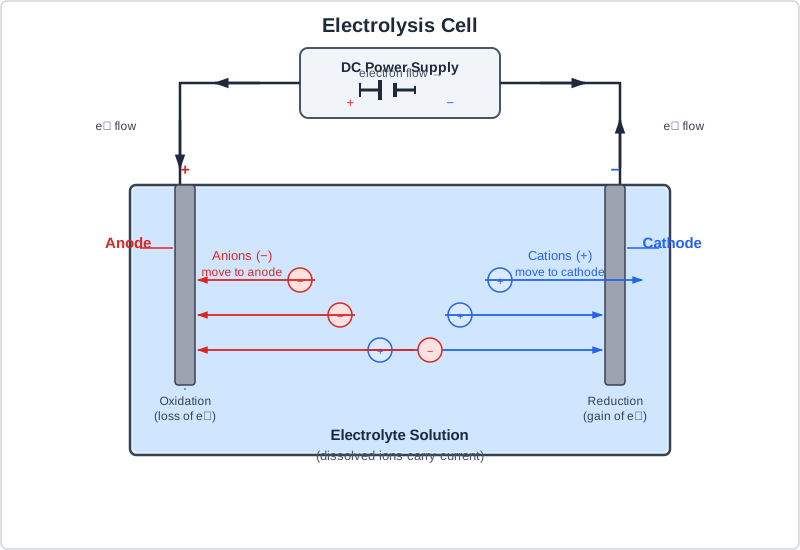
Labelled electrolysis cell showing DC power supply, anode and cathode electrodes, electrolyte solution with cations moving to cathode and anions to anode, and electron flow in external circuit

Figure 1: Electrolysis cell showing ion migration and electron flow

Keep building this topic

Read this section alongside the surrounding pages in Electrolysis of Molten Compounds. That gives you the full topic sequence instead of a single isolated revision point.

Practice Questions for Electrolysis of Molten Compounds

Which condition is required for electrolysis to occur with an ionic compound?

  • A. The ions must be free to move (molten or in solution)
  • B. The compound must be dissolved in organic solvent
  • C. The compound must be heated above 1000 °C
  • D. The compound must contain metallic bonds
1 markfoundation

State the products formed at each electrode when molten lead bromide (PbBr₂) is electrolysed.

2 marksstandard

Want to test your knowledge?

PrepWise has 20 exam-style questions and 0 flashcards for Electrolysis of Molten Compounds — with adaptive difficulty and instant feedback.

Join Alpha