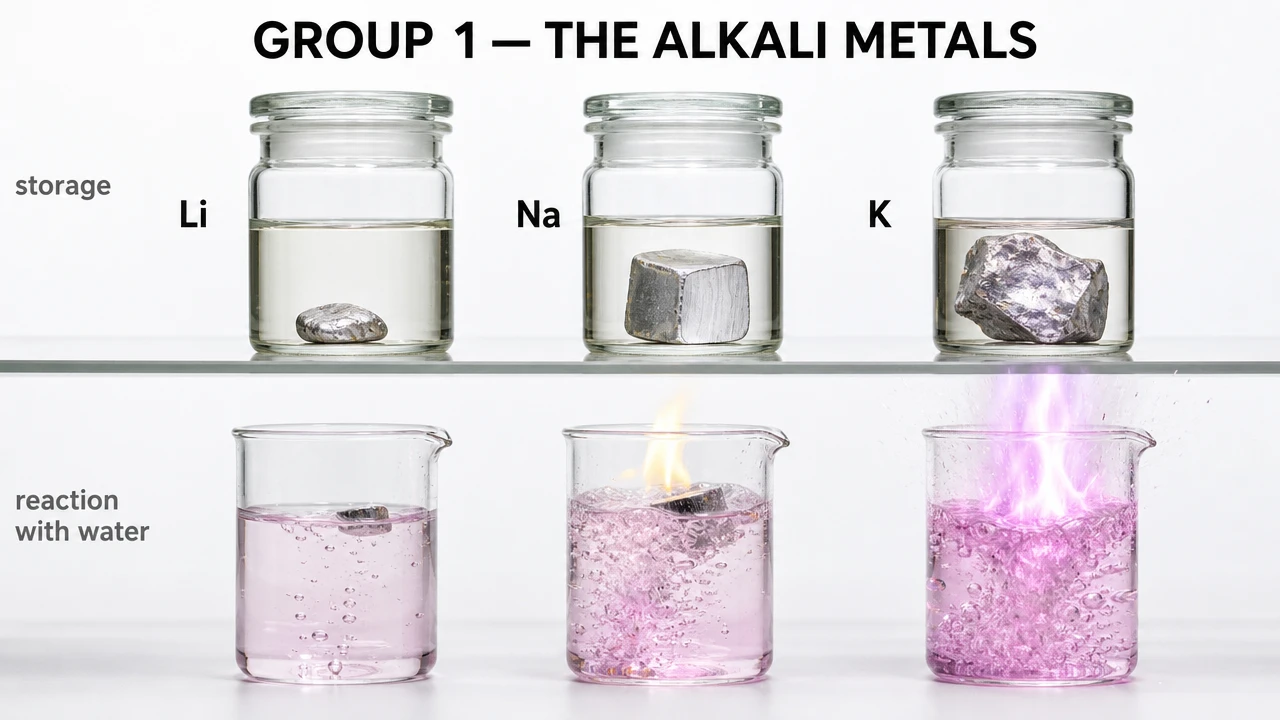
Figure 1: Group 1 elements with increasing reactivity going down the group as atomic size increases.
This diagram covers Group 1 Alkali Metals within Group 1: Alkali Metals for GCSE Chemistry. Revise Group 1: Alkali Metals in Atomic Structure for GCSE Chemistry with 22 exam-style questions and 20 flashcards. This topic appears less often, but it can still be a useful differentiator on mixed-topic papers. It is section 2 of 13 in this topic. Focus on the labels, the relationships between parts, and the explanation that turns the diagram into an exam-ready answer.
Practice questions for Group 1: Alkali Metals
How many electrons do alkali metals have in their outermost shell?
Explain why potassium is more reactive than sodium when it reacts with water.
Quick recall flashcards
Equation: sodium + water →
2Na + 2H₂O → 2NaOH + H₂
More reactive: Li or K?
Potassium (further down = more reactive)