
How Impurities Shift the Points
Part of Purity & Formulations — GCSE Chemistry
This diagram covers How Impurities Shift the Points within Purity & Formulations for GCSE Chemistry. Revise Purity & Formulations in Chemical Analysis for GCSE Chemistry with 20 exam-style questions and 12 flashcards. This topic appears regularly enough that it should still be part of a steady revision cycle. It is section 4 of 13 in this topic. Focus on the labels, the relationships between parts, and the explanation that turns the diagram into an exam-ready answer.
Topic position
Section 4 of 13
Practice
20 questions
Recall
12 flashcards
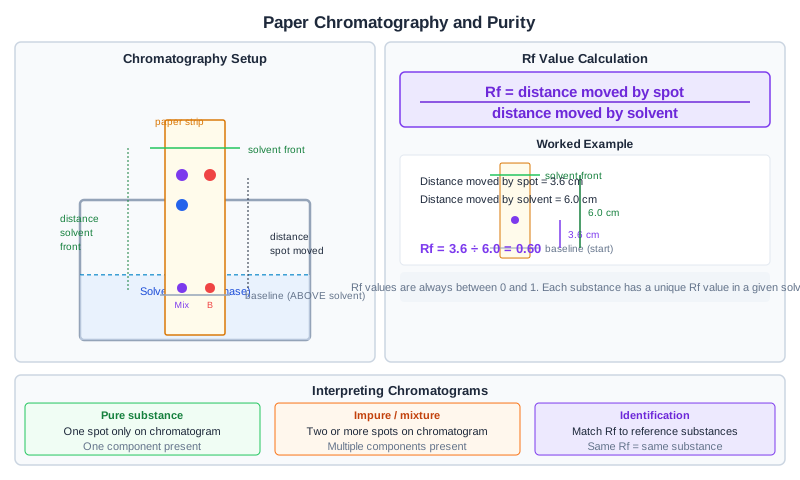
Figure 1: Chromatography can also confirm purity — a single spot indicates a pure substance.
How Impurities Shift the Points
- Impurities lower the melting point
- Impurities raise the boiling point
- Melting/boiling occurs over a range rather than a fixed point
Quick Check: A sample of aspirin melts over the range 132–136 °C. Pure aspirin melts at 135 °C. What does this tell you?
The sample contains impurities. The depressed melting point and broad range both indicate the aspirin is not pure.