The Purity Paradox
🧪 The Purity Paradox
You pick up a bottle of "pure" orange juice. Sounds chemically pure, right? Wrong! In chemistry, that juice is a complex mixture of water, sugars, citric acid, vitamins, and flavour compounds. This is one of chemistry's most common exam tricks: the word "pure" means something very different in science compared to everyday life. A chemist's idea of pure means just ONE type of substance — nothing else mixed in. Nail this distinction and you are already ahead of half the class.
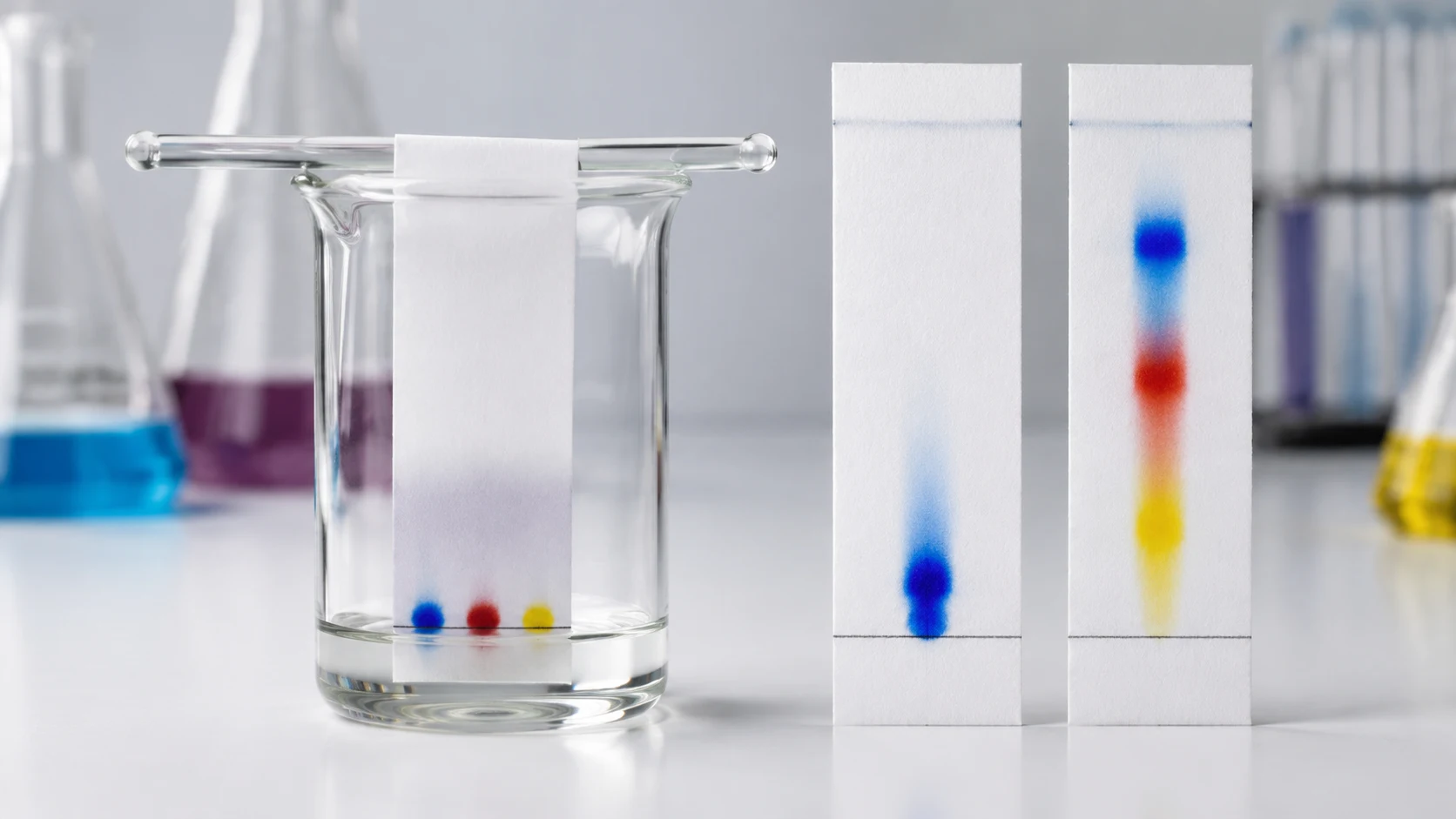
- 1Setup —
- 2Pure substance —
- 3Mixture —
Chemistry glossary
- What is a formulation?
- A mixture designed to have specific properties for a particular purpose, with each component in measured quantities
In everyday language, "pure" means natural or without additives — "pure orange juice" or "pure wool".
Earn the mark scheme marks
🧠 Memory Aid
PURE = one type of substance ONLY, SHARP melting point
To remember what impurities do to melting and boiling points:
"IMPURITIES: Melt LOW, Boil HIGH — they spread the range WIDE"
Think of salting icy roads (lowers freezing/melting point) and salting cooking water (raises boiling point) — both effects in one real-world example.
Quick Check: State TWO ways you could test whether a sample of an organic compound is pure.
1. Measure the melting point — if it melts sharply at the known literature value, it is likely pure. 2. Run paper or thin-layer chromatography — a single spot confirms a single compound (pure substance).
Now try it yourself
Quiz · Question 1 of 22
In chemistry, what does it mean for a substance to be described as 'pure'?
Tap an answer to check it