The Carbon Paradox
📖 The Carbon Paradox
Diamond vs graphite is like comparing a steel frame to a deck of cards. In diamond, every carbon is locked in 4 directions like steel girders — nothing moves! In graphite, carbons form flat sheets like playing cards stacked on top of each other. The cards themselves are strong (the covalent bonds), but they slide over each other easily (weak forces between layers). Same carbon atoms, but the architecture makes all the difference!
The answer is all about STRUCTURE. In both diamond and graphite, carbon atoms are held together by strong covalent bonds. But the WAY they're arranged is completely different, and this arrangement determines everything about how they behave.
Think of it like building with LEGO: You could build a solid cube (like diamond) or a stack of flat sheets (like graphite) using the exact same bricks. The bricks are identical, but the structures behave completely differently!
Unlike simple molecular substances, giant covalent structures don't have separate molecules. Instead, the entire solid is ONE huge network of atoms connected by covalent bonds. This is why they're called "giant" — the structure extends in all directions indefinitely, just like giant ionic lattices.
And because you have to break strong covalent bonds to melt them (not just weak intermolecular forces), giant covalent substances have extremely high melting points — much higher than simple molecular substances!
Diamond — a giant covalent lattice. Click each part to explore the bonding and properties.
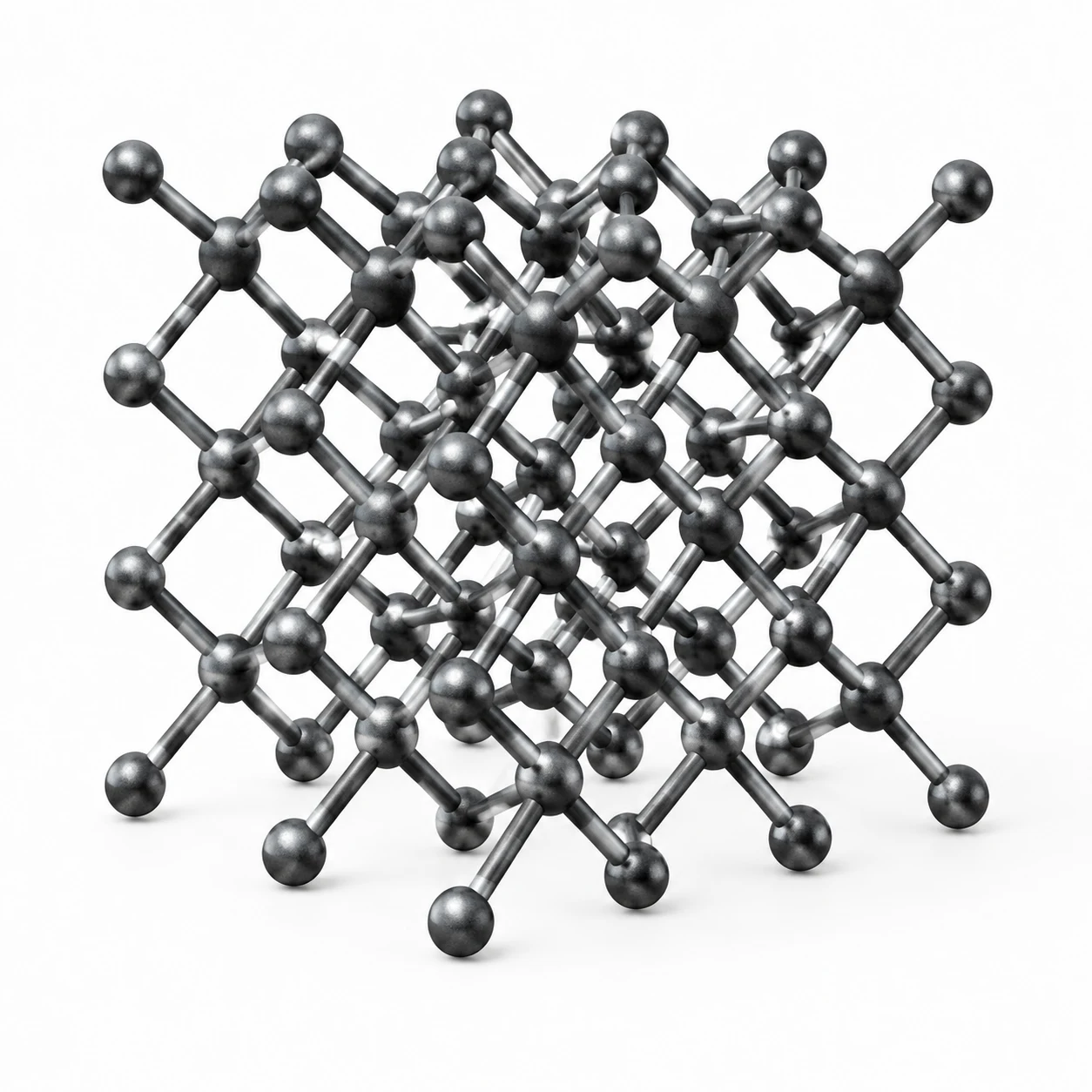
- 1Carbon atom —
- 2Tetrahedral bonds —
- 3Giant covalent lattice —
Figure 1: Diamond — a giant covalent lattice. Click each part to explore the bonding and properties.
Chemistry glossary
- What is graphene?
- A single layer of graphite — extremely strong, conducts electricity
Fullerenes (C₆₀) and Graphene: These are carbon structures worth knowing! Fullerenes are hollow carbon "cages" that can carry drugs in medicine. Graphene is a single layer of graphite — incredibly strong and conducts electricity. Both appear in higher tier questions.
Earn the mark scheme marks
🧠 Memory Aids
Diamond = 4 bonds = hard, Graphite = 3 bonds + 1 free = conducts + slides:
- Diamond: 4 bonds used → ALL electrons locked → NO conduction, VERY HARD
- Graphite: 3 bonds used → 1 electron free per C → CONDUCTS, soft layers SLIDE
Uses memory trick: "Diamond CUTS, Graphite WRITES" — diamond's hardness makes it ideal for cutting tools and drill bits; graphite's layered structure means layers rub off onto paper in pencils.
Allotropes: "ALL-otropes = ALL the same element, different structures" — diamond, graphite, graphene, fullerenes are all made entirely of carbon atoms arranged differently.
Now try it yourself
Quiz · Question 1 of 21
Why do giant covalent structures have very high melting points?
Tap an answer to check it
This topic in real past papers
Every real exam question we've found on giant covalent structures, with a full worked answer.