Languages & IDEsDiagram

Compiler, Interpreter and Assembler Comparison

Part of TranslatorsGCSE Computer Science

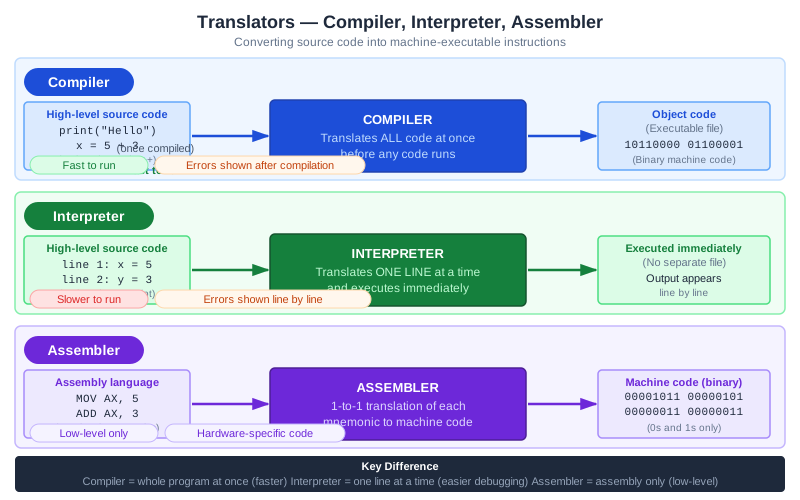
This diagram covers Compiler, Interpreter and Assembler Comparison within Translators for GCSE Computer Science. Revise Translators in Languages & IDEs for GCSE Computer Science with 15 exam-style questions and 8 flashcards. This topic appears regularly enough that it should still be part of a steady revision cycle. It is section 3 of 7 in this topic. Focus on the labels, the relationships between parts, and the explanation that turns the diagram into an exam-ready answer.

Topic position

Section 3 of 7

Practice

15 questions

Recall

8 flashcards

Compiler, Interpreter and Assembler Comparison

Translators comparison diagram showing three translation methods: Compiler takes entire high-level source code and produces a standalone executable file (translated all at once, fast execution), Interpreter takes high-level source code and executes it directly line by line (no output file, slower execution, stops at first error), and Assembler converts assembly language mnemonics to machine code in a near one-to-one translation, with examples of when each is used

Keep building this topic

Read this section alongside the surrounding pages in Translators. That gives you the full topic sequence instead of a single isolated revision point.

Practice Questions for Translators

Which type of translator converts an entire high-level language program into machine code before the program runs?

  • A. Assembler
  • B. Interpreter
  • C. Compiler
  • D. Linker
1 markfoundation

Explain why a compiled program runs faster than an interpreted program.

3 marksstandard

Quick Recall Flashcards

What does a compiler do?
Translates entire program into executable file at once
What does an assembler do?
Converts assembly language to machine code

Want to test your knowledge?

PrepWise has 15 exam-style questions and 8 flashcards for Translators — with adaptive difficulty and instant feedback.

Join Alpha