Test yourself on Map and Spatial Skills with exam style questions, marked instantly.
Flashcards that come back just before you would forget them.
A revision plan that remembers what you know and shows what to do next.
See which topics you have nailed and which need another look.
Quiz yourself on Map and Spatial SkillsGet your flashcardsBuild my revision planTrack my progress📐 Grid References: Pinpointing Locations Precisely
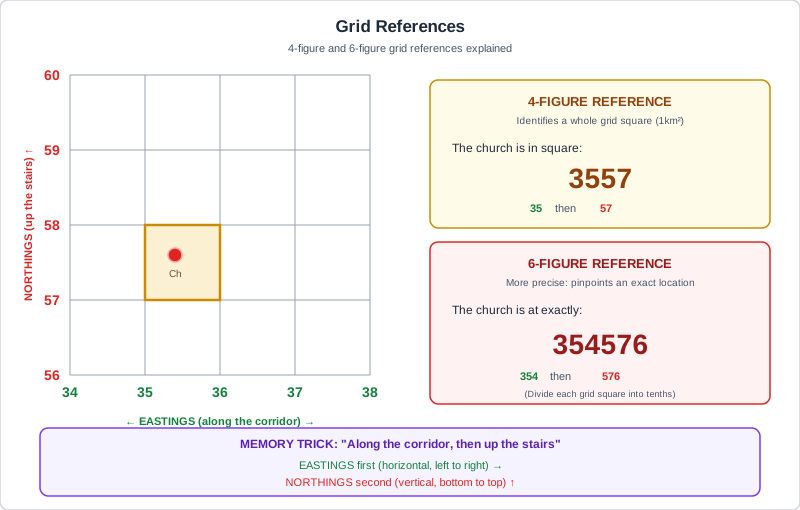
Figure 1: Grid References — 4-figure (1 km square) and 6-figure (100 m precision)
OS maps are divided into a grid of numbered squares. The vertical lines are called eastings (they increase going east, left to right). The horizontal lines are called northings (they increase going north, bottom to top). Every location on the map can be described using these grid lines.
The golden rule — and the most important phrase in map skills — is: "Along the corridor, then up the stairs." Always read the easting (horizontal position, along the bottom) before the northing (vertical position, up the side). Get this order wrong and you give a completely different location.
4-Figure Grid References
A 4-figure grid reference identifies a 1 km × 1 km square. It is not a point — it is an area. The reference is formed by taking the easting of the left-hand (western) edge of the square, then the northing of the bottom (southern) edge.
6-Figure Grid References
A 6-figure grid reference pinpoints a location to a 100 m × 100 m square — ten times more precise than a 4-figure reference. To achieve this, each 1 km grid square is mentally divided into tenths (10 equal strips in each direction).
Checking yourself: Your 6-figure reference should start with the same two digits as the easting from your 4-figure reference, and the 4th and 5th digits should start the same as the northing from your 4-figure reference. If your 4-figure was 4210 and your 6-figure starts 37..., something has gone wrong.
Quick Check: A church is located 3 tenths east and 7 tenths north within the grid square where the easting is 52 and the northing is 34. What is the 6-figure grid reference?
The 6-figure grid reference is 523347. Method: Start with the 4-figure reference — easting 52, northing 34 gives 5234. Then add the tenths: 3 tenths east = third digit 3; 7 tenths north = sixth digit 7. Result: 523347. The key check: does it start 52? Yes. Does the 4th digit start with 34? Yes (digits 4 and 5 are 34). Confirmed correct. Remember: along the corridor (easting) first, then up the stairs (northing).
Make this stick
Signing in gives access to all PrepWise features.