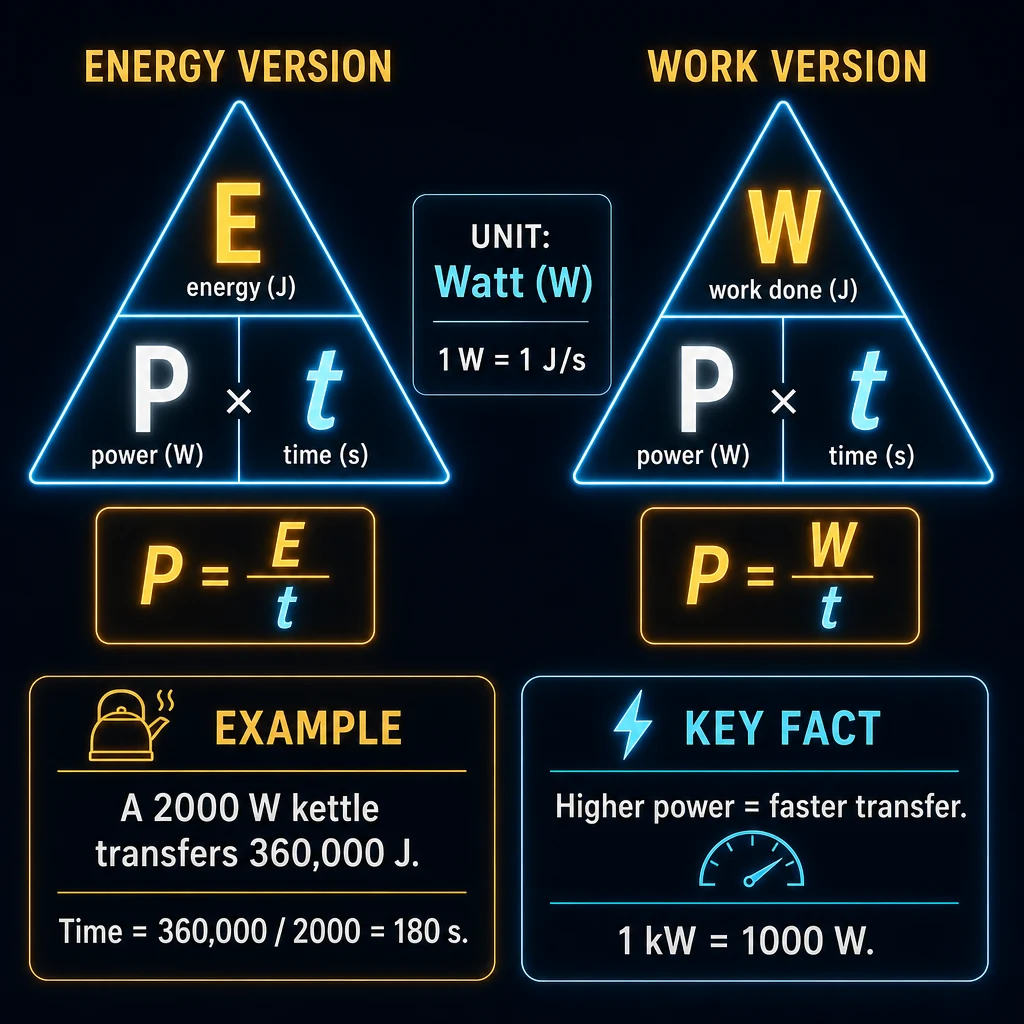
Figure 1: The power formula triangle — cover the quantity you want to find
Power is defined as the rate of energy transfer or the rate of doing work. It tells you how many joules of energy are transferred every second.
P = E / t Power (W) = Energy transferred (J) ÷ Time (s)
This can also be written as:
P = W / t Power (W) = Work done (J) ÷ Time (s)
Both equations mean the same thing — "work done" and "energy transferred" are interchangeable in this context.
- Power is measured in watts (W) — named after James Watt, who improved the steam engine
- 1 watt = 1 joule per second (1 W = 1 J/s)
- Higher power means energy is transferred more quickly
- Power does NOT tell you how much total energy was used — only how fast it was used
Quick Check: A motor transfers 600 J of energy in 30 seconds. What is its power output?
P = E / t = 600 ÷ 30 = 20 W. The motor has a power output of 20 watts.
This deep dive covers Understanding Power within Power for GCSE Physics. Revise Power in Energy for GCSE Physics with 14 exam-style questions and 25 flashcards. This topic appears regularly enough that it should still be part of a steady revision cycle. It is section 2 of 12 in this topic. Use this deep dive to connect the idea to the wider topic before moving on to questions and flashcards.
Practice questions for Power
Which of the following is the correct definition of power?
A microwave oven transfers 54,000 J of energy. It has a power rating of 900 W. Calculate how long the microwave was switched on. Use the equation: power = energy transferred / time Give your answer in seconds (s).