Space PhysicsDiagram

Circular vs Elliptical Orbits

Part of OrbitsGCSE Physics

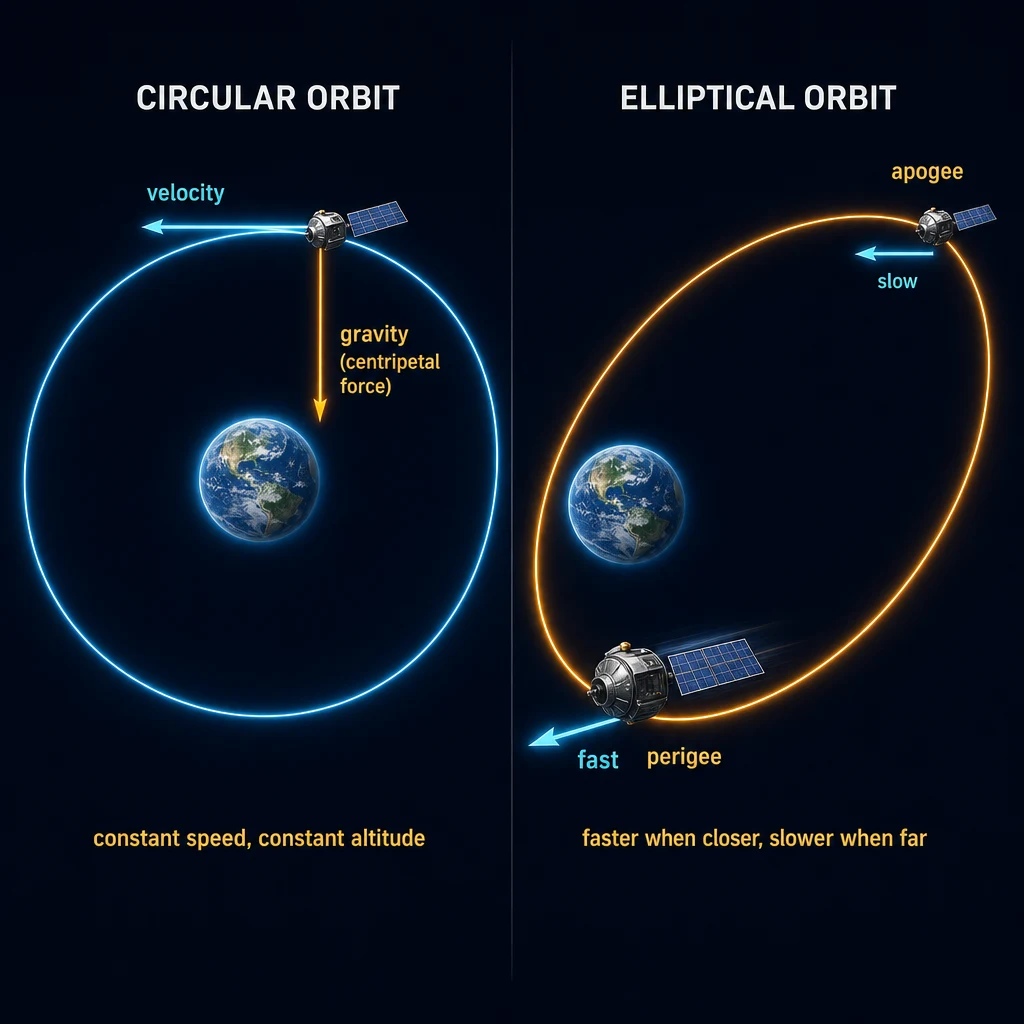
This diagram covers Circular vs Elliptical Orbits within Orbits for GCSE Physics. Revise Orbits in Space Physics for GCSE Physics with 13 exam-style questions and 10 flashcards. This topic appears regularly enough that it should still be part of a steady revision cycle. It is section 3 of 5 in this topic. Focus on the labels, the relationships between parts, and the explanation that turns the diagram into an exam-ready answer.

Topic position

Section 3 of 5

Practice

13 questions

Recall

10 flashcards

📊 Circular vs Elliptical Orbits

Comparison of circular orbits (constant speed and distance) vs elliptical orbits (speed varies - faster when closer to central body)

Keep building this topic

Read this section alongside the surrounding pages in Orbits. That gives you the full topic sequence instead of a single isolated revision point.

Practice Questions for Orbits

What is a protostar?

  • A. A cloud of gas and dust in space
  • B. A star that is forming from a collapsing cloud of gas and dust
  • C. A star that has used up all its hydrogen
  • D. A star that has exploded as a supernova
1 markfoundation

Explain why a main sequence star remains stable (in equilibrium) for billions of years.

2 marksstandard

Quick Recall Flashcards

What is Low Earth Orbit (LEO)?
Orbit at 200-2000 km altitude with ~90 minute orbital period. Used for ISS, imaging, and Earth observation
What is a polar orbit used for?
Mapping - the satellite orbits at ~800 km altitude covering the whole Earth as the planet rotates beneath it

Want to test your knowledge?

PrepWise has 13 exam-style questions and 10 flashcards for Orbits — with adaptive difficulty and instant feedback.

Join Alpha