523 questions with model answers ยท Biology Paper 1 ยท GCSE Biology revision
Compare the structure of plant and animal cells. Include both similarities and differences in your answer.
Both plant and animal cells are eukaryotic and share several structures: they both have a nucleus containing DNA, cytoplasm where chemical reactions take place, a cell membrane, mitochondria for aerobic respiration, and ribosomes for protein synthesis (2 marks). However, there are key differences. Plant cells have a rigid cell wall made of cellulose outside the cell membrane, providing structural support, whereas animal cells lack a cell wall and have a flexible shape (1 mark). Plant cells contain chloroplasts with chlorophyll for photosynthesis, allowing them to make their own glucose from sunlight; animal cells do not have chloroplasts (1 mark). Plant cells have a large permanent vacuole filled with cell sap that maintains turgor pressure to keep the cell rigid, while animal cells may only have small temporary vacuoles (1 mark). As a result, plant cells have a fixed, regular shape, while animal cells have a more flexible, irregular shape (1 mark).
This is a 6-mark comparison question. You MUST include both similarities AND differences. Examiners look for: (1) at least two shared structures with functions, (2) three key differences (cell wall, chloroplasts, permanent vacuole) with functions explained, and (3) comparative language ('whereas', 'while', 'in contrast'). A very common mistake is saying that ONLY plant cells have mitochondria - both cell types have mitochondria for respiration. Another mistake is only listing differences without mentioning similarities, or just naming structures without explaining their functions. For top marks, link each difference to its function.
Nerve cells and root hair cells are both specialised cells. Evaluate which cell shows the greater degree of specialisation. In your answer, describe the key adaptations of each cell and explain how effectively each adaptation supports the cell's function.
Nerve cells have several remarkable adaptations. They have an extremely long axon (sometimes over a metre) that allows electrical impulses to travel long distances without interruption. Branched dendrites at each end connect with many other nerve cells, forming complex networks. The axon is covered by a myelin sheath, a fatty insulating layer that speeds up impulse transmission. At synaptic endings, many mitochondria provide energy for releasing chemical neurotransmitters across the gap to the next neuron. Root hair cells are adapted for absorption. They have a long, thin projection extending into the soil that greatly increases the surface area in contact with soil water. Many mitochondria provide energy for active transport of mineral ions against the concentration gradient. The thin cell wall allows water to enter easily by osmosis. Overall, nerve cells show a greater degree of specialisation because they have more unique structural modifications (axon, dendrites, myelin sheath, synapses) that are not found in any other cell type, and they have given up the ability to divide, whereas root hair cells, while well-adapted, have a simpler set of modifications centred around one function - absorption.
This is a 6-mark extended response requiring AO3 (evaluation/judgment). You must: (1) describe nerve cell adaptations with functions (2-3 marks), (2) describe root hair cell adaptations with functions (2 marks), (3) make a reasoned evaluation of which is MORE specialised with a justified conclusion (1 mark). The evaluation mark is the hardest - you need to make a clear judgment and support it with evidence from your descriptions. Either answer is acceptable IF well justified. Quality of written communication matters in 6-mark questions: use scientific terminology, write in full sentences, and structure your answer logically.
Explain how sperm cells and egg cells are adapted for their roles in fertilisation.
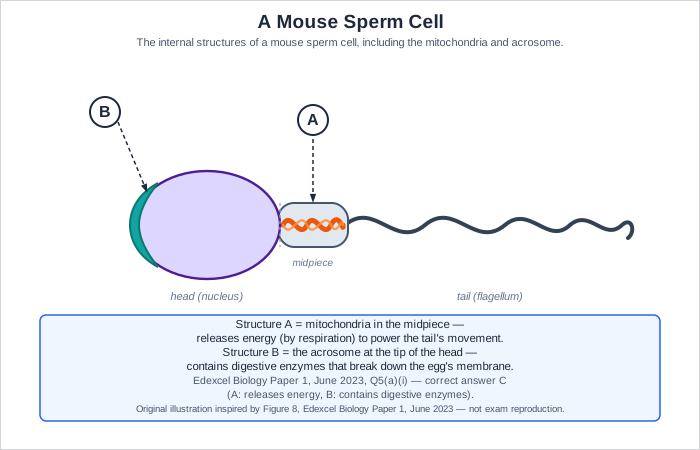
Sperm cells have a long tail (flagellum) that whips from side to side to propel them towards the egg through the reproductive tract (1 mark). The middle section of the sperm is packed with mitochondria, which provide the energy (ATP) needed for the tail to keep moving (1 mark). The sperm head contains an acrosome filled with digestive enzymes that break down the protective layers around the egg cell, allowing the sperm to penetrate and deliver its DNA (1 mark). Egg cells are very large compared to other cells because they contain nutrient reserves in their cytoplasm to nourish the early developing embryo before it implants (1 mark). After one sperm enters, the egg cell membrane changes structure to become impermeable to other sperm, preventing more than one sperm fertilising the egg (1 mark).
This 5-mark question requires adaptations of BOTH gametes. For sperm: (1) tail/flagellum for swimming, (2) many mitochondria for energy, (3) acrosome with digestive enzymes to penetrate egg. For egg: (4) large size with nutrient stores for embryo, (5) membrane changes after fertilisation to prevent multiple sperm entering. Structure your answer clearly - deal with sperm adaptations first, then egg adaptations. Link every feature to its function: 'The sperm has [feature] which allows it to [function]'. Common mistakes: describing appearance without explaining WHY it helps, or only covering one gamete type.
Describe four features of a prokaryotic (bacterial) cell.
Prokaryotic cells have no true nucleus - their genetic material is a single circular loop of DNA that floats freely in the cytoplasm (1 mark). They also contain plasmids, which are small extra rings of DNA that often carry genes for antibiotic resistance (1 mark). They have a cell wall, but it is not made of cellulose like plant cell walls (1 mark). Many prokaryotic cells have one or more flagella, which are tail-like structures that allow the bacterium to move, and they are much smaller than eukaryotic cells, typically 1-5 um (1 mark).
Prokaryotic cells (bacteria) have several distinctive features. The most important for GCSE is that they lack a true nucleus - their DNA is a single loop floating freely in the cytoplasm. They also have plasmids (small extra DNA rings). They have a cell wall, but it is chemically different from plant cell walls (not cellulose). Many have flagella for movement. They are typically 1-5 um, much smaller than eukaryotic cells (10-100 um). Do NOT say bacteria have 'no DNA' - they have DNA, it is just not enclosed in a nuclear membrane. Also remember that prokaryotic cells have no membrane-bound organelles such as mitochondria or chloroplasts.
Explain the main differences between prokaryotic and eukaryotic cells.
Prokaryotic cells lack a true nucleus - their genetic material is a single loop of DNA free in the cytoplasm, whereas eukaryotic cells have a true nucleus enclosed by a nuclear membrane containing their DNA on chromosomes (1 mark). Prokaryotic cells have no membrane-bound organelles like mitochondria or chloroplasts, while eukaryotic cells have many such organelles that compartmentalise different functions (1 mark). Prokaryotic cells contain plasmids (small extra circular rings of DNA), which eukaryotic cells do not have (1 mark). Prokaryotic cells are typically much smaller (1-5 um) compared to eukaryotic cells (10-100 um) (1 mark).
This is a 4-mark comparison worth learning thoroughly - it appears very frequently in exams. Four key differences: (1) NUCLEUS - prokaryotes lack a true nucleus, DNA is free; eukaryotes have a membrane-enclosed nucleus, (2) ORGANELLES - prokaryotes have no membrane-bound organelles; eukaryotes do, (3) PLASMIDS - prokaryotes have them; eukaryotes do not, (4) SIZE - prokaryotes are much smaller. Use comparative language: 'whereas', 'while', 'in contrast'. Common mistakes: saying prokaryotes have 'no DNA' (they DO, it is just not in a nucleus), or forgetting to mention size difference. Examples: bacteria are prokaryotes; animal, plant, and fungal cells are eukaryotes.
Explain how red blood cells are adapted for their function.
Red blood cells are adapted to transport oxygen around the body (1 mark). They have no nucleus, which creates more room inside the cell to pack in haemoglobin - the protein that binds to and carries oxygen molecules (1 mark). Their biconcave disc shape (curved inward on both sides) increases the surface area to volume ratio, allowing oxygen to diffuse in and out of the cell more quickly (1 mark). They are also small and flexible, which allows them to squeeze through the narrowest capillaries and deliver oxygen to every tissue in the body (1 mark).
This is a classic 4-mark specialist cell question. State the function first (transport oxygen), then give three adaptations linked to function: (1) no nucleus = more haemoglobin, (2) biconcave disc = larger surface area for gas exchange, (3) small and flexible = fits through capillaries. Common mistakes: saying red blood cells 'make energy' or 'produce oxygen' (they only CARRY oxygen), or describing features without linking to function. Use the pattern: 'Red blood cells have [feature] which allows them to [function] because [reason]'. Remember to spell 'haemoglobin' (UK spelling) in exams.
Describe the correct method for using a light microscope to observe plant cells. Include how to prepare the slide.
Place the specimen (e.g. onion epidermis) on a clean glass slide with a drop of water or iodine stain, then carefully lower a coverslip at an angle using a mounted needle to avoid trapping air bubbles which would distort the image (1 mark). Clip the prepared slide onto the stage of the microscope and select the lowest power objective lens, such as x4 (1 mark). Looking through the eyepiece, use the coarse focus knob to bring the image into approximate focus by moving the stage slowly away from the lens (1 mark). Once roughly focused, switch to a higher power objective lens (x10 or x40) and use the fine focus knob to produce a sharp, clear image of the cells (1 mark).
This is a required practical question - you must know this method. Four key steps: (1) PREPARE SLIDE - specimen, water/stain, coverslip at angle to avoid air bubbles, (2) START LOW - use lowest power objective lens first (easier to find specimen, wider field of view), (3) COARSE FOCUS - get approximate focus, always move stage AWAY from lens to avoid cracking the slide, (4) HIGH POWER + FINE FOCUS - switch to higher magnification and use fine focus for a sharp image. Total magnification = eyepiece lens (usually x10) multiplied by objective lens (x4, x10, or x40), giving x40, x100, or x400. This practical is frequently examined.
Compare the structure and function of xylem and phloem.
Xylem transports water and dissolved mineral ions from the roots upward to the leaves and stem, while phloem transports dissolved sugars (mainly sucrose) both upward and downward throughout the plant to where they are needed (1 mark). Xylem cells are dead and hollow when mature, having lost their end walls to form continuous tubes, whereas phloem cells are living (1 mark). Xylem walls are thickened with lignin, a waterproof strengthening material, making xylem strong enough to support the plant; in contrast, phloem has thin walls and sieve plates with pores between cells to allow sugar solution to flow (1 mark). As well as transport, xylem provides structural support, while phloem cells have companion cells alongside them that provide the energy needed for active loading of sugars into the phloem (1 mark).
This 4-mark comparison needs four clear points of difference using comparative language. Key comparisons: (1) WHAT they transport and direction - xylem carries water UP, phloem carries sugars BOTH ways, (2) ALIVE/DEAD - xylem dead, phloem living, (3) WALL STRUCTURE - xylem thick with lignin, phloem thin with sieve plates, (4) ADDITIONAL ROLES - xylem also provides support, phloem has companion cells. Common mistakes: saying xylem carries food (phloem does that), or not making direct comparisons (describing each separately). Use 'whereas', 'while', 'in contrast' to show you are comparing.
Name three structures found in animal cells and state the function of each.
The cell membrane is selectively permeable and controls what substances enter and leave the cell. The cytoplasm is a jelly-like substance where most chemical reactions take place. The nucleus contains DNA which is the genetic material that controls the cell's activities.
Animal cells have five main structures at GCSE level. The cell membrane is selectively permeable, controlling which substances enter and leave. The cytoplasm is the jelly-like substance filling the cell where most chemical reactions occur. The nucleus contains DNA and controls cell activities. Mitochondria are the site of aerobic respiration (transferring energy from glucose). Ribosomes are the site of protein synthesis. For full marks, you must name each structure AND state its correct function - just listing names without functions will not score.
A cell has an actual size of 50 um. Under a microscope, the image of the cell measures 5 mm. Calculate the magnification. Show your working.
Convert units: 5 mm = 5000 um (1 mark). Use the formula: Magnification = Image Size / Actual Size (1 mark). Magnification = 5000 / 50 = x100 (1 mark).
Always convert to the same units first - this is where most marks are lost. 1 mm = 1000 um, so 5 mm = 5000 um. Then use the magnification formula: M = I / A. Magnification = 5000 / 50 = 100. Write as x100. Check your answer: the image is bigger than the real cell, so magnification should be greater than x1. To rearrange the formula: A = I / M (find actual size) or I = M x A (find image size). Remember the magnification triangle: I on top, M and A on the bottom.
Describe the structure and function of chloroplasts.
Chloroplasts are organelles found in plant cells and algae, but not in animal cells (1 mark). They contain the green pigment chlorophyll, which absorbs light energy from the sun (1 mark). Chloroplasts are the site of photosynthesis, where light energy is used to convert carbon dioxide and water into glucose and oxygen (1 mark).
For 3 marks, cover three key points: (1) WHERE they are found (plant cells and algae, not animal cells), (2) WHAT they contain (chlorophyll pigment that absorbs light), (3) WHAT they do (photosynthesis - converting light energy into chemical energy in glucose). Not all plant cells have chloroplasts - root cells, for example, are underground and do not carry out photosynthesis. Only cells in parts of the plant exposed to light contain chloroplasts. The chlorophyll absorbs red and blue wavelengths of light and reflects green, which is why plants appear green.
Describe the structure and function of the permanent vacuole in plant cells.
The permanent vacuole is a large, fluid-filled sac in the centre of a plant cell (1 mark). It contains cell sap, which is a solution of water with dissolved sugars, mineral salts, and sometimes pigments (1 mark). Its main function is to maintain turgor pressure - the vacuole absorbs water by osmosis, swells, and pushes the cell membrane against the rigid cell wall, keeping the cell firm and helping support the whole plant (1 mark).
The permanent vacuole is unique to plant cells (animal cells only have small temporary vacuoles). Three key points: (1) it is a large fluid-filled sac taking up most of the cell volume, (2) it contains cell sap - a solution of water, dissolved sugars, and mineral salts, (3) its main role is maintaining turgor pressure. When the vacuole is full of water, it pushes outward against the rigid cell wall, keeping the cell turgid (firm). When a plant lacks water, vacuoles shrink, cells become flaccid (limp), and the plant wilts. Do not confuse cell sap (in the vacuole) with cytoplasm (the jelly-like substance around the organelles).
Explain how root hair cells are adapted for absorbing water and mineral ions from the soil.
Root hair cells have a long, thin hair-like projection that extends out into the soil, greatly increasing the surface area of the cell membrane in contact with soil particles and water (1 mark). Water enters the root hair cell by osmosis, moving from the dilute solution in the soil (higher water concentration) to the more concentrated cell sap inside the cell (lower water concentration) (1 mark). The cell also has many mitochondria, which provide the energy (ATP) needed for active transport to absorb mineral ions from the soil, even when the concentration of minerals is lower in the soil than inside the cell (1 mark).
Three key adaptations for 3 marks: (1) long projection increases surface area for absorption, (2) water enters by osmosis (passive, down concentration gradient), (3) many mitochondria provide energy for active transport of mineral ions (against concentration gradient). CRITICAL distinction at GCSE: water moves by OSMOSIS (passive) but mineral ions are absorbed by ACTIVE TRANSPORT (requires energy from mitochondria). This is a very common exam question and getting the transport mechanisms right is essential. Do not say minerals are absorbed by diffusion or osmosis - this is wrong and will lose marks.
Explain how muscle cells are adapted for contraction.
Muscle cells contain a large number of mitochondria, which transfer energy through aerobic respiration to provide the ATP needed for muscle contraction (1 mark). They are packed with special protein fibres that can slide past each other, causing the cell to shorten and contract, generating force for movement (1 mark). Muscle cells are elongated and work together in groups, allowing coordinated contraction that can move bones at joints or squeeze substances through tubes like blood vessels (1 mark).
Muscle cells are adapted for their contraction function in three main ways: (1) many mitochondria provide the large amounts of energy (ATP) needed for repeated contraction, (2) special protein fibres inside the cell can slide past each other, shortening the cell to generate force, (3) the elongated shape and coordination of many muscle cells allows effective movement. During vigorous exercise when oxygen supply cannot keep up, muscle cells also respire anaerobically, producing lactic acid. Common mistake: saying mitochondria 'make' energy - they transfer energy from glucose.
Explain why plant cells have a cell wall but animal cells do not.
Plant cells have a cell wall made of cellulose that provides structural support and maintains the shape of the cell. When the cell absorbs water by osmosis it becomes turgid; the cell wall prevents the cell from bursting. Animal cells do not need a rigid cell wall because they are supported by the skeleton and connective tissues, and their flexible cell membrane allows them to change shape.
Plant cells need a cell wall for three reasons: (1) it is made of cellulose and provides rigid structural support, maintaining the cell's shape; (2) when the cell absorbs water by osmosis it swells (becomes turgid) and the cell wall withstands this pressure, preventing the cell from bursting; (3) it helps the whole plant stand upright. Animal cells do not need a cell wall because they are already supported externally by the skeleton and connective tissues, and they need flexibility โ their cell membrane allows them to change shape (e.g. red blood cells bending through capillaries). Common mistake: saying animal cells have 'no membrane at all' โ they have a cell membrane, just no rigid cell wall.
Name three organelles found in both animal and plant cells.
Three organelles found in both animal and plant cells are: nucleus, mitochondria, and cell membrane. Ribosomes and cytoplasm are also present in both.
Both animal and plant cells share the same fundamental organelles needed for life: the nucleus (contains DNA and controls cell activities), mitochondria (site of aerobic respiration, releasing energy as ATP), cell membrane (controls what enters and leaves the cell), ribosomes (where proteins are synthesised), and cytoplasm (fluid where chemical reactions occur). The question only awards marks for naming two correct organelles, so give any two from this list. Common mistake: naming chloroplasts or cell wall โ these are plant-cell-only structures not found in animal cells.
An image of a cell is 30 mm long under x400 magnification. Calculate the actual size of the cell in micrometres (um). Show your working.
Convert image size: 30 mm = 30000 um. Actual Size = Image Size / Magnification = 30000 / 400 = 75 um (2 marks).
Rearrange the magnification formula to find actual size: A = I / M. Convert 30 mm to micrometres first: 30 x 1000 = 30000 um. Then divide: 30000 / 400 = 75 um. Check: 75 um is within the typical range for a eukaryotic cell (10-100 um), so this is a sensible answer. A common mistake is dividing without converting units first, which would give 0.075 mm - correct but not in the units asked for. Always give your answer in the units the question specifies.
Describe the function of mitochondria.
Mitochondria are the site of aerobic respiration. They release energy (in the form of ATP) from glucose for the cell to use.
Mitochondria are the powerhouses of the cell. They carry out aerobic respiration using glucose and oxygen to release energy in a usable form (ATP). This energy powers virtually every cellular process โ muscle contraction, active transport, cell division, and protein synthesis. Two mark points: (1) mitochondria are the site of aerobic respiration, and (2) energy/ATP is released for the cell to use. Common mistake: saying mitochondria 'make glucose' or 'produce food' โ they break glucose DOWN to release energy, they do not produce it.
Which part of the cell contains DNA and controls the cell's activities?
The nucleus is the control centre of the cell. It contains the genetic material (DNA) organised into structures called chromosomes. The DNA carries the instructions (genes) that control which proteins the cell makes, and therefore controls all the cell's activities. The cytoplasm (B) is where most chemical reactions take place, but it does not control the cell. The cell membrane (C) controls what enters and leaves the cell, but does not control cell activities overall. Mitochondria (D) are the site of aerobic respiration, not the control centre.
Which organelle is the site of aerobic respiration in both plant and animal cells?
Mitochondria are the site of aerobic respiration, where glucose reacts with oxygen to transfer energy for the cell's processes. Both plant AND animal cells have mitochondria because all living cells need to respire to release energy. Ribosomes (A) are where proteins are synthesised - a completely different function. Chloroplasts (B) are the site of photosynthesis, found only in some plant cells, not respiration. Vacuoles (D) store cell sap in plant cells. A common mistake is saying mitochondria 'make energy' - they transfer energy from glucose, since energy cannot be created or destroyed.
Plant cell walls are made of which substance?
Plant cell walls are made of cellulose, a strong carbohydrate made from long chains of glucose molecules. Cellulose fibres are arranged in a criss-cross pattern, giving the wall its strength and rigidity. This allows plant cells to withstand turgor pressure (water pressure inside the cell) without bursting. Starch (A) is also made from glucose, but it is a storage molecule found in chloroplasts, not a structural molecule. The cell wall is fully permeable - it lets all dissolved substances through - unlike the cell membrane which is selectively permeable.
What are plasmids found in bacterial cells?
Plasmids are small, circular rings of extra DNA found in bacterial cells. They are separate from the main bacterial chromosome and often carry additional genes, such as those for antibiotic resistance. Plasmids can replicate independently and can be transferred between bacteria, which is why antibiotic resistance can spread rapidly through bacterial populations. Flagella (A) are tail-like structures for movement, not DNA. Ribosomes (B) make proteins. The main bacterial chromosome (C) is a single large circular DNA molecule in the cytoplasm - plasmids are much smaller additional DNA loops. Plasmids are also used in genetic engineering as vectors to insert genes into bacteria.
What is the function of ribosomes?
Ribosomes are the site of protein synthesis (making proteins). They read the instructions from messenger RNA (mRNA) that has been copied from DNA in the nucleus, and use these instructions to join amino acids together in the correct order to build specific proteins. Ribosomes are found in ALL living cells, both prokaryotic and eukaryotic, because every cell needs to make proteins. They are very small and are not surrounded by a membrane. The nucleus (A) controls the cell; DNA in the nucleus (C) stores genetic information; mitochondria (D) carry out respiration.
Which organelle is found in plant cells but NOT animal cells?
Chloroplasts are organelles found only in plant cells (and algae). They contain chlorophyll and are the site of photosynthesis. Animal cells do not carry out photosynthesis and therefore lack chloroplasts.
A student observes a very long, thin cell with branched endings at both ends. Which type of specialised cell is this most likely to be?
The description matches a nerve cell (neuron). Nerve cells have a long axon that can extend over a metre, allowing electrical impulses to travel long distances rapidly. They have branched dendrites at each end to connect with many other nerve cells, forming networks. Red blood cells (A) are small biconcave discs. Root hair cells (B) have one long extension, not branched endings at both ends. Sperm cells (D) have a single tail for swimming. The key features of nerve cells to remember are: long axon, branched dendrites, myelin sheath for insulation, and many mitochondria at the synaptic endings.
What is the main advantage of an electron microscope over a light microscope?
The main advantage of electron microscopes is their much higher magnification and resolution. Light microscopes magnify up to about x1500 with a resolution limit of about 200 nm (0.2 um). Electron microscopes can magnify up to x2,000,000 with a resolution of about 0.2 nm, meaning they can distinguish between objects that are much closer together. This allows scientists to see subcellular structures like ribosomes and internal detail of mitochondria. However, electron microscopes are very expensive (A is wrong), can only view dead specimens in a vacuum (B is wrong), and produce black and white images (C is wrong). Light microscopes are better for observing living cells and are used in the required practical.
Which of the following best describes the typical size of a prokaryotic cell?
Prokaryotic cells (such as bacteria) are typically 1-5 um in diameter - much smaller than eukaryotic cells. Most animal cells are 10-100 um (B), which is why B is a common wrong answer. The size difference between prokaryotic and eukaryotic cells is an important comparison point in exams. Remember: 1 mm = 1000 um, so prokaryotic cells are far too small to see with the naked eye. You need at least a light microscope to see individual bacteria. The small size of prokaryotic cells gives them a large surface area to volume ratio, which helps with nutrient exchange.
What is the main function of the large central vacuole in a plant cell?
The large central vacuole in plant cells is filled with cell sap (a solution of sugars, salts and pigments). It helps maintain the cell's turgor pressure, keeping the cell firm and giving the plant structural support. It is NOT the site of photosynthesis (that is the chloroplast), does NOT control entry/exit (that is the cell membrane), and the structural support function is primarily the cell wall.
Evaluate the advantages and limitations of light microscopes compared to electron microscopes.
Advantages of light microscopes: they can observe living specimens, allowing study of cell movement and processes (1); they are relatively cheap and portable compared to electron microscopes (1); they are easy to use with simple specimen preparation - just a slide and coverslip (1). Limitations: they have much lower magnification (maximum ร1500) compared to electron microscopes (up to ร500,000+) (1); they have lower resolution (~200 nm) compared to electron microscopes (~0.1 nm) (1); they cannot see detailed subcellular structures like ribosomes, which are too small (1).
This is an evaluate question requiring BOTH advantages and limitations. Structure: state 3 advantages (living, cheap, easy), then 3 limitations (magnification, resolution, detail). Balanced answer needed for full marks.
Describe the method for the required practical 'Using a light microscope to observe plant and animal cells'.
Prepare the specimen by peeling a thin layer of onion epidermis (plant) OR gently swabbing the inside of your cheek with a cotton bud (animal) (1). Place on a slide and add a drop of iodine solution (for plant cells) OR methylene blue (for animal cells) (1). Lower a coverslip at a 45ยฐ angle to avoid trapping air bubbles (1). Place slide on microscope stage and start with the lowest magnification objective lens, using the coarse focus knob to get approximate focus (1). Switch to a higher magnification objective lens and use ONLY the fine focus knob to sharpen the image (1).
This is AQA Required Practical 1. Key points: prepare thin specimen (onion peel/cheek swab), stain (iodine/methylene blue), coverslip at angle, low mag first with coarse focus, high mag with fine focus only.
A student wants to observe plant cells using a light microscope. Describe the method to prepare a slide and calculate the magnification of the image. [5 marks]
Cut a thin section of the plant tissue using a scalpel and place it on a clean microscope slide with a small drop of water to mount the specimen. Add a drop of iodine stain to increase contrast and make the cell structures (such as the nucleus and cell wall) visible. Carefully lower a coverslip at an angle to avoid trapping air bubbles, then gently press it down. Place the slide on the microscope stage and focus using the low power objective first, then switch to higher power objectives for greater detail. To calculate the magnification, use the formula: magnification = image size divided by actual size. Measure the size of the image using a ruler and determine the actual size of the cell (using a graticule or given value), then divide.
This 5-mark experimental design question combines RPA1 (microscopy technique) with the magnification calculation. The five mark points are: (1) cut a thin section of plant tissue with a scalpel and mount on a slide with water; (2) add iodine stain to increase contrast and make structures visible; (3) lower coverslip at an angle to avoid trapping air bubbles; (4) focus using low power objective first, then switch to higher power; (5) magnification = image size divided by actual size. Key misconceptions to avoid: stains do not magnify (they only add colour); always start on LOW power not high power โ starting on high power makes it almost impossible to locate the specimen; the coverslip must be lowered slowly at an angle to prevent air bubbles. For the magnification formula, remember the units must match โ convert if necessary (e.g. both in ยตm).
Describe the correct method for using a light microscope to observe cells.
Start with the lowest magnification objective lens (usually ร4) (1). Place the specimen slide on the stage and secure with clips (1). Use the coarse focus knob to bring the specimen into approximate focus (1). Switch to a higher magnification objective lens and use ONLY the fine focus knob to sharpen the image (1).
This is the AQA required practical method. Key points: low power first (to find specimen), coarse then fine focus, NEVER coarse focus at high magnification (damages equipment).
Compare Transmission Electron Microscopes (TEM) and Scanning Electron Microscopes (SEM).
TEM passes an electron beam through a very thin specimen, while SEM scans the surface of a specimen with an electron beam (1). TEM produces 2D images, whereas SEM produces 3D-like images of the surface (1). TEM shows internal structures and organelles, while SEM shows surface details and topology (1). TEM has higher magnification (up to ร1,000,000) and better resolution (0.1 nm) than SEM (up to ร500,000, resolution 3-10 nm) (1).
Classic comparison question. Structure: state what BOTH do for each point. TEM = through specimen, 2D, internal; SEM = surface scan, 3D-like, topology. TEM has higher specs.
A bacterium has an actual size of 2 ฮผm. Under a microscope it appears 8 mm long. Calculate the magnification used. Show your working.
Convert to same units: 8 mm = 8000 ฮผm (1) Magnification = Image size รท Actual size (1) Magnification = 8000 รท 2 (1) Magnification = ร4000 (1)
Always convert to the same units first. 1 mm = 1000 ฮผm, so 8 mm = 8000 ฮผm. Then M = I รท A: 8000 รท 2 = 4000. Write as ร4000.
Explain why electron microscopes have better resolution than light microscopes.
Resolution is limited by the wavelength of the radiation used (1). Light waves have wavelengths of approximately 400-700 nm (1). Electron beams have much shorter wavelengths, around 0.005 nm (1). The shorter wavelength of electrons allows much better resolution, so finer details can be distinguished (1).
This tests understanding of the physics behind resolution. Key concept: resolution is wavelength-dependent. Light ~500 nm, electrons ~0.005 nm. Shorter wavelength = better resolution.
A student is having difficulty seeing clear images through their light microscope. Suggest four possible problems and their solutions.
Problem 1: Dirty lenses - Solution: Clean the objective and eyepiece lenses carefully using lens paper only (1). Problem 2: Air bubbles trapped under coverslip - Solution: Remove coverslip and reapply at a 45ยฐ angle, lowering slowly (1). Problem 3: Specimen too thick - Solution: Prepare thinner sections of the specimen so light can pass through (1). Problem 4: Poor focusing technique - Solution: Start with lowest magnification, use coarse focus to get approximate focus, then use fine focus only (1).
Troubleshooting question tests practical skills. Must give BOTH problem AND solution for each mark. Common issues: dirty lenses (lens paper), air bubbles (angle technique), thick specimen (thinner), poor focus (start low).
A student observes three structures under microscopes: a ribosome (25 nm), a mitochondrion (2 ฮผm), and a human egg cell (120 ฮผm). Calculate how many orders of magnitude larger the egg cell is compared to the ribosome.
Convert to same units (nm): ribosome = 25 nm, egg cell = 120 ฮผm = 120,000 nm (1). Calculate the ratio: 120,000 รท 25 = 4800 times larger (1). Express as powers of 10: ribosome โ 10ยน, egg โ 10โต (1). The difference in orders of magnitude = 5 - 1 = 4 orders of magnitude (or more precisely, logโโ(4800) โ 3.7) (1).
Orders of magnitude question tests mathematical skills. Convert to same units, calculate ratio, express as powers of 10, find difference in exponents. Answer: 4 orders of magnitude (or 3.7 more precisely).
A cell appears 15 mm long when viewed at ร300 magnification. Calculate the actual size of the cell in micrometers (ฮผm).
Actual size = Image size รท Magnification = 15 mm รท 300 = 0.05 mm Convert to ฮผm: 0.05 ร 1000 = 50 ฮผm
Use the formula: Actual size = Image size รท Magnification. Then convert mm to ฮผm by multiplying by 1000. Triangle tip: I on top, M and A on bottom.
Explain why specimens are stained before viewing under a light microscope.
Most cells and tissues are transparent or colorless (1), so difficult to see under a microscope. Stains bind to specific structures in cells (1), adding color which makes these structures visible and easier to identify (1). For example, iodine stains starch blue-black in plant cells.
Cells are naturally transparent. Stains add color by binding to specific structures, making them visible and identifiable under the microscope. Common stains: iodine (starch), methylene blue (nuclei).
Describe how to add a coverslip to a microscope slide to avoid air bubbles.
Hold the coverslip at a 45ยฐ angle touching one edge of the specimen (1). Slowly and gradually lower the coverslip onto the slide (1). This technique allows air to escape from underneath, preventing air bubbles from being trapped (1).
The angled technique is crucial: hold at 45ยฐ, touch one edge first, then slowly lower. This pushes air out sideways, preventing trapped bubbles which distort the image.
Explain how muscle cells are adapted for their function, with reference to features visible under a microscope.
Muscle cells contain many mitochondria, which can be seen under an electron microscope (1). These mitochondria supply energy through aerobic respiration to power muscle contraction (1). Muscle cells are also elongated and contain contractile protein fibres (myofibrils), visible under the microscope, which allow contraction to occur (1).
Muscle cell adaptation question links microscopy to cell biology. Key features: many mitochondria (for aerobic respiration energy), elongated shape, myofibrils for contraction. Note: mitochondria are visible under electron microscopes, not light microscopes.
Explain how the development of electron microscopes allowed scientists to discover the internal structure and function of subcellular organelles. [3 marks]
Electron microscopes have a much greater magnification and resolution than light microscopes. This allows the detailed ultrastructure of organelles to be observed, for example the cristae inside mitochondria and the thylakoid stacks inside chloroplasts. By studying these fine structural details, scientists could link specific structures to specific functions, such as the large surface area of cristae for ATP production.
Light microscopes are limited in resolution by the wavelength of visible light (~400โ700 nm) โ they cannot resolve details smaller than ~200 nm. Electron microscopes use electrons (wavelength ~0.004 nm) giving ~1000ร better resolution. This breakthrough revealed organelle ultrastructure: the folded cristae of mitochondria, the stacked thylakoids of chloroplasts, the double membrane of the nucleus. Each structural feature pointed to its function โ cristae maximise surface area for respiration enzymes; thylakoids hold photosynthesis pigments. Form follows function.
A scientist wants to study the movement of living bacteria. Suggest which type of microscope would be most suitable and explain your choice.
A light microscope would be most suitable (1). This is because the bacteria are living and moving, which can only be observed in real-time (1). Electron microscopes (both TEM and SEM) require dead specimens that are specially prepared and placed in a vacuum, so movement cannot be observed (1).
Application question testing understanding of microscope limitations. Only light microscopes can view living specimens. Electron microscopes require dead specimens in a vacuum, making movement observation impossible.
Describe how cell fractionation and ultracentrifugation can be used to separate and study different organelles from a cell. [3 marks]
Cells are first broken open (homogenised) in ice-cold isotonic buffer solution to prevent organelle damage and enzyme activity. The resulting homogenate is then centrifuged at increasing speeds. At low speeds, heavy organelles such as nuclei and cell debris sediment to form a pellet and are removed. Progressively higher centrifuge speeds cause lighter organelles such as mitochondria, then ribosomes, to sediment in separate pellets. Each pellet can then be collected and analysed.
Cell fractionation is a technique for isolating specific organelles in bulk. Key steps: (1) Homogenise (blend) cells in ice-cold isotonic buffer โ cold prevents enzyme degradation, isotonic prevents osmotic damage, buffer maintains pH. (2) Centrifuge at low speed (1,000g) โ nuclei, unbroken cells, and debris sediment. Remove pellet. (3) Centrifuge supernatant at medium speed (10,000โ20,000g) โ mitochondria, chloroplasts pellet. (4) Centrifuge again at high speed (100,000g) โ ribosomes pellet. Each fraction is pure enough to study biochemically.
A microscope has an eyepiece magnification of ร10 and an objective lens magnification of ร40. Calculate the total magnification.
Total magnification = eyepiece magnification ร objective lens magnification = ร10 ร ร40 = ร400
Total magnification = eyepiece ร objective. Always multiply these two values: 10 ร 40 = 400, written as ร400.
A bacterial cell is 2 ฮผm long. Express this in metres using standard form.
Convert micrometers to metres: 2 ฮผm รท 1,000,000 = 0.000002 m (1) Express in standard form: 2 ร 10โปโถ m (1)
To convert ฮผm to m, divide by 1,000,000 (or multiply by 10โปโถ). Standard form expresses numbers as a ร 10โฟ where 1 โค a < 10. Remember: 1 ฮผm = 10โปโถ m.
What is magnification?
Magnification refers to how many times larger an image appears compared to the actual size of the object. Use the formula: Magnification = Image size รท Actual size. Don't confuse with resolution (ability to see detail).
What is resolution in microscopy?
Resolution is the ability to distinguish between two separate points that are close together. Better resolution = clearer detail. Light microscopes have resolution ~200 nm; electron microscopes ~0.1 nm.
What is the typical size range of most animal cells?
Most animal cells are 10-30 ฮผm. Bacterial cells are smaller (1-5 ฮผm). Egg cells are much larger (~100 ฮผm). Remember the scale: bacteria < typical cells < egg cells.
Convert 2.5 mm to micrometers (ฮผm).
To convert mm to ฮผm, multiply by 1000. So 2.5 mm ร 1000 = 2500 ฮผm. Remember: 1 mm = 1000 ฮผm, 1 ฮผm = 1000 nm.
Which objective lens magnification is best for initially scanning to find your specimen?
Always start with ร4 (scanning objective) - it has the widest field of view, making it easiest to find your specimen. Then switch to higher magnifications once centered.
What is the maximum magnification of a light microscope?
Light microscopes magnify up to ร1500. A standard school microscope typically uses an eyepiece (ร10) ร highest objective lens (ร40) = ร400, but with specialized lenses can reach up to ร1500 as the practical limit.
A scientist wants to observe living bacteria moving. Which microscope should they use?
Only light microscopes can view living specimens. Electron microscopes (TEM and SEM) require dead, specially prepared specimens in a vacuum, so movement cannot be observed.
The small intestine has many adaptations for absorption including: a very long length (6-7 meters), millions of villi covering the inner surface, and microvilli on the epithelial cells. Evaluate how effectively these adaptations work together to maximize nutrient absorption. In your answer, consider both the advantages of these features and any potential limitations.
The small intestine adaptations work together extremely effectively to maximize nutrient absorption: Advantages: The very long length (6-7 m) provides a large total surface area and gives more time for absorption as food moves through (1). The millions of villi increase surface area from about 0.3 m2 to 30 m2, allowing far more nutrients to be absorbed simultaneously (1). Microvilli on each epithelial cell increase the surface area even further to about 200 m2, creating a brush border that maximizes contact with digested food (1). Each villus is also adapted with a thin wall (one cell thick) for short diffusion distance, and has an excellent blood supply and lacteal to maintain concentration gradients by constantly removing absorbed nutrients (1). Limitations: The very long length requires significant energy and resources to maintain - producing enzymes, mucus, and replacing epithelial cells constantly (1). The large surface area also presents more opportunities for disease or damage. Evaluation: Overall these adaptations are highly effective because they address all the key factors for efficient exchange: very large surface area, very short diffusion distances, and maintained concentration gradients. While there are some costs in terms of energy and vulnerability, these are minimal compared to the critical benefit of extracting maximum nutrients from food, which is essential for survival and growth (1).
This is an evaluation question requiring you to discuss both advantages and limitations, then make an overall judgment. Top-level answers should include: 1. Multiple structural features explained: - Length provides surface area and time - Villi dramatically increase surface area (x100) - Microvilli increase it even further (x600 overall) - Thin walls reduce diffusion distance - Blood supply maintains gradients 2. Understanding of how features work together: - They address all three key factors for exchange surfaces - Combined effect is much greater than any single adaptation 3. Recognition of limitations: - Energy cost of maintenance - Cell replacement requirements - Vulnerability to disease - Resource demands 4. Balanced evaluation: - Benefits massively outweigh costs - Essential for survival - Evolutionary success of design - Justification of your judgment Remember to use scientific terminology and link your points to the underlying biological principles (surface area, diffusion distance, concentration gradient).
A student wants to investigate the effect of salt concentration on the mass of potato cylinders. Plan a method for this investigation. Your plan should include: - the equipment needed - how to make the investigation a fair test - how to obtain accurate results - a risk assessment.
Cut potato cylinders to the same length and diameter using a cork borer, and record their initial mass on a balance (1). Prepare at least five different salt concentrations โ for example 0.0 M, 0.2 M, 0.4 M, 0.6 M, 0.8 M, and 1.0 M โ by diluting a stock salt solution with distilled water (1). Place one potato cylinder into each concentration in separate beakers containing the same volume of solution, and leave them for a set time such as 30 minutes (1). Remove the cylinders, gently blot them dry with paper towel to remove surface liquid, then reweigh each one and calculate the percentage change in mass (1). Keep key variables constant: use the same potato, the same volume of solution in each beaker, the same temperature (room temperature), and the same immersion time (1). Risk assessment: use the cork borer carefully on a cutting mat to avoid cuts, mop up any spilled liquid to prevent slipping, and handle glassware carefully โ salt solutions at these concentrations are low hazard (1).
This is a 6-mark experimental design question based on Required Practical Activity 3 (osmosis). To score full marks you need to cover all aspects of planning. First, prepare identical potato cylinders using a cork borer so they have the same starting size, and weigh each one. Then make at least five different concentrations of salt solution โ this gives you enough data points to spot a pattern. Place one cylinder in each concentration for the same length of time. After the set time, remove the cylinders, blot them gently with paper towel (do not squeeze โ this would force water out), and reweigh. The percentage change in mass shows how much water moved in or out by osmosis. For a fair test, control everything except the salt concentration: same potato variety, same volume of solution, same temperature, and same time period. For safety, use a cork borer on a cutting mat to avoid injury, and wipe up spills immediately. The key principle is that water moves from a dilute solution (high water concentration) to a concentrated solution (low water concentration) through the partially permeable potato cell membranes. In dilute solutions, potato gains mass; in concentrated solutions, it loses mass.
Root hair cells absorb mineral ions from the soil even when the mineral concentration inside the root is higher than in the soil. Explain how the sub-cellular structures of root hair cells are adapted to carry out this function.
Mineral ions must be moved against their concentration gradient โ from the low concentration in the soil to the higher concentration already inside the root (1). This movement against the gradient requires active transport, which needs energy (1). The energy is released by aerobic respiration, which takes place in the mitochondria of the root hair cell (1). Root hair cells contain many mitochondria so they can release enough energy (ATP) to drive the active transport of mineral ions continuously (1). Additionally, root hair cells have a long, thin projection (the 'hair') that extends into the soil, greatly increasing the surface area in contact with soil water and allowing more mineral ions to be absorbed (1).
This question tests whether you can link sub-cellular structures to their function in active transport โ a key Grade 8-9 skill. The critical chain is: minerals are at low concentration in soil but high concentration in the root, so they must move AGAINST the concentration gradient. This rules out diffusion (which only works down a gradient) and requires active transport. Active transport needs energy, which comes from aerobic respiration in mitochondria. Root hair cells are packed with many mitochondria specifically because active transport is energy-demanding and happens continuously. The root hair cell's long projection is also important โ it increases the surface area in contact with soil particles and water, allowing more mineral ions to be absorbed. A common mistake is saying diffusion or osmosis absorbs minerals. Osmosis only moves water, and diffusion can only move substances from high to low concentration. Since minerals must move against the gradient here, only active transport works.
When placed in pure water, animal red blood cells burst (lyse) but plant cells do not. Compare and explain the different effects of osmosis on these two cell types.
In pure water, the water concentration outside both cell types is higher than the concentration inside the cells, so water enters both cells by osmosis through their partially permeable cell membranes (1). In animal red blood cells, there is no cell wall to resist expansion. As water continues to enter, the cell swells and the thin cell membrane stretches until it ruptures โ this is called lysis (1). In plant cells, however, there is a strong, rigid cellulose cell wall surrounding the cell membrane (1). As water enters and the cell swells, the cell wall pushes back against the expanding cell membrane, creating turgor pressure that resists further water entry and prevents the cell from bursting (1). The plant cell becomes turgid โ firm and swollen โ which is actually the normal, healthy state for a plant cell. Turgor pressure in many cells together helps support the plant's structure and keep stems and leaves upright (1).
This compare-contrast question tests your understanding of why osmosis has different outcomes in animal and plant cells. The starting point is the same for both: pure water has a higher water concentration than the cytoplasm of both cell types, so water enters both by osmosis through the partially permeable cell membrane. The difference comes from cell structure. Animal cells (like red blood cells) have only a thin cell membrane and no cell wall. As water floods in, the cell swells until the membrane cannot stretch any further, and it bursts. This is called lysis. Plant cells also take in water, but they have a rigid cellulose cell wall outside the membrane. As the cell swells, the wall pushes back against the membrane. This inward pressure (turgor pressure) prevents further expansion and stops the cell from bursting. The cell becomes turgid โ firm and pressurised. Turgidity is actually beneficial for plants. The turgor pressure in cells acts like air in a balloon, keeping leaves and stems rigid. When plant cells lose water (in concentrated solutions), they become flaccid and the plant wilts. A common mistake is saying the cell wall stops water entering โ it does not. The cell wall is fully permeable to water. It only provides structural resistance to over-expansion.
Explain why single-celled organisms like amoeba do not need specialised exchange surfaces but large multicellular organisms do.
Single-celled organisms like amoeba have a large surface area to volume ratio (1). This means diffusion through their cell membrane is fast enough to supply all the oxygen and nutrients they need, and to remove all their waste products (1). Large multicellular organisms have a small surface area to volume ratio (1). Their body surface area is too small compared to their large volume of cells, so diffusion alone cannot supply enough oxygen or remove enough waste - they need specialised exchange surfaces with large areas like lungs, gills or leaves (1).
This is all about the surface area to volume ratio (SA:V): Single-celled organisms (like amoeba): - Have a LARGE surface area to volume ratio - Their cell membrane provides enough surface area for all the oxygen, nutrients and waste their small volume of cytoplasm needs - Diffusion distances are very short (everything is close to the surface) - Therefore diffusion alone is sufficient - they don't need lungs, gills, or other specialised surfaces Large multicellular organisms (like humans): - Have a SMALL surface area to volume ratio (as organisms get bigger, volume increases faster than surface area) - Their body surface is too small compared to the huge volume of cells inside - Many cells are far from the surface, so diffusion distances are too large - Therefore they NEED specialised exchange surfaces with very large surface areas (lungs for gas exchange, villi in small intestine for nutrient absorption, etc.) to meet their needs For example: a 1mm cube has SA:V = 6:1, but a 10mm cube has SA:V = 0.6:1 - ten times smaller!
Describe four features of an effective gas exchange surface and explain how each feature increases the efficiency of exchange.
1. Large surface area - provides more space for molecules to diffuse across, increasing the rate of exchange (1). 2. Thin walls, often just one cell thick - substances only have to travel a very short distance, so diffusion is faster (1). 3. Good blood supply (animals) or ventilation (lungs) - constantly removes products or supplies reactants to maintain a steep concentration gradient, maximizing the rate of diffusion (1). 4. Moist surface - allows oxygen and carbon dioxide to dissolve before diffusing across the surface (1).
Effective exchange surfaces (like alveoli in lungs, villi in small intestine, gills in fish, or leaves in plants) share these adaptations: 1. Large surface area - More area means more space for diffusion to occur at the same time. For example, millions of alveoli in lungs provide a huge total surface area (about 70 m2). 2. Thin walls - Often just one or two cells thick (e.g., alveoli are one cell thick). This means substances only travel a very short distance (short diffusion pathway), so diffusion is much faster. 3. Good blood supply (or ventilation) - Blood constantly removes diffused substances (like oxygen from alveoli) and brings fresh supplies of substances to be removed (like carbon dioxide to alveoli). This maintains a steep concentration gradient, which maximizes the rate of diffusion. 4. Moist surface - For gas exchange surfaces, moisture is essential because oxygen and carbon dioxide must dissolve in water before they can diffuse across cell membranes. These features work together to maximize the efficiency of exchange by increasing the surface area, reducing diffusion distance, and maintaining the steepest possible concentration gradient.
Explain how osmosis causes a plant cell to become plasmolysed when placed in a concentrated sugar solution.
Water moves out of the cell by osmosis (1) through the partially permeable cell membrane from a region of high water concentration inside the cell to low water concentration in the concentrated sugar solution outside (1). This causes the cytoplasm to shrink and the cell membrane pulls away from the cell wall, making the cell plasmolysed (1).
When a plant cell is placed in a concentrated sugar solution, the water concentration outside the cell is lower than inside (because the sugar solution has lots of dissolved sugar). Water moves by osmosis through the partially permeable cell membrane from high water concentration (inside the cell) to low water concentration (in the concentrated solution). As water leaves the cell, the cytoplasm shrinks and the cell membrane pulls away from the rigid cell wall. This state is called plasmolysis. The cell becomes flaccid (limp) and if all plant cells in a tissue are plasmolysed, the plant wilts.
Explain why root hair cells use active transport to absorb mineral ions from the soil.
The concentration of mineral ions is lower in the soil water than inside the root hair cell (1). Active transport is needed to move minerals against their concentration gradient from low concentration in soil to high concentration in the cell (1). This process requires energy from respiration (1).
Root hair cells need to absorb mineral ions (like nitrate and magnesium) from soil water. However, plants have already absorbed many minerals, so the concentration of minerals inside root hair cells is actually HIGHER than in the soil water. Diffusion cannot work here because minerals would move from high concentration (inside cell) to low concentration (soil) - the opposite of what's needed. Instead, root hair cells use active transport to pump minerals from the soil (low concentration) into the cell (high concentration), against the concentration gradient. This requires energy from respiration, which is why waterlogged soil (where roots can't respire) leads to mineral deficiency.
A student is investigating the effect of different sugar solution concentrations on potato cylinders. Describe how the student should prepare the potato cylinders to make this a fair test.
Cut all potato cylinders to the same length using a cork borer so they have the same surface area and volume (1). Use the same type or variety of potato for all cylinders to ensure the same initial water concentration (1). Blot each cylinder dry with paper towel before measuring its initial mass to remove surface water (1).
To make this investigation a fair test, only ONE variable should change (the concentration of sugar solution). All other variables must be controlled: 1. Same size cylinders - Use a cork borer to cut cylinders of the same diameter. Cut them all to the same length (e.g., 3 cm). This ensures they all have the same surface area and volume, so osmosis occurs at the same rate. 2. Same potato variety - Use the same type of potato for all cylinders (or ideally, cut all cylinders from the same potato). Different potato varieties may have different initial water concentrations, which would affect results. 3. Dry before weighing - Blot each cylinder dry with paper towel before measuring its initial mass. Surface water would add extra mass that isn't part of the potato tissue, making measurements inaccurate. Other controlled variables include: same volume of solution, same temperature, same time period for the investigation.
In an osmosis investigation, potato cylinders showed a +12% mass change in solution A, 0% change in solution B, and -8% change in solution C. Explain what these results tell you about the concentration of each solution compared to the potato cells.
Solution A is more dilute than the potato cells (has higher water concentration), so water moved into the cylinders by osmosis, increasing mass by 12% (1). Solution B has the same concentration as the potato cells (isotonic), so there was no net movement of water and mass stayed the same (1). Solution C is more concentrated than the potato cells (has lower water concentration), so water moved out of the cylinders by osmosis, decreasing mass by 8% (1).
The percentage change in mass tells us about water movement by osmosis, which reveals the relative concentrations: Solution A (+12% mass increase): - The potato gained mass, meaning water moved INTO the cylinders - Water moves by osmosis from high to low water concentration - Therefore solution A must be MORE DILUTE than the potato cells (higher water concentration in solution A) - This could be pure water or a very weak sugar/salt solution Solution B (0% change): - No change in mass means no NET movement of water - This happens when the concentration is the SAME inside and outside (isotonic) - Water molecules still move both ways, but equal amounts in and out - Solution B has the same concentration as potato cell sap Solution C (-8% mass decrease): - The potato lost mass, meaning water moved OUT of the cylinders - Therefore solution C must be MORE CONCENTRATED than the potato cells (lower water concentration in solution C) - This is a strong sugar or salt solution This type of investigation can be used to find the concentration of cell sap by finding which solution gives 0% change.
Explain what is meant by the term diffusion.
Diffusion is the net movement of particles (1) from a region of high concentration to a region of low concentration down the concentration gradient (1).
Diffusion is the NET movement of particles (meaning the overall movement, since individual particles move randomly in all directions but more move from crowded to less crowded areas) from a region of HIGH concentration to a region of LOW concentration. This is also described as moving DOWN the concentration gradient. Diffusion happens because particles are constantly moving randomly - more particles will move from the area where there are lots of them to the area where there are fewer, simply because there are more particles available to make that journey. No energy is required - it's a passive process.
Give two factors that affect the rate of diffusion.
1. Concentration gradient - the greater the difference in concentration, the faster the rate of diffusion (1). 2. Temperature - the higher the temperature, the faster the rate of diffusion (1).
Several factors affect the rate of diffusion: 1. **Concentration gradient** - The greater the difference in concentration between two regions, the faster diffusion occurs. This is because there are more particles available to move from the high concentration side. 2. **Temperature** - Higher temperatures give particles more kinetic energy, so they move faster and diffusion is quicker. 3. **Surface area** - A larger surface area provides more space for particles to diffuse through, increasing the rate. 4. **Distance** - The shorter the distance particles need to travel (or the thinner a membrane), the faster diffusion occurs.
A potato cylinder has a mass of 3.5 g before being placed in a sugar solution. After 30 minutes, its mass is 4.2 g. Calculate the percentage change in mass.
Change in mass = 4.2 - 3.5 = 0.7 g (1) Percentage change = (0.7 / 3.5) x 100 = 20% (1)
To calculate percentage change in mass: 1. Find the change in mass: Final mass - Initial mass = 4.2 - 3.5 = 0.7 g 2. Calculate percentage change: (Change / Original) x 100 = (0.7 / 3.5) x 100 = 0.2 x 100 = 20% The positive result (+20%) tells us the mass increased, meaning water moved into the potato cylinder by osmosis. This indicates the potato was placed in a dilute solution (or pure water) where the water concentration outside was higher than inside the potato cells.
A student places a 6.0 g potato cylinder in a concentrated salt solution. After 40 minutes, the mass is 4.8 g. Calculate the percentage change in mass.
Change in mass = 4.8 - 6.0 = -1.2 g (1) Percentage change = (-1.2 / 6.0) x 100 = -20% (1)
To calculate percentage change in mass: 1. Find the change in mass: Final mass - Initial mass = 4.8 - 6.0 = -1.2 g (the negative shows a decrease) 2. Calculate percentage change: (Change / Original) x 100 = (-1.2 / 6.0) x 100 = -0.2 x 100 = -20% The negative result (-20%) tells us the mass decreased, meaning water moved OUT of the potato cylinder by osmosis. This indicates the potato was placed in a concentrated salt solution where the water concentration outside was lower than inside the potato cells. Always include the negative sign to show direction of change.
Explain how oxygen from air in the alveoli reaches the red blood cells.
Oxygen diffuses from the alveoli into the blood through the thin alveolar and capillary walls (1). It moves from high concentration in the alveoli to low concentration in the blood, down the concentration gradient (1).
When you breathe in, air rich in oxygen fills the millions of tiny alveoli in your lungs. The oxygen concentration is HIGH in the alveoli but LOW in the blood arriving from the body (because cells have used up the oxygen). Oxygen diffuses from the alveoli into the blood capillaries surrounding them. It moves down the concentration gradient - from high concentration (alveoli) to low concentration (blood). The oxygen passes through two very thin walls (one cell thick each): the alveolar wall and the capillary wall. This short diffusion distance means diffusion is very fast. The constant flow of blood removes oxygenated blood and brings deoxygenated blood, and breathing brings fresh oxygen into the alveoli. This maintains the steep concentration gradient, keeping diffusion efficient.
After a meal, glucose concentration in the small intestine is sometimes lower than in the blood. Explain how glucose can still be absorbed into the blood.
Glucose is absorbed by active transport, which uses energy from respiration (1). Active transport can move glucose against the concentration gradient, from low concentration in the small intestine to high concentration in the blood (1).
Usually after eating, glucose concentration is higher in the small intestine than in the blood, so most glucose is absorbed by diffusion (passive, no energy needed) from high to low concentration. However, as digestion continues, the body wants to absorb ALL available glucose, even when the concentration in the gut becomes lower than in the blood. At this point, diffusion would actually move glucose the wrong way (from blood back into gut)! To prevent this, cells lining the small intestine use active transport. This process: - Requires energy from respiration - Can move glucose AGAINST its concentration gradient - Pumps glucose from low concentration (gut) to high concentration (blood) This ensures maximum glucose absorption, even late in digestion when gut glucose concentration is low. It's why the small intestine has many mitochondria - to provide energy for active transport.
Which statement best describes diffusion?
Diffusion is the net movement of particles from an area of high concentration to an area of low concentration. This happens because particles are constantly moving randomly, and more particles move from the crowded area to the less crowded area than vice versa. No energy is required - it's a passive process driven by the concentration gradient.
What is osmosis?
Osmosis is a special type of diffusion that only involves water molecules. Water moves through a partially permeable membrane (one that lets water through but not large solute molecules) from a dilute solution (high water concentration) to a more concentrated solution (lower water concentration). The membrane allows water through but blocks larger dissolved molecules.
What is active transport?
Active transport is the movement of substances from a region of low concentration to a region of high concentration (against the concentration gradient). This requires energy from respiration because the particles are being moved in the opposite direction to diffusion. Examples include root hair cells absorbing mineral ions from soil, and gut cells absorbing glucose from the intestine even when concentration is already higher in the blood.
A plant cell is placed in pure water. What will happen to the cell?
When a plant cell is placed in pure water (a very dilute solution), water enters the cell by osmosis because the water concentration is higher outside than inside. The cell swells and the cell membrane pushes against the strong cellulose cell wall. The cell becomes turgid (swollen and firm). Unlike animal cells, plant cells don't burst because the cell wall can withstand the pressure.
Root hair cells absorb mineral ions from soil water where the concentration of minerals is very low. Which process do they use?
Root hair cells need to absorb mineral ions (like nitrates and magnesium) from soil water even though the concentration of these minerals is very low in the soil and much higher inside the root cells. This means minerals must be moved against their concentration gradient, from low to high concentration. This requires active transport, which uses energy from respiration to pump minerals into the cell.
Why do large organisms need specialised exchange surfaces like lungs and gills?
As organisms get larger, their volume increases faster than their surface area. This means the surface area to volume ratio decreases. A small organism like an amoeba has a large enough surface area relative to its volume to exchange all the oxygen and carbon dioxide it needs through its body surface. But large organisms have too small a surface area compared to their large volume of cells, so diffusion through the body surface alone cannot supply enough oxygen or remove enough waste. They need specialised exchange surfaces with large surface areas (like lungs, gills, or leaves) to meet their exchange needs.
A student investigates the effect of temperature on the rate of diffusion of food coloring in water. What effect will increasing temperature have?
Temperature affects the rate of diffusion because it changes the kinetic energy of particles. At higher temperatures, particles have more kinetic energy and move faster. This means they spread out more quickly, increasing the rate of diffusion. In the experiment with food coloring in water, the color will spread through the water faster in warm water than in cold water because the water molecules and dye particles are moving faster.
Compare mitosis and meiosis in terms of their purpose, number of divisions, and genetic outcomes.
Mitosis is used for growth and repair, while meiosis is used for sexual reproduction to produce gametes. Mitosis involves one division producing 2 daughter cells, whereas meiosis involves two divisions producing 4 cells. Mitosis maintains the diploid chromosome number producing genetically identical cells, while meiosis halves the chromosome number to haploid and produces genetically different cells with variation. Both processes involve chromosome separation and occur in eukaryotic cells.
This comparison requires showing understanding of BOTH processes side by side. Cover: purpose (growth/repair vs reproduction), divisions (1 vs 2), cells produced (2 vs 4), chromosome number (diploidโdiploid vs diploidโhaploid), and genetic outcome (identical vs variation). For full marks, also mention similarities.
Describe how the cell cycle is controlled and explain what happens when this control is lost.
The cell cycle is controlled by checkpoints that monitor progress at different stages. The G1 checkpoint checks for adequate cell size, sufficient nutrients, and DNA damage before allowing the cell to proceed to DNA replication. The G2 checkpoint verifies that DNA has replicated correctly without errors. The M checkpoint ensures all chromosomes are properly attached to spindle fibers before cell division proceeds. If problems are detected at any checkpoint, the cycle pauses until issues are fixed, or the cell undergoes programmed death if damage is irreparable. When this control is lost due to mutations in checkpoint genes, cells divide uncontrollably without proper regulation, which can result in cancer or tumor formation.
This 6-mark question requires detailed understanding of cell cycle regulation. Describe: G1 (size/nutrients/damage), G2 (DNA replication complete), M (chromosome attachment). Explain that problems cause pause/death. Then link loss of control to cancer. Show cause-effect relationships for full marks.
A student observes cells in an onion root tip under a microscope. In a field of view containing 50 cells, 8 cells are undergoing mitosis. Calculate the mitotic index and suggest why root tips are used for this investigation.
Mitotic index = (8 รท 50) ร 100 = 16%. Root tips are used because they contain meristematic tissue where cells divide rapidly for growth. This means a high proportion of cells are undergoing mitosis at any time, making the stages of mitosis easier to observe under a microscope.
This practical-based question combines calculation and biological reasoning. Mitotic index = (dividing cells รท total) ร 100 = 16%. Root tips are ideal because meristematic tissue divides rapidly for growth, giving high proportion of cells in mitosis. Always show working for method marks.
Stem cells can divide by mitosis to produce specialized cells. Explain how this property could be used in medicine to treat diseases.
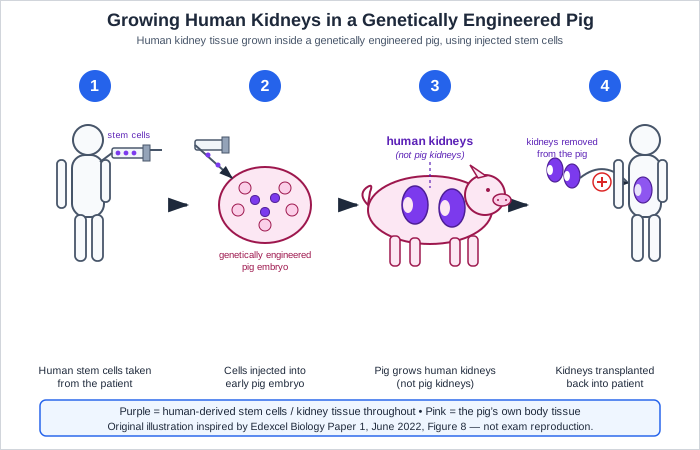
Stem cells can divide repeatedly by mitosis and differentiate into various specialized cell types. This could be used to replace damaged or diseased cells. For example, stem cells could produce dopamine-releasing neurons to treat Parkinson's disease, or insulin-producing beta cells for diabetes, or cardiac muscle cells for heart disease patients. They could potentially be used to grow replacement tissues or even whole organs for transplantation.
Stem cells have two key properties: self-renewal (divide by mitosis repeatedly) and differentiation (become specialized cells). Medical applications: replace specific damaged cells in diseases. For 5 marks: explain BOTH properties, give specific disease examples, explain HOW stem cells help.
List the four stages of mitosis in order and describe what happens to the chromosomes in each stage.
Prophase: chromosomes condense and become visible. Metaphase: chromosomes line up along the equator of the cell. Anaphase: sister chromatids separate and are pulled to opposite poles of the cell by spindle fibers. Telophase: chromosomes uncoil and new nuclear envelopes reform around each set of chromosomes.
The four stages PMAT ensure correct chromosome distribution. Prophase makes chromosomes visible, Metaphase lines them up precisely, Anaphase pulls chromatids apart, Telophase reforms nuclei. Common mistake: mixing up metaphase (aligned) and anaphase (moving apart).
Explain how mitosis contributes to the healing of a cut in the skin.
When skin is cut, damaged cells release chemical signals that trigger nearby healthy cells to start dividing. These cells undergo mitosis to produce new, genetically identical skin cells. The new cells replace the damaged or dead cells, restoring the protective barrier. The process continues until the wound is completely healed and covered with new tissue.
This question tests application of mitosis knowledge to wound healing. The key chain: damage โ chemical signals โ mitosis โ new identical cells โ replacement โ healing complete. New cells must be genetically identical to perform the same protective function as original skin cells.
Explain why it is important that daughter cells produced by mitosis are genetically identical to the parent cell.
It is important because all body cells need the same genetic information to ensure they can perform their specialized functions correctly. When cells are replaced by mitosis, the new cells must have identical DNA to work exactly like the original cells. This maintains tissue organization and structure. Genetic identity keeps the organism's characteristics consistent and prevents abnormal growth or genetic disorders.
Genetic identity is crucial for: same instructions (all cells need same DNA), functional replacement (new cells must work like originals), tissue structure, and organism consistency. If cells had different DNA, tissues would become disorganized and dysfunctional.
Explain how cancer cells differ from normal cells in terms of cell division control.
Normal cells only divide when needed for growth or repair and stop dividing when they receive stop signals. Cancer cells have lost normal cell cycle regulation due to mutations in checkpoint control genes. As a result, cancer cells divide uncontrollably without responding to stop signals. This continuous inappropriate division leads to tumor formation as cells accumulate.
Key difference: regulation. Normal cells divide only when needed and respond to stop signals. Cancer cells have lost checkpoint control (due to mutations) so divide uncontrollably, ignoring signals. Result: tumor formation. Important: it's about CONTROL not speed.
Describe what happens during interphase to prepare a cell for mitosis.
During interphase, the cell grows and increases in size. The DNA replicates to form two identical copies of each chromosome (sister chromatids). The number of organelles such as mitochondria and ribosomes increases so that there are enough for both daughter cells.
Interphase is the longest stage of the cell cycle where the cell prepares for division. The cell grows, DNA replicates during S phase forming sister chromatids, and organelles increase in number. All this preparation ensures each daughter cell has everything it needs.
Explain the difference between a chromosome and a chromatid.
After DNA replication during interphase, each chromosome consists of two identical sister chromatids joined together at the centromere. During anaphase of mitosis, the centromere splits and the chromatids separate. Once separated, each chromatid is called a chromosome.
After DNA replication, each chromosome = 2 sister chromatids joined at centromere. During anaphase they separate - each chromatid then becomes a chromosome. Common mistake: thinking they're completely different structures when chromatids are actually parts of replicated chromosomes.
Explain why mitosis is important for asexual reproduction.
Asexual reproduction produces offspring from a single parent without gametes or fertilization. Mitosis is used because it produces genetically identical daughter cells (clones). This means the offspring are genetically identical to the parent, ensuring that successful characteristics and adaptations are passed on without variation.
Asexual reproduction needs mitosis because: single parent (no gametes/fertilization), mitosis produces identical cells, so offspring are clones of parent. This passes on successful characteristics without variation. Examples include bacteria, strawberry runners, potato tubers.
Using the diagrams, describe the main events that occur during mitosis.
During mitosis, the chromosomes in the cell are first copied (replicated) so each chromosome consists of two identical chromatids. Spindle fibres form and attach to the chromosomes, pulling the chromatids to opposite poles of the cell. The cell then divides to produce two genetically identical daughter cells, each with the same number of chromosomes as the parent cell.
This 3-mark question tests your ability to describe the key events of mitosis in sequence. Three mark points to cover: (1) chromosomes are replicated/copied before the cell divides โ each chromosome becomes two identical sister chromatids joined at the centromere; (2) spindle fibres attach to the centromeres and pull the sister chromatids to opposite poles of the cell; (3) the cell divides to produce two genetically identical daughter cells, each with the same chromosome number as the parent cell. Common mistake: saying chromosomes are 'halved' (that is meiosis) or that four cells are produced (also meiosis). Mitosis always produces exactly two daughter cells.
A bacterial culture starts with 100 cells. If the cells divide by binary fission every 20 minutes, how many cells will there be after 2 hours?
120 minutes รท 20 = 6 divisions. 100 ร 2^6 = 100 ร 64 = 6,400 cells.
More complex because you start with 100 cells not 1. Formula: Final = Starting ร 2^n. Step 1: Time conversion (2h = 120min), Step 2: Divisions (120รท20 = 6), Step 3: Calculate (100ร2^6 = 100ร64 = 6,400). Common mistake: forgetting to multiply by starting number.
State the number of chromosomes in the daughter cells shown at the end of mitosis compared to the parent cell.
The daughter cells produced by mitosis contain the same number of chromosomes as the parent cell. In humans, both the parent cell and the daughter cells contain 46 chromosomes. The daughter cells are genetically identical to the parent cell.
A key rule of mitosis: the chromosome number is CONSERVED. The parent cell starts diploid (two sets of chromosomes) and both daughter cells end up diploid with exactly the same number. In humans, this means each daughter cell has 46 chromosomes โ the same as the parent cell. This happens because DNA replication during interphase copies every chromosome before the cell divides, so there is enough genetic material for two complete cells. Common mistake: thinking mitosis halves the chromosome number โ that is meiosis. Remember: Mitosis Maintains the chromosome number; Meiosis halves it.
A single cell divides by mitosis every 3 hours. How many cells will there be after 15 hours?
15 รท 3 = 5 divisions. 2^5 = 32 cells.
Each mitosis doubles the cell number (exponential growth). Step 1: Calculate divisions = 15รท3 = 5. Step 2: Final cells = 2^5 = 32. Common mistake: using multiplication (5ร2=10) instead of powers. Always show both steps for full marks.
Explain why mitosis is important for growth and repair using the diagram.
Mitosis is important for growth because it produces new cells that are genetically identical to the parent cell, increasing the number of cells in an organism. It is also essential for repair because when cells are damaged or die, mitosis produces identical replacement cells to restore the tissue.
Mitosis produces genetically identical daughter cells โ this is what makes it ideal for both growth and repair. For growth: an organism increases its number of cells by mitosis; the new cells are identical to the original, so they perform the same functions and the organism develops correctly. For repair: when cells are damaged or die (e.g. skin cells after a cut), mitosis replaces them with identical copies that can fulfil exactly the same role as the lost cells, restoring the tissue. Common mistake: saying mitosis is used for sexual reproduction โ sexual reproduction uses meiosis. Only asexual reproduction uses mitosis.
What is mitosis?
Mitosis produces two genetically identical diploid daughter cells. This is what distinguishes it from meiosis (which produces four genetically different haploid cells). Remember: mitosis is for growth, repair, and asexual reproduction where you need identical cells.
Which of the following is NOT a purpose of mitosis?
Gamete production requires meiosis, not mitosis. Gametes must be haploid (half the chromosome number) so that fertilization restores the diploid number. If mitosis were used, the chromosome number would double each generation. The three purposes of mitosis are: growth, repair, and asexual reproduction.
What are the three main stages of the cell cycle?
The cell cycle consists of three main stages: interphase (cell grows, DNA replicates, organelles increase), mitosis (nuclear division into two identical nuclei), and cytokinesis (cytoplasm divides to form two separate cells). Most of the cell cycle time is spent in interphase.
When does DNA replication occur in the cell cycle?
DNA replication happens during the S phase (Synthesis phase) of interphase, which occurs BEFORE mitosis begins. This ensures each daughter cell receives a complete copy of all DNA. By the time mitosis starts, each chromosome consists of two identical sister chromatids joined at the centromere. Common mistake: thinking DNA replicates during mitosis itself.
In which stage of mitosis do chromosomes line up along the cell's equator?
Metaphase is when chromosomes line up in the middle (equator) of the cell. Think 'M' for middle/metaphase. Spindle fibers attach to the centromere of each chromosome. This alignment ensures each daughter cell receives exactly one copy of every chromosome when chromatids separate in anaphase.
What is the function of spindle fibers during mitosis?
Spindle fibers are protein structures that attach to the centromere (center point where sister chromatids join) and contract during anaphase to pull chromatids apart to opposite poles of the cell. Think of them as molecular ropes pulling chromosomes.
Which stage of mitosis is shown in diagram B, where chromosomes are aligned along the middle of the cell?
Metaphase is when chromosomes line up along the equator (middle) of the cell, attached to spindle fibres. This is diagram B. Prophase is when chromosomes condense; anaphase is when sister chromatids are pulled to opposite poles; telophase is when two new nuclei form.
How does cytokinesis differ between plant and animal cells?
Animal cells have flexible cell membranes so they can pinch inward (cleavage furrow) until the cell divides. Plant cells have rigid cellulose cell walls that cannot pinch, so they build a new cell wall (cell plate) down the middle that grows outward from the center until it reaches the edges.
Stem cell research has the potential to revolutionize medicine but raises ethical concerns. Evaluate the use of embryonic stem cells in medical research and treatment, considering both the potential benefits and ethical objections. Reach a conclusion about whether this research should continue.
Embryonic stem cell research offers significant potential benefits. These cells are pluripotent, meaning they can differentiate into any cell type in the body, making them ideal for treating diseases like paralysis, diabetes, and Parkinson's disease where specific cell types are damaged or lost (1). They are more versatile than adult stem cells, which can only produce limited cell types (1). However, there are serious ethical concerns. The process requires destroying human embryos, which many people - particularly those with religious beliefs - consider to be potential human life with moral status (1). This creates a moral dilemma: should we destroy potential life to save existing lives (1)? On the other hand, many of the embryos used come from surplus IVF treatments and would otherwise be destroyed, so the research makes use of embryos that won't develop into babies anyway (1). Furthermore, alternatives are being developed: adult stem cells from bone marrow can treat some conditions, and induced pluripotent stem cells (adult cells reprogrammed to behave like embryonic ones) could provide the benefits without destroying embryos (1). In conclusion, I believe embryonic stem cell research should continue but with strict regulation. The potential to cure devastating diseases justifies the research, especially when surplus IVF embryos are used that would be destroyed regardless.
This is a 6-mark evaluation question requiring a balanced argument and a justified conclusion. You must present BOTH sides: Benefits (cure diseases, pluripotent versatility) and Concerns (destroying embryos, religious objections). Then add nuance: embryos are often surplus from IVF, and alternatives exist. Finally, reach a clear conclusion โ there's no single 'right' answer, but you must justify your position.
"Embryonic stem cells should be used to treat disease and injury, even though embryos are destroyed in the process." Evaluate this statement. [6 marks]
Embryonic stem cells are pluripotent โ they can develop into any cell type in the body. This makes them potentially valuable for treating conditions like Parkinson's disease, spinal cord injuries, Type 1 diabetes, and heart failure by replacing lost or damaged cells. However, obtaining them requires destroying an embryo (usually a blastocyst at 4โ5 days), which raises serious ethical concerns for people who believe life begins at fertilisation or shortly after. This is a genuine moral dilemma: the potential to alleviate suffering in existing people vs destroying a potential human life. Alternatives exist โ adult stem cells (less versatile but no embryo is destroyed) and induced pluripotent stem cells (iPSCs โ adult cells reprogrammed to act like embryonic stem cells). If iPSC technology matures, the ethical cost of embryo destruction may become avoidable. On balance, there is a strong case for limited, regulated use in serious medical conditions while iPSC research develops, but this requires ongoing ethical scrutiny.
OCR B SSI question on stem cells. Full marks require: what embryonic stem cells are and why they are valuable (pluripotency), the medical benefits with named conditions, the ethical objection (destruction of embryo) with recognition that this rests on views about when life begins, alternatives (adult stem cells/iPSCs), and a justified personal judgement that weighs these factors. Students should not assert one side is simply 'right' โ they should show they understand this is a genuine values-based disagreement.
Scientists are developing a technique called therapeutic cloning, where a patient's own cells are used to create stem cells. Explain the advantages of therapeutic cloning over using stem cells from embryos created by other people.
Therapeutic cloning uses the patient's own DNA to create stem cells (1), which means the resulting stem cells are genetically identical to the patient's own cells (1). When these stem cells are differentiated and transplanted back into the patient, the immune system recognizes them as 'self' and doesn't attack them, so there's no immune rejection (1). This means the patient doesn't need to take immunosuppressant drugs for the rest of their life, which have serious side effects and increase infection risk (1). Additionally, therapeutic cloning avoids some of the ethical concerns associated with using embryos created from other people's genetic material (1).
This is a 5-mark higher-tier explanation question. The logic chain: (1) therapeutic cloning uses patient's own DNA, (2) creating genetically identical stem cells, (3) no immune rejection when transplanted, (4) no need for immunosuppressant drugs (which have serious side effects), (5) fewer ethical concerns. Common mistakes: confusing therapeutic cloning (making cells for treatment) with reproductive cloning (making a baby), or not explaining WHY genetic identity prevents rejection. This technique is still experimental but very promising for personalized medicine.
Explain how root hair cells are adapted for their function.
Root hair cells are adapted to absorb water and mineral ions from the soil (1). The long hair-like projection increases the surface area of the cell, allowing more water and minerals to be absorbed (1). The cell wall is very thin, providing a short diffusion distance for water to move in by osmosis (1). The cell contains many mitochondria which provide energy for active transport of mineral ions against the concentration gradient (1).
This is a 4-mark adaptation question testing a common GCSE topic. State the function (absorb water and minerals), then give 3-4 adaptations: (1) long projection = larger surface area, (2) thin cell wall = short diffusion distance for water, (3) mitochondria = energy for active transport. CRITICAL: Water moves by OSMOSIS (passive), but minerals need ACTIVE TRANSPORT (requires energy from mitochondria). This is a common exam mistake - students often say minerals move by diffusion, but they're usually in lower concentration in the soil, so the plant must use energy to pump them in.
Compare how nerve cells and xylem vessels are each adapted for their specific functions. You should refer to at least two adaptations for each cell type.
Nerve cells are adapted for transmitting electrical signals. They have a long axon (nerve fibre) that can be over a meter long, allowing rapid transmission of electrical impulses over long distances from one part of the body to another (1). They also have branched dendrites and many synaptic connections, allowing them to connect with multiple other neurons to form complex signaling networks (1). Xylem vessels are adapted for transporting water up the plant. They have thick cell walls strengthened with lignin, which helps them withstand the pressure of the water column and provides structural support to the plant (1). The cells are dead with no cell contents, and the end walls have broken down to form a continuous hollow tube, allowing water to flow freely from roots to leaves (1).
This is a 4-mark comparison question testing knowledge of specialized cells. You must give TWO adaptations for EACH cell type (nerve and xylem). Nerve cells: (1) long axon for long-distance signal transmission, (2) branched dendrites for connections with multiple neurons. Xylem: (1) lignified walls for strength and pressure resistance, (2) hollow tube (no contents, no end walls) for water flow. Common mistakes: confusing xylem with phloem (xylem = water, phloem = sugars), saying xylem cells are alive (they're dead), or only giving adaptations for one cell type instead of comparing both.
Some people object to the use of embryonic stem cells in medical research. Explain one argument for and one argument against using embryonic stem cells.
One argument FOR using embryonic stem cells is that they could potentially cure serious diseases and conditions such as paralysis, diabetes, or Parkinson's disease by providing replacement cells that the body cannot regenerate naturally (1). Additionally, many of the embryos used come from surplus IVF embryos that would otherwise be destroyed, so the research provides a benefit without creating new embryos specifically for destruction (1). One argument AGAINST is that some people, often for religious or moral reasons, believe that embryos represent potential human life and that destroying them for research is ethically wrong, regardless of the medical benefits (1). Another argument against is that alternative sources such as adult stem cells or induced pluripotent stem cells (adult cells reprogrammed to behave like embryonic ones) could be used instead, avoiding the ethical controversy entirely (1).
This is a 4-mark evaluation question requiring balanced arguments. FOR: (1) potential to cure serious diseases, (2) embryos are surplus from IVF and would be destroyed anyway. AGAINST: (1) moral/religious belief that embryos are potential life and shouldn't be destroyed, (2) alternatives exist (adult stem cells, induced pluripotent stem cells). Common mistakes: giving only one side, not explaining the reasoning behind objections, or claiming embryos are 'fully formed babies' (they're not - they're early-stage cell clusters). This is a classic AO3 question - you must present both sides and show understanding of the ethical complexity.
Explain how sperm cells are adapted for their function.
Sperm cells are adapted to fertilize the egg cell by delivering male DNA (1). They have a long tail (flagellum) which allows them to swim towards the egg through the female reproductive system (1). The midpiece is packed with mitochondria that provide energy for the tail to move (1). The head contains an acrosome - a compartment of enzymes that digest through the egg cell's outer membrane to allow fertilization (1).
This is a classic 3-4 mark adaptation question. Use the pattern: state the function first (fertilize egg), then give 3 adaptations with explanations: (1) long tail for swimming, (2) mitochondria for energy, (3) acrosome for penetrating the egg. Common mistakes: saying 'produces energy' instead of 'transfers energy', forgetting to link each feature to its purpose, or not mentioning what the sperm is swimming towards (the egg). Higher-tier students should know about the streamlined head shape to reduce resistance.
Embryonic stem cells could potentially be used to treat conditions such as paralysis or diabetes. Explain how.
Embryonic stem cells can differentiate into any type of cell in the body (1). Scientists could grow them in a lab and make them differentiate into the specific cell type needed - for example, nerve cells to repair spinal damage in paralysis, or insulin-producing pancreatic cells for diabetes (1). These cells could then be transplanted into the patient to replace the damaged or non-functioning cells and restore normal function (1).
This is a 3-mark application question. Follow the logic: (1) embryonic stem cells can make any cell type, (2) scientists grow them in the lab and make them differentiate into the specific cells needed (nerve cells, insulin-producing cells, etc.), (3) these cells are transplanted into the patient to replace damaged cells. Common mistakes: not explaining that stem cells must be differentiated FIRST before transplant, or saying they 'cure' the disease without explaining the mechanism. The key is REPLACEMENT of damaged cells with healthy functioning cells.
Adult stem cells from bone marrow can be used to treat blood disorders such as leukemia. Explain why adult stem cells from bone marrow are suitable for this treatment.
Bone marrow contains adult stem cells that can differentiate into all the different types of blood cells - red blood cells, white blood cells, and platelets (1). In leukemia treatment, healthy bone marrow stem cells are transplanted to replace the patient's diseased blood cells and restore normal blood cell production (1). Adult stem cells are multipotent (more limited than embryonic), but they can still make all blood cell types, which is exactly what's needed for treating blood disorders (1).
This question tests understanding of adult stem cells and their medical use. Key points: (1) Bone marrow adult stem cells can differentiate into all types of blood cells (red, white, platelets), (2) they replace diseased cells in leukemia, (3) even though adult stem cells are more limited than embryonic (multipotent not pluripotent), they can still make all blood cell types, which is what's needed. Common mistake: saying bone marrow stem cells can make ANY cell type - they can't, they're specialized for blood. This is why they're safer and less controversial than embryonic stem cells.
Describe the role of meristem tissue in plants and explain how it can be used to produce new plants.
Meristems are regions of undifferentiated plant stem cells found at the tips of roots and shoots (1). These meristem cells can divide and differentiate into any type of plant cell throughout the plant's entire life, allowing continuous growth (1). Gardeners can take cuttings containing meristem tissue, and these cells will divide and differentiate into all the cell types needed to grow a complete new plant - this is a form of cloning (1).
This 3-mark question covers plant stem cells. Mark 1: Meristems are at root and shoot tips. Mark 2: Meristem cells can differentiate into any plant cell type throughout the plant's life (unlike animal cells which mostly differentiate early). Mark 3: This allows plant cloning through cuttings - the meristem tissue grows into a complete new plant with roots, stems, leaves, etc. This is why you can take a cutting from a plant and grow a genetically identical copy. Plants are much easier to clone than animals because of persistent meristems.
A culture of stem cells contains 800 undifferentiated cells. After 3 days, 600 cells have differentiated into nerve cells and 150 into muscle cells. How many cells remain undifferentiated? Show your working.
Total differentiated cells = 600 nerve cells + 150 muscle cells = 750 (1). Undifferentiated cells remaining = 800 original - 750 differentiated = 50 (1). Answer: 50 cells remain undifferentiated (1).
This is a multi-step calculation. Step 1: Add up the differentiated cells (600 + 150 = 750). Step 2: Subtract from the original number (800 - 750 = 50). Always show your working in calculation questions - you can get partial marks even if your final answer is wrong. Common mistake: only subtracting one of the differentiated cell types instead of both. The question tests understanding that differentiated cells were originally undifferentiated stem cells.
What is meant by cell differentiation?
Cell differentiation is the process where an undifferentiated stem cell becomes a specialized cell (1). The cell develops specific structures and adaptations that allow it to perform a particular function, such as a nerve cell developing an axon to transmit electrical signals (1).
This is a 2-mark definition question. Mark 1 is for explaining that an undifferentiated/unspecialized cell becomes specialized. Mark 2 is for linking this to structure and function - the cell develops specific features to do a specific job. A good answer format: 'Cell differentiation is when an undifferentiated cell becomes specialized (1), developing a particular structure to perform a specific function (1).' Don't just say 'a cell changes' - you must specify it's going from UNspecialized to specialized.
Give two differences between embryonic stem cells and adult stem cells.
Embryonic stem cells can differentiate into any type of cell in the body, but adult stem cells can only differentiate into certain cell types (1). Embryonic stem cells are found in embryos, whereas adult stem cells are found in specific tissues such as bone marrow or skin (1).
This is a 2-mark comparison question. Mark 1: Embryonic stem cells can make ANY cell type (pluripotent), but adult stem cells can only make certain cell types (multipotent) - for example, bone marrow stem cells can make blood cells but not nerve cells. Mark 2: Embryonic stem cells come from embryos (very early stage of development), adult stem cells come from specific tissues in mature bodies. Other valid points: embryonic stem cells divide faster, or there are ethical concerns with embryonic but not adult stem cells.
A sample of 500 blood cells contains 240 red blood cells, 255 white blood cells, and 5 stem cells. Calculate the percentage of cells that are stem cells.
Percentage of stem cells = (number of stem cells / total cells) ร 100 (1). (5 / 500) ร 100 = 1% (1).
This is a straightforward percentage calculation. Formula: (part / whole) ร 100. Here: (5 stem cells / 500 total cells) ร 100 = 1%. Common mistake: forgetting to multiply by 100 (giving 0.01 instead of 1%). In reality, the percentage of stem cells in blood is very low - most blood cells are specialized (red and white blood cells). Stem cells are mainly in the bone marrow, not circulating in the blood.
What is a stem cell?
Stem cells are undifferentiated cells that have NOT yet specialized. They can divide by mitosis to produce more stem cells, and they can differentiate (become specialized) into many different cell types. This makes them incredibly useful for growth, repair, and medical treatments. Option B is wrong because stem cells aren't specialized - root hair cells are specialized. Option C reverses the definition - nerve cells are already differentiated, so they're NOT stem cells. Option D describes bacteria, which are completely different from stem cells.
Which type of stem cell can differentiate into ANY type of cell in the body?
Embryonic stem cells are pluripotent, meaning they can differentiate into ANY type of cell found in the human body - nerve cells, muscle cells, blood cells, skin cells, etc. This is because they come from very early embryos before specialization has begun. Adult stem cells (A) are more limited - bone marrow stem cells can only make blood cells, not nerve or muscle cells. Plant meristem cells (C) can make plant cells, but the question is about animal/human cells. Muscle cells (D) are already specialized and cannot change.
What is cell differentiation?
Differentiation is the process by which an unspecialized stem cell becomes a specialized cell with a specific structure adapted to a particular function. For example, a stem cell might differentiate into a nerve cell (with long axon for transmitting signals) or a red blood cell (with no nucleus to carry more oxygen). Mitosis (A) is just cell division - it produces identical copies, not specialized cells. Cell migration (B) is movement, not specialization. Cell death and replacement (D) is part of the cell cycle but not differentiation.
Where are stem cells found in plants?
Plant stem cells are found in regions called meristems. The main meristems are at the tips of roots and shoots. Meristem cells can divide and differentiate throughout the plant's entire life, which is why plants can keep growing taller and producing new branches even when fully mature. This is different from animals, where most cells differentiate early and stay specialized. Gardeners use this property when taking cuttings - meristem tissue in the cutting can differentiate into all the cell types needed to grow a complete new plant.
When does differentiation occur in animal cells compared to plant cells?
In animals, most cells differentiate early in development (as an embryo). Once an animal cell becomes specialized, it usually stays that way - a nerve cell stays a nerve cell. However, many plant cells retain the ability to differentiate throughout the plant's life because of meristem tissue at root tips and shoot tips. This means plants can keep growing and producing new specialized cells (like xylem or phloem) even when fully mature. This is why you can take a cutting from a plant and grow a whole new plant - the meristem cells can differentiate into all the needed cell types.
Which adaptation is specific to nerve cells (neurons)?
Nerve cells have a long axon (nerve fibre) that can be over 1 meter long. This allows them to carry electrical impulses rapidly over long distances - for example, from your spinal cord all the way down to your toes. Many nerve cells also have a myelin sheath (fatty insulation) that speeds up transmission, and branched dendrites to connect with other neurons. Muscle cells (A) have many mitochondria, not nerve cells. Red blood cells (C) have no nucleus, but nerve cells DO have a nucleus in the cell body. Root hair cells (D) are plant cells with a long projection, but nerve cells have an axon for electrical signaling.
Red blood cells have no nucleus. Which statement best explains why this is an advantage?
The lack of a nucleus in mature red blood cells creates extra space inside the cell to pack in more haemoglobin molecules. Haemoglobin is the protein that binds to oxygen, so more haemoglobin means the cell can carry more oxygen - which is the red blood cell's main function. This is a perfect example of how structure relates to function: losing the nucleus makes the cell better at its job. Red blood cells are produced in bone marrow with a nucleus, but they expel it before entering the bloodstream. This means they can't divide or make new proteins, but they don't need to - they only survive about 120 days.
If a DNA molecule has 1000 nucleotides, how many base pairs are there?
What is the term for the genetic code that specifies the sequence of amino acids in proteins?
A codon is a sequence of three nucleotides in mRNA. Each codon codes for a specific amino acid during protein synthesis. The genetic code is the set of rules linking codons to amino acids. During translation, ribosomes read the mRNA codons and assemble the corresponding amino acids into a polypeptide chain. This flow of information from DNA to RNA to protein is called the central dogma.
A codon is a sequence of three nucleotides that corresponds to one of the twenty amino acids during protein synthesis.
A DNA molecule has a sequence of 150 nucleotides. If each base pair is 3.4 nm apart, what is the total length of the DNA molecule?
What is the term for the sequence of three nucleotides in DNA that codes for a specific amino acid?
The term is a codon, also called a triplet. A codon is a sequence of three nucleotides that codes for a specific amino acid. There are 64 possible codons (4 bases arranged in groups of 3). Most amino acids are coded for by more than one codon. The sequence of codons determines the sequence of amino acids in the resulting protein.
A codon is a sequence of three nucleotides in DNA/mRNA that codes for a specific amino acid.
If a DNA molecule has 1000 nucleotides, how many bases are present?
Each nucleotide contains one nitrogenous base. Therefore 1000 nucleotides = 1000 bases.
A DNA molecule has 2000 nucleotides. If each nucleotide contains approximately 300 base pairs, how many base pairs are in the entire DNA molecule?
What are the four nitrogenous bases found in DNA?
The four nitrogenous bases found in DNA are adenine (A), thymine (T), cytosine (C), and guanine (G). Adenine pairs with thymine, and cytosine pairs with guanine via complementary base pairing.
The four nitrogenous bases found in DNA are Adenine (A), Thymine (T), Cytosine (C), and Guanine (G).
What is the term for the genetic code that specifies the sequence of amino acids in a protein?
The genetic code is the set of rules that specifies which amino acid each codon codes for. A codon is a triplet of three nucleotides in mRNA. Each codon codes for a specific amino acid, and the sequence of codons determines the sequence of amino acids in a protein.
The genetic code specifies the sequence of amino acids in a protein via codons โ triplets of nucleotides that each code for a specific amino acid.
What is the order of bases in a DNA molecule that determines the genetic code?
The sequence (order) of bases in a DNA molecule determines the genetic code. The base pairing rules are that adenine (A) always pairs with thymine (T), and guanine (G) always pairs with cytosine (C). This specific base sequence is read in groups of three (codons) to specify each amino acid in a protein.
The order of bases in a DNA molecule that determines the genetic code is specified by the base pairing rules: A-T and G-C.
If a DNA molecule has 1000 nucleotides, how many bases are there in total?
There are 1000 bases in total. Each nucleotide contains exactly one nitrogenous base, so the total number of bases equals the total number of nucleotides. Each nucleotide is made of a phosphate group, a deoxyribose sugar, and one nitrogenous base.
Each nucleotide contains exactly one nitrogenous base. Therefore 1000 nucleotides contain 1000 bases in total.
What is the process by which genetic information in DNA is used to synthesize a protein?
Translation is the process by which genetic information carried by mRNA is used to synthesize a protein. Translation occurs at ribosomes in the cytoplasm. Amino acids are joined together in the order specified by the mRNA codons to form a polypeptide chain.
Translation is the process by which genetic information in mRNA is used to synthesize a protein at ribosomes.
Which of the following base pairing rules is correct for DNA?
In DNA, adenine (A) always pairs with thymine (T), and cytosine (C) always pairs with guanine (G).
What is the shape of a DNA molecule?
DNA molecules are typically double helices due to their specific structural requirements for stability and function. The double-helix structure allows for efficient storage and transmission of genetic information.
What is the purpose of transcription in a cell?
Transcription is the process by which a DNA sequence is used as a template to synthesize a complementary RNA molecule.
Which of the following base pairing rules is correct?
Base pairing rules state that adenine (A) always pairs with thymine (T), and cytosine (C) always pairs with guanine (G).
What is the sugar molecule component of a nucleotide in DNA?
In DNA, each nucleotide consists of a phosphate group, a nitrogenous base, and a sugar molecule. The specific type of sugar in DNA is deoxyribose.
Explain the concept of genetic variation and its relationship to adaptation.
Genetic variation refers to differences in the DNA sequences or alleles between individuals in a population. These differences arise through mutations and sexual reproduction. Adaptation refers to a feature that makes an organism better suited to its environment. Individuals with advantageous genetic variations are more likely to survive and reproduce successfully in their environment through the process of natural selection. They pass their beneficial alleles to their offspring. Over many generations, the frequency of advantageous alleles increases in the population. In this way, genetic variation provides the raw material on which natural selection acts, driving adaptation.
Genetic variation provides the raw material for natural selection. Individuals with advantageous variations are more likely to survive and reproduce, passing beneficial traits to offspring.
Cystic fibrosis is caused by a recessive allele (f). A couple are both carriers of cystic fibrosis. Use a Punnett square to determine the probability that their child will have cystic fibrosis. Explain the genotypes and phenotypes of all possible offspring.
Both parents are carriers, so their genotype is Ff (heterozygous). In the Punnett square, the possible offspring genotypes are: FF, Ff, Ff, and ff. The ratio is 1 FF : 2 Ff : 1 ff. FF is homozygous dominant and does not have cystic fibrosis. Ff is heterozygous โ a carrier who does not show symptoms but carries the recessive allele. Only ff is homozygous recessive and will have cystic fibrosis. The probability of the child having cystic fibrosis is 1 in 4, which is 25%.
When both parents are carriers of a recessive disorder like cystic fibrosis, each has the genotype Ff โ one dominant allele (F, normal) and one recessive allele (f, cystic fibrosis). A Punnett square crossing Ff x Ff produces four possible combinations: FF (homozygous dominant, unaffected), Ff (heterozygous, carrier but unaffected), Ff (carrier), and ff (homozygous recessive, has cystic fibrosis). This gives a 1:2:1 genotypic ratio. Only the ff genotype shows the disease because the recessive allele must be present in two copies for the condition to appear. The probability is therefore 1 in 4 (25%) for an affected child, 2 in 4 (50%) for a carrier, and 1 in 4 (25%) for a completely unaffected child. A common mistake is confusing carriers (Ff) with affected individuals โ carriers have one copy of the allele but show no symptoms.
Sickle cell disease is caused by a recessive allele. In parts of Africa where malaria is common, the frequency of the sickle cell allele is much higher than in other parts of the world. Explain why carriers of sickle cell trait have an advantage in malaria regions and how natural selection maintains the sickle cell allele at a high frequency in these populations.
Carriers of sickle cell trait are heterozygous โ they have one normal allele and one sickle cell allele. These carriers do not have sickle cell disease but their red blood cells are slightly altered, which makes it harder for the malaria parasite to survive inside their cells. In malaria regions, carriers have a survival advantage because they are protected against severe malaria while not suffering from sickle cell disease. This is called heterozygote advantage. Individuals who are homozygous normal have no protection against malaria and may die from the disease. Individuals who are homozygous recessive have full sickle cell disease. Because carriers survive better in malaria regions, they are more likely to reproduce and pass on the sickle cell allele. This means natural selection maintains a higher frequency of the sickle cell allele in these populations than would otherwise be expected.
Sickle cell trait is a classic example of heterozygote advantage, also called balanced polymorphism. In regions with malaria, three genotypes have different fitness: homozygous normal (HbA HbA) individuals are vulnerable to malaria and may die from it; homozygous sickle cell (HbS HbS) individuals have severe sickle cell disease; but heterozygous carriers (HbA HbS) get the best of both worlds โ their slightly altered red blood cells make it difficult for the malaria parasite (Plasmodium) to survive inside them, providing malaria resistance, while they do not suffer from sickle cell disease. Because carriers have the highest survival rate in malaria regions, they reproduce more and pass on the sickle cell allele. Natural selection thus maintains the allele at a higher frequency than would be expected if only disease disadvantage were considered. This explains why sickle cell allele frequency is high in malaria-endemic Africa but low in malaria-free regions.
A plant has a genotype of BB and is crossed with a plant that has the genotype Bb. What proportion of the offspring will have the dominant phenotype?
What is the purpose of a Punnett square in genetic inheritance?
A Punnett square combines the alleles from each parent to show all possible offspring genotypes and phenotypes. It allows us to calculate the probability or ratio of different traits being expressed in the offspring.
A Punnett square shows possible offspring from two parents by combining the alleles of each parent. It helps predict the probability of certain traits being expressed in offspring.
Explain the concept of incomplete dominance.
Incomplete dominance occurs when neither allele is fully dominant over the other. As a result, the heterozygous individual displays a blended or intermediate phenotype that is a mix of the two homozygous phenotypes. For example, a red-flowered plant (RR) crossed with a white-flowered plant (WW) produces pink-flowered offspring (RW) showing incomplete dominance.
Incomplete dominance occurs when two alleles do not exhibit a clear dominant-recessive relationship, resulting in a blend of the two traits.
Explain the term 'homozygous' in relation to genetic inheritance.
Homozygous means having two identical alleles for a particular gene. A homozygous dominant individual has two dominant alleles (e.g., BB), and a homozygous recessive individual has two recessive alleles (e.g., bb). This is different from heterozygous, where an individual has two different alleles (e.g., Bb).
Homozygous refers to an individual having two identical alleles for a particular gene, either both dominant (BB) or both recessive (bb).
What is the term for a random change in the frequency of alleles in a population?
Genetic drift is a random change in the frequency of alleles in a population. Unlike natural selection, it is not driven by environmental pressure but by chance events.
Genetic drift is a random change in the frequency of alleles in a population due to chance events.
What is the term for an allele that is always expressed when present?
A dominant allele is a version of a gene that is always expressed in the phenotype (observable characteristics) when it is present in an organism's genotype, even if only one copy is inherited. This contrasts with recessive alleles, which are only expressed when two copies are present. In genetic notation, dominant alleles are conventionally represented using capital letters (such as B for a dominant brown eye allele), while recessive alleles use lowercase letters (such as b for a recessive blue eye allele). For example, if an individual inherits a dominant allele for brown eyes (B) from one parent and a recessive allele for blue eyes (b) from the other parent, their genotype would be Bb (heterozygous), but their phenotype would show brown eyes because the dominant B allele masks the expression of the recessive b allele. This principle was first discovered by Gregor Mendel in his pea plant experiments, where he observed that certain traits like tall plant height consistently dominated over alternatives like short plant height. Understanding dominant alleles is crucial for predicting inheritance patterns and explaining why certain characteristics appear more frequently in populations than others, as only one dominant allele is needed for expression rather than two copies as required for recessive traits.
What is the term for an allele that only shows up when there's no dominant allele?
A recessive allele is only expressed when there is no dominant allele present (homozygous recessive).
What is the term for an organism that has two identical alleles for a particular gene?
An organism with two identical alleles for a particular gene is called homozygous. The term 'homozygous' comes from Greek roots: 'homo' meaning 'same' and 'zygous' referring to 'paired'. This genetic condition occurs when an individual inherits the same version of a gene from both parents. There are two types of homozygous genotypes: homozygous dominant (such as BB, where both alleles are dominant) and homozygous recessive (such as bb, where both alleles are recessive). Being homozygous has important implications for inheritance and breeding. For example, a homozygous organism will always pass the same allele to all of its offspring, making it a 'true-breeding' individual for that trait. This predictability was crucial to Mendel's experiments with pea plants. In contrast, heterozygous organisms (with two different alleles, like Bb) can pass either allele to offspring, creating more variation in the next generation. Homozygosity can be advantageous when it involves beneficial alleles, but it can also be problematic if it involves harmful recessive alleles, as both copies of a deleterious allele will be expressed, potentially causing genetic disorders such as cystic fibrosis or sickle cell anemia when both parents are carriers.
What is the term for a trait that only shows up when there's no dominant allele?
A recessive phenotype only appears when an organism has two recessive alleles (homozygous recessive).
What is the term for a genotype that has two different alleles for a particular gene?
A genotype with two different alleles for a particular gene is called heterozygous, represented in notation such as Bb where one allele is dominant (B) and one is recessive (b). The term 'heterozygous' derives from Greek: 'hetero' meaning 'different' and 'zygous' meaning 'paired', perfectly describing the condition of having non-identical alleles. Heterozygosity is extremely common in nature and plays a crucial role in maintaining genetic variation within populations. When an organism is heterozygous for a trait, it typically displays the phenotype associated with the dominant allele while carrying the recessive allele hidden in its genotype. For example, a person with genotype Bb for eye color might have brown eyes (dominant B) but still carry the allele for blue eyes (recessive b) that could be passed to offspring. This 'carrier' status is particularly important in medical genetics because individuals heterozygous for certain recessive genetic disorders (like cystic fibrosis or sickle cell disease) don't show symptoms themselves but can pass the disorder allele to their children. Heterozygous organisms also produce gametes carrying different alleles (50% with B, 50% with b in this example), creating genetic diversity in offspring and contributing to evolution through natural selection.
What is the term for a trait that is always expressed, regardless of the genotype?
A dominant phenotype is the observable characteristic that is always expressed in an organism when at least one dominant allele is present in the genotype. This means that both homozygous dominant individuals (such as BB) and heterozygous individuals (such as Bb) will display the same dominant phenotype, even though they have different genotypes. The dominant phenotype 'masks' or covers up the recessive phenotype whenever they occur together. For example, in human genetics, the allele for brown eyes is dominant over the allele for blue eyes, so anyone with at least one brown eye allele (whether BB or Bb) will have brown eyes as their phenotype. This is why some traits appear more commonly in populations - they only require one copy of the allele to be visible. The concept of dominance was first systematically described by Gregor Mendel through his experiments with pea plants, where he observed that traits like purple flower color dominated over white flower color. It's important to understand that 'dominant' doesn't mean 'better' or 'more common' in the population - it simply describes the relationship between alleles at the molecular level, where the dominant allele produces a functional protein that determines the phenotype even in the presence of a non-functional or different recessive allele.
What is the term for an organism that has two different alleles for a particular gene, one of which is dominant?
An organism with two different alleles for the same gene is termed heterozygous, a fundamental concept in genetics that describes genetic variation at the individual level. The prefix 'hetero-' means different, while '-zygous' refers to the pairing of alleles on homologous chromosomes. When an organism is heterozygous for a particular gene (for instance, having genotype Bb), it has inherited different versions of that gene from each parent - one dominant allele from one parent and one recessive allele from the other. This genetic state has several important implications. First, the organism's phenotype will typically reflect the dominant allele while the recessive allele remains unexpressed but present in the genotype. Second, during gamete formation through meiosis, the heterozygous organism will produce two types of gametes in equal proportions - 50% carrying the dominant allele and 50% carrying the recessive allele. This segregation of alleles is the basis of Mendel's First Law. Third, heterozygous individuals can act as carriers of recessive genetic conditions, appearing healthy themselves but capable of passing deleterious alleles to offspring. Heterozygosity is generally advantageous for populations as it maintains genetic diversity, provides raw material for natural selection, and in some cases confers heterozygote advantage where the heterozygous genotype is actually fitter than either homozygous form, as seen in sickle cell trait providing malaria resistance.
What is the term for an organism that has two identical recessive alleles for a particular gene?
An organism with two identical recessive alleles is called homozygous recessive.
What is the term for a trait that only shows up when an individual has two copies of the recessive allele?
A recessive phenotype only appears when an individual has two copies of the recessive allele (homozygous recessive).
What is the term for an individual that has two copies of the dominant allele?
An individual with two copies of the dominant allele is called homozygous dominant (e.g., BB).
What is the term for an individual that has two copies of the recessive allele?
An individual with two copies of the recessive allele is called homozygous recessive (e.g., bb).
What trait is expressed when an individual has one copy of the dominant allele and one copy of the recessive allele?
When an individual has one dominant and one recessive allele (heterozygous), the dominant phenotype is expressed.
What trait is not expressed when an individual has one copy of the dominant allele and one copy of the recessive allele?
In heterozygous individuals, the recessive phenotype is not expressed because the dominant allele masks it.
What is the term for a random change in the frequency of an allele in a population?
Genetic drift is the term for a random change in the frequency of an allele in a population due to chance events.
Genetic drift is a random change in the frequency of an allele in a population due to chance events.
What genetic condition could cause an individual to have both blue and brown eyes?
Heterochromia is a genetic condition that can cause an individual to have two differently coloured eyes or patches of different colour within one eye.
Heterochromia occurs when differences in melanin production in the iris result in patches of different colors.
What is the term for a dominant allele?
A dominant allele will always be expressed if an individual has one copy of it.
What is the genotype of an individual with brown eyes?
Brown eyes can result from either BB (homozygous dominant) or Bb (heterozygous) genotypes because brown is dominant over blue.
A plant has a genotype of Bb. What is the probability that it will pass on the dominant allele to its offspring?
A Bb plant can pass on B or b with equal probability, so 50% chance of passing the dominant allele.
Evaluate the advantages and disadvantages of using vaccination programmes compared to improving sanitation and hygiene to reduce the spread of infectious diseases in developing countries.
Vaccination programmes have the advantage of providing specific immunity against serious diseases like measles and polio, and can create herd immunity when enough people are vaccinated, protecting those who cannot be vaccinated. They can be implemented relatively quickly through mass immunisation campaigns. However, vaccinations only protect against specific pathogens, require cold storage which can be challenging in developing countries, and need repeated doses for some diseases. Improved sanitation and hygiene, such as clean water supplies and sewage treatment, prevents transmission of multiple diseases simultaneously including cholera, dysentery, and other waterborne infections. This represents a long-term sustainable solution benefiting entire communities. However, sanitation infrastructure is expensive to build, takes years to implement fully, and requires ongoing maintenance and education to be effective. In conclusion, both approaches are valuable - vaccination programmes offer rapid protection against specific high-priority diseases, while sanitation improvements provide broader, long-term disease prevention. An integrated approach using both strategies is most effective.
This is an evaluation question requiring balanced arguments. Strong answers will discuss specific advantages and disadvantages of BOTH approaches, use scientific terminology correctly, provide examples of diseases each approach prevents, and reach a justified conclusion. The best answers recognize that the choice depends on context (resources, specific disease threats, infrastructure) and that combining both strategies is most effective. Six marks are available so aim for at least 6 distinct scientific points with explanations.
Compare and contrast bacteria and viruses as pathogens. Your answer should include their structure, reproduction, and how they can be treated.
Bacteria are prokaryotic cells with a cell wall and can reproduce independently by binary fission, whereas viruses are not cells - they consist only of genetic material (DNA or RNA) inside a protein coat and must infect host cells to reproduce by hijacking the host's machinery. Bacteria are much larger than viruses. Bacterial infections can be treated with antibiotics which target bacterial cell structures, but antibiotics cannot treat viral infections because viruses lack these structures. Viral infections may be treated with antiviral drugs or prevented through vaccination.
This question requires a detailed comparison highlighting key differences. Bacteria are living cells (though prokaryotic), typically 1-10 micrometers in size, with cell walls, cytoplasm, and ribosomes. They reproduce every 20 minutes by binary fission. Viruses are 20-300 nanometers (much smaller), non-living outside a host, and reproduce by inserting genetic material into host cells. Antibiotics work by targeting bacterial cell walls, ribosomes, or DNA replication - structures viruses lack. Both can cause serious diseases but require different treatment approaches.
HIV is a virus that attacks white blood cells. Explain how HIV is transmitted and why it leads to illness.
HIV is transmitted through bodily fluids such as blood and during sexual contact or by sharing needles. The virus infects and destroys white blood cells, which weakens the immune system. This makes the person unable to fight off other infections effectively, leading to opportunistic infections and eventually AIDS if left untreated.
HIV (Human Immunodeficiency Virus) specifically targets white blood cells that coordinate immune responses. As these cells are destroyed, the immune system becomes progressively weaker. Without treatment, HIV develops into AIDS (Acquired Immune Deficiency Syndrome), where the immune system is so damaged that normally harmless infections become life-threatening. Modern antiretroviral drugs can suppress HIV replication and prevent progression to AIDS.
A student tested three antibiotics (A, B, and C) on a bacterial culture. The clear zones had diameters of 12 mm, 20 mm, and 8 mm respectively. Which antibiotic was most effective and explain your reasoning.
Antibiotic B was most effective because it produced the largest clear zone with a 20 mm diameter. A larger clear zone indicates that more bacteria were killed, as the antibiotic diffused further through the agar and inhibited bacterial growth over a larger area.
In antibiotic testing, the clear zone (zone of inhibition) is the area around the antibiotic disc where bacteria cannot grow. The antibiotic diffuses out from the disc into the agar, killing bacteria as it spreads. The more effective the antibiotic, the further it can diffuse while still maintaining a high enough concentration to kill bacteria, creating a larger clear zone. Antibiotic B with 20 mm diameter is most effective, followed by A (12 mm), then C (8 mm).
Rose black spot is a fungal disease that affects rose plants. Explain how this disease spreads between plants and describe its effects on the plant.
Rose black spot spreads when fungal spores are carried by water, rain, or wind from infected to healthy plants. The disease causes purple or black spots to appear on leaves, which then turn yellow and drop off. This reduces the leaf area available for photosynthesis, weakening the plant and reducing its growth.
Rose black spot is caused by a fungus that thrives in warm, wet conditions. Spores germinate on leaf surfaces and penetrate the tissue, causing dark lesions. As the disease progresses, infected leaves cannot photosynthesize efficiently due to damaged chloroplasts and eventually fall off (defoliation). This reduces the plant's ability to make glucose, leading to poor growth and increased susceptibility to other diseases. Treatment includes removing infected leaves and applying fungicides.
Explain why viruses need to infect host cells in order to reproduce.
Viruses are not true cells and lack cellular structures like ribosomes and enzymes. They cannot carry out metabolic processes on their own. Therefore, they must infect host cells and hijack the host cell's machinery, including ribosomes, to replicate their genetic material and produce viral proteins.
Viruses consist only of genetic material (DNA or RNA) surrounded by a protein coat. Unlike bacteria, they have no cytoplasm, ribosomes, or metabolic enzymes. To reproduce, they must enter a host cell and use the host's ribosomes to translate viral genetic material into proteins, and use the host's enzymes to replicate viral DNA/RNA. This is why viruses are considered non-living outside a host.
Salmonella is a bacterium that causes food poisoning. Suggest three ways to prevent the spread of Salmonella infection.
Three ways to prevent Salmonella spread are: cook food thoroughly to kill bacteria, wash hands before preparing food and after handling raw meat, and refrigerate food properly to prevent bacterial growth.
Salmonella bacteria in food can be controlled through proper food hygiene. Cooking food to high temperatures (above 70ยฐC) kills bacteria. Hand washing removes bacteria before they contaminate food. Refrigeration slows bacterial growth. Separating raw and cooked foods prevents cross-contamination.
Explain how mosquitoes act as vectors in transmitting malaria.
Mosquitoes act as vectors by carrying the Plasmodium protist that causes malaria. When a mosquito feeds on an infected person's blood, it picks up the pathogen. When the same mosquito later bites an uninfected person, it transfers the pathogen into their bloodstream, causing infection.
A vector is an organism that carries and transmits a pathogen from one host to another without being affected by the disease itself. Female Anopheles mosquitoes transmit the malaria protist (Plasmodium) when they feed on blood. The protist develops inside the mosquito and is passed on during subsequent blood meals. This is why controlling mosquito populations (using nets, insecticides, removing standing water) helps prevent malaria.
A community wants to reduce the spread of infectious diseases. Suggest three different methods they could use.
Three methods to reduce disease spread are: vaccination programmes to build immunity against specific diseases, improved hygiene and sanitation including handwashing and clean water supplies, and vector control such as using mosquito nets and insecticides to prevent vector-transmitted diseases like malaria.
Communities can use multiple approaches to reduce infectious disease. Vaccination creates herd immunity when enough people are immune. Good hygiene practices (handwashing, food safety) prevent direct transmission and contamination. Sanitation systems prevent waterborne diseases. Vector control (nets, insecticides, removing mosquito breeding sites) reduces diseases like malaria. Isolating infected individuals prevents further spread.
When culturing bacteria, scientists use aseptic technique. Describe three steps used in aseptic technique and explain why each is important.
Three aseptic technique steps are: sterilise the inoculating loop by flaming it to kill any unwanted microorganisms, work near a Bunsen flame to create an upward air current that prevents airborne contamination, and seal the petri dish with tape and only open it briefly to prevent contamination from the air.
Aseptic technique prevents contamination of bacterial cultures with unwanted microorganisms. Sterilising equipment (flaming loops, autoclaving dishes) kills existing microbes. Working near a Bunsen flame creates convection currents that keep airborne microbes away. Sealing dishes and minimizing opening time prevents environmental contamination. This ensures the culture contains only the intended bacteria, making results valid for testing antibiotics or identifying bacteria.
A student wants to culture bacteria on agar plates in a school laboratory. Describe how the student should use aseptic technique to safely culture the bacteria and prevent contamination.
The student should sterilise the inoculation loop by holding it in a Bunsen burner flame until it glows red hot, allowing it to cool before use, so that any bacteria on the loop are killed and cannot contaminate the culture. The growth medium and agar plates should be autoclaved beforehand to kill any bacteria already present. The petri dish lid should be kept almost closed during inoculation and sealed with tape after inoculation to minimise the time the agar is exposed to air and to prevent airborne contaminants from entering. The plates should be incubated at no more than 25ยฐC to prevent the growth of human pathogens, since pathogens grow faster at body temperature.
Aseptic technique is a set of procedures that prevent unwanted microorganisms from contaminating a culture. The three key steps are: (1) sterilising equipment โ flaming the inoculation loop kills bacteria on it before you introduce it to the agar; (2) minimising exposure โ keeping the petri dish lid nearly closed and sealing the dish after inoculation stops airborne bacteria from falling onto the agar; (3) safe incubation temperature โ schools must use โค25ยฐC because human pathogens thrive at body temperature (37ยฐC). A common mistake is describing general hygiene (washing hands, wearing gloves) rather than these specific aseptic technique steps.
Explain how lifestyle, genetic and environmental factors can each contribute to the development of a non-communicable disease such as Type 2 diabetes. [3 marks]
Lifestyle factors such as a poor diet high in refined carbohydrates and lack of physical exercise can lead to obesity, which increases the risk of developing Type 2 diabetes. Genetic factors โ including inherited alleles โ mean some individuals have a higher susceptibility to the disease even if their lifestyle is healthy. Environmental factors such as low socioeconomic status, chronic stress, or exposure to pollution may also raise risk by affecting diet choices and physiological stress responses.
Non-communicable diseases like Type 2 diabetes have multiple interacting causes. Lifestyle factors (diet, exercise, weight) are the most modifiable. Genetic susceptibility means some people are at higher risk even with a healthy lifestyle. Environmental factors like poverty or chronic stress can compound both โ affecting food access and physiological stress hormone levels. OCR B questions often ask students to address all three categories together.
Describe how an antibody-based test, such as a lateral flow test, can be used to identify whether a person is infected with a specific pathogen. [3 marks]
The lateral flow test uses antibodies that are complementary and specific to antigens on the pathogen's surface. A sample (e.g. saliva or blood) is applied to the strip, where labelled antibodies bind to any pathogen antigens present. The antigen-antibody complexes then travel along the strip and bind to fixed antibodies at the test line, producing a coloured band that indicates a positive result. A control line confirms the test has worked correctly.
Lateral flow tests exploit antibody-antigen specificity. Each antibody has a binding site complementary to one specific antigen shape. In a positive test: sample antigens bind labelled antibodies โ complex travels to test zone โ fixed antibodies capture the complex โ coloured label concentrated at the test line = positive result. The control line uses a different antibody that always binds, confirming the test worked even if the result is negative.
A student is investigating the effectiveness of an antibiotic. They measure the clear zone around an antibiotic disc and find it has a diameter of 16 mm. Calculate the area of the clear zone in mmยฒ. Use ฯ = 3.14
To find the area of a circle, first calculate the radius by dividing the diameter by 2: r = 16 รท 2 = 8 mm. Then use the formula Area = ฯ rยฒ. Substituting values: Area = 3.14 ร 8ยฒ = 3.14 ร 64 = 200.96 mmยฒ. The larger the clear zone, the more effective the antibiotic is at killing bacteria.
State two features of bacterial cells.
Bacterial cells have a cell wall. They contain circular DNA that is not enclosed in a nucleus โ bacteria have no true nucleus.
Bacteria are prokaryotic cells with distinct features. They have a cell wall made of peptidoglycan, circular DNA floating freely in the cytoplasm, ribosomes for protein synthesis, and may have plasmids or flagella. Unlike eukaryotic cells, they lack a true nucleus.
Name two different ways that pathogens can be transmitted from one person to another.
Pathogens can be transmitted through airborne droplets when someone coughs or sneezes, and through direct contact with infected surfaces or people. They can also spread through contaminated water or food, or by vectors such as mosquitoes that carry and transmit pathogens.
There are four main routes of pathogen transmission: airborne (via respiratory droplets from coughing/sneezing), direct contact (touching infected people or surfaces), ingestion (contaminated water or food), and vector transmission (carried by organisms like mosquitoes).
Measles is a viral disease. Describe one way measles spreads and one way to prevent infection.
Measles spreads through airborne droplets when an infected person coughs or sneezes. It can be prevented by vaccination with the MMR vaccine.
Measles is a highly contagious viral disease spread via respiratory droplets. The virus can remain in the air for up to 2 hours. The MMR (measles, mumps, rubella) vaccine provides effective protection by stimulating the immune system to produce antibodies against the virus. Herd immunity occurs when a high percentage of the population is vaccinated, protecting those who cannot be vaccinated.
What is a pathogen?
A pathogen is a microorganism that causes disease. Pathogens include bacteria, viruses, fungi, and protists. They invade the body and damage cells, causing symptoms of illness.
Which type of pathogen causes malaria?
Malaria is caused by a protist called Plasmodium. It is transmitted by mosquitoes, which act as vectors carrying the protist from one person to another when they feed on blood.
How is tuberculosis (TB) transmitted?
Tuberculosis is caused by bacteria and is transmitted through airborne droplets. When an infected person coughs or sneezes, tiny droplets containing the bacteria are released into the air and can be inhaled by others.
What type of pathogen causes athlete's foot?
Athlete's foot is caused by a fungus. It spreads through direct contact with infected surfaces, often in warm, moist environments like changing rooms and swimming pools. Other examples of fungal diseases include rose black spot in plants.
Which of the following diseases is transmitted by a vector?
Malaria is transmitted by mosquitoes, which act as vectors. A vector is an organism that carries a pathogen from one host to another. Mosquitoes pick up the Plasmodium protist when feeding on infected blood and transfer it to uninfected people through subsequent bites.
Why don't antibiotics work against viral infections?
Antibiotics work by targeting specific structures in bacterial cells, such as cell walls or ribosomes. Viruses do not have these structures - they are simply genetic material in a protein coat. Additionally, viruses reproduce inside host cells, using the host's cellular machinery, so antibiotics cannot target them without harming human cells. This is why viral infections like flu or COVID-19 cannot be treated with antibiotics.
In school laboratories, bacterial cultures are grown at 25ยฐC rather than at body temperature (37ยฐC). Why is this?
In schools, bacterial cultures are grown at 25ยฐC as a safety precaution. Many harmful human pathogens grow best at body temperature (37ยฐC). By using 25ยฐC, we reduce the risk of growing dangerous bacteria that could infect students if there were an accident. This is part of the required practical for investigating the effectiveness of antiseptics and antibiotics.
Some people argue that it's better to catch a disease naturally rather than be vaccinated, because 'natural immunity is stronger'. Evaluate this argument using your knowledge of the adaptive immune system. Your answer should include: the role of memory cells, antibody production, and the risks of primary immune response.
Both natural infection and vaccination produce memory cells and lead to long-term immunity, so in that sense the argument is partially correct. However, natural infection requires a full primary immune response that takes 7-10 days, during which the pathogen multiplies and the person becomes seriously ill, with a real risk of complications or death. Vaccination introduces dead or inactive pathogen (or just antigens) which triggers memory cell production without causing serious disease, avoiding these risks. Both methods then provide a rapid secondary immune response โ large amounts of antibodies are produced very quickly โ if the pathogen is encountered again. Vaccination is therefore safer because it provides the same immunity benefit without the dangers of actually having the disease. Additionally, widespread vaccination creates herd immunity which protects vulnerable people who cannot be vaccinated. In conclusion, the argument is incorrect: vaccination provides equal or equivalent immunity to natural infection but with much lower risk.
Both natural infection and vaccination produce memory cells that provide long-term immunity. However, natural infection requires experiencing the full disease, including a slow primary immune response (7-10 days) that allows the pathogen to multiply and cause potentially serious illness or complications. In contrast, vaccination introduces dead or inactive pathogens which trigger memory cell production without causing serious disease. Both methods result in memory cells that provide rapid secondary immune responses if the real pathogen is encountered later. The key advantage of vaccination is that it provides the same immunity benefit without the risks associated with actually having the disease.
A student catches a new strain of influenza virus that their body has never encountered before. Explain how the student's adaptive immune system responds to this new pathogen, from the initial detection of the virus through to the production of memory cells.
White blood cells called lymphocytes detect the unique antigens on the surface of the new virus. B-lymphocytes that have complementary antibodies to these specific antigens are activated. The B-lymphocytes divide rapidly by mitosis to produce many clones, some of which become plasma cells that secrete large quantities of specific antibodies. These antibodies bind to the antigens on the virus and destroy or neutralise the pathogen. Some of the B-lymphocytes become memory cells that remain in the blood long-term, so if the same virus is encountered again the secondary immune response is much faster and produces antibodies more quickly, preventing illness.
When a new pathogen enters the body, the adaptive immune system mounts a specific response. First, lymphocytes (a type of white blood cell) detect the unique antigens on the pathogen's surface. B-lymphocytes with antibodies complementary to these antigens become activated and undergo rapid cell division (mitosis) to produce many clones. Some clones become plasma cells that secrete large amounts of antibodies specific to the pathogen โ these antibodies lock onto the antigens and neutralise or destroy the virus. Crucially, some B-lymphocytes become long-lived memory cells. If the same pathogen is encountered again in the future, these memory cells trigger the secondary immune response, which is much faster and produces antibodies in greater quantity, often preventing the person from becoming ill at all. This is the biological basis of immunity.
Explain why you rarely get the same disease twice. Use the concept of memory cells in your answer.
After the first infection, some lymphocytes remain as memory cells. If the same pathogen enters the body again, memory cells recognise its specific antigens. They produce the correct antibodies much faster (1-3 days vs 7-10 days) and in much larger quantities. This destroys the pathogen before symptoms appear, so you don't get ill.
After the first infection (primary response), some lymphocytes remain in the body as memory cells. If the same pathogen enters the body again, these memory cells quickly recognise its specific antigens. They then produce the correct antibodies much faster (1-3 days instead of 7-10 days) and in much larger quantities. This rapid secondary immune response destroys the pathogen before it can multiply enough to cause symptoms, which is why you don't get ill from the same disease twice.
A graph shows the concentration of antibodies in the blood over time. After the first infection, antibody levels rise slowly over 10 days then fall. After the second infection with the same pathogen, antibody levels rise rapidly in 2 days and reach much higher levels. Explain the differences between the two responses.
The first infection causes a primary immune response which is slow (7-10 days) because there are no memory cells. Antibodies are produced gradually. The second infection causes a secondary immune response which is much faster (1-3 days) because memory cells from the first infection recognise the pathogen's antigens. The secondary response produces more antibodies at higher concentration, destroying the pathogen quickly and preventing illness.
The first infection triggers a primary immune response. There are no memory cells for this pathogen, so lymphocytes must recognise the antigen and start producing antibodies from scratch. This takes 7-10 days and antibody levels rise slowly. After recovery, memory cells remain in the blood. The second infection triggers a secondary immune response. Memory cells from the first infection quickly recognise the pathogen's antigens and produce antibodies much faster (1-3 days) and in much larger quantities (higher concentration). This rapid response destroys the pathogen before it can cause illness.
Explain how lymphocytes produce antibodies to destroy a specific pathogen.
Lymphocytes recognise the specific antigens on the pathogen's surface. They then produce specific antibodies that are complementary to those antigens. These antibodies bind to the antigens on the pathogen, leading to its destruction.
When a pathogen enters the body, lymphocytes (a type of white blood cell) recognise the specific antigens on its surface. They then produce specific antibodies that are complementary to those antigens (like a lock and key). These antibodies bind to the antigens on the pathogen, which leads to the pathogen being destroyed.
A student catches flu for the first time. After recovering, they are exposed to the same flu virus one year later but don't get ill. Explain the difference between the immune response in the two cases.
The first infection causes a primary immune response which is slow (7-10 days), allowing the virus to multiply and cause illness. The second exposure causes a secondary immune response which is much faster (1-3 days) because memory cells recognise the virus and produce antibodies quickly, destroying it before symptoms appear.
The first infection triggers a primary immune response, which takes 7-10 days to produce enough antibodies. During this time, the virus multiplies and causes illness. The second exposure triggers a secondary immune response because memory cells from the first infection are still present. They recognise the virus and produce antibodies much faster (1-3 days) and in larger quantities, destroying the virus before it can cause symptoms.
Describe the three ways that white blood cells defend the body against pathogens.
White blood cells defend the body in three ways: phagocytosis (engulfing and digesting pathogens), producing specific antibodies that bind to antigens and destroy pathogens, and producing antitoxins that neutralise toxins produced by bacteria.
White blood cells defend against pathogens in three key ways at GCSE level: (1) Phagocytosis - they engulf and digest pathogens; (2) Antibody production - lymphocytes produce specific antibodies that bind to antigens on pathogens and destroy them; (3) Antitoxin production - they produce antitoxins that neutralise toxins released by bacteria.
A child has had measles. Later they are exposed to chickenpox. Explain why the antibodies produced during the measles infection cannot protect them from chickenpox.
Antibodies are specific to one antigen and have a complementary shape to that antigen only. Measles and chickenpox have different antigens on their surface. Therefore, the measles antibodies cannot bind to chickenpox antigens (lock and key model - the shape doesn't fit).
Antibodies are specific to one antigen, meaning each antibody has a complementary shape that only fits one type of antigen (like a lock and key). Measles and chickenpox are different pathogens with different antigens on their surface. The antibodies produced against measles are shaped to fit measles antigens only, so they cannot bind to the different shaped antigens on chickenpox. Therefore, new antibodies must be produced to fight chickenpox.
Explain why antibodies are described as 'specific' to particular antigens. Use the lock and key model in your answer.
Each antibody has a specific complementary shape that fits exactly with only one type of antigen, like a lock and key. Different antigens have different shapes, so different antibodies are needed. This means one antibody cannot bind to different types of antigens.
Antibodies are described as specific because each antibody has a unique complementary shape that fits exactly with only one type of antigen, like a lock and key. The antibody's shape is determined by its structure and will only bind to an antigen with the matching complementary shape. Different pathogens have different shaped antigens, so different antibodies are needed for each pathogen. This is why an antibody that works against measles cannot work against chickenpox - the shapes don't match.
Define what is meant by the term 'antigen'.
Antigens are unique proteins or molecules on the surface of pathogens that trigger an immune response when detected by the body.
Antigens are unique proteins or molecules on the surface of pathogens. Each pathogen has its own specific antigens, which trigger the immune response when detected by white blood cells. The immune system recognises these antigens as 'foreign' and responds by producing specific antibodies.
Describe what antibodies are and what they do.
Antibodies are proteins produced by lymphocytes (white blood cells) that bind to specific antigens on pathogens, leading to the pathogen's destruction.
Antibodies are proteins produced by lymphocytes (a type of white blood cell). They are specific to particular antigens and bind to antigens on the surface of pathogens. This binding leads to the destruction of the pathogen.
Explain why each antibody can only destroy one type of pathogen.
Each antibody is specific to one antigen and has a complementary shape that only fits that antigen. Different pathogens have different antigens, so one antibody cannot bind to different pathogens (lock and key model).
Each antibody is specific to one antigen, meaning it has a complementary shape that only fits that particular antigen (like a lock and key). Different pathogens have different antigens on their surface, so an antibody that fits one pathogen's antigen cannot bind to a different pathogen's antigen.
Explain how vaccination uses memory cells to protect people from disease.
Vaccination introduces dead or inactive pathogen antigens into the body. This triggers immune response and produces memory cells without causing serious illness. If the real pathogen enters later, memory cells provide rapid protection through secondary immune response.
Vaccination introduces dead or inactive pathogens (or just their antigens) into the body. This triggers an immune response and the production of memory cells, but because the pathogen is dead or weakened, it doesn't cause serious illness. If the real, active pathogen enters the body later, the memory cells quickly recognise its antigens and produce antibodies rapidly (secondary response), destroying the pathogen before it causes disease.
A person is infected with a new virus they have never encountered before. Explain why they will get ill during the first week of infection.
The primary immune response takes 7-10 days to produce enough antibodies. During this time, the virus multiplies and causes symptoms, making the person ill before the antibodies can destroy it.
When exposed to a new pathogen for the first time, the body goes through a primary immune response. This takes 7-10 days to produce enough antibodies to destroy the pathogen. During this time, the virus is able to multiply and spread through the body, causing illness. Once enough antibodies are produced, they destroy the virus and the person recovers.
What are antigens?
Antigens are unique proteins or molecules on the surface of pathogens. Each pathogen has its own specific antigens which trigger the immune response.
Which type of blood cell produces antibodies?
Lymphocytes are a type of white blood cell that produce antibodies. They recognise specific antigens and produce specific antibodies to destroy pathogens.
What is the role of memory cells?
Memory cells remain after an infection. If the same pathogen enters the body again, memory cells recognise its antigens and produce the correct antibodies much faster and in larger quantities.
What is the role of antitoxins produced by white blood cells?
Antitoxins are proteins produced by white blood cells that neutralise (counteract) toxins produced by bacteria. They do not kill the bacteria themselves, but they prevent damage from bacterial toxins.
State what antitoxins do.
Antitoxins neutralise toxins produced by bacteria.
Antitoxins are proteins produced by white blood cells that neutralise (counteract) toxins produced by bacteria. They bind to the toxins and prevent them from damaging body cells.
Why can't antibodies produced against measles protect you from chickenpox?
Antibodies are specific to one antigen, like a lock and key. Measles and chickenpox have different antigens on their surface, so measles antibodies cannot bind to chickenpox antigens.
Which statement correctly compares the primary and secondary immune response?
The secondary immune response (re-infection) is much faster (1-3 days vs 7-10 days) AND produces more antibodies than the primary response. This is why you don't get ill the second time.
Which option lists the three key roles of white blood cells in fighting infection?
White blood cells have three key roles at GCSE level: phagocytosis (engulfing pathogens), producing antibodies (specific proteins that destroy pathogens), and producing antitoxins (neutralise bacterial toxins).
What is the primary role of lymphocytes in the immune system?
Lymphocytes are a type of white blood cell that produce antibodies โ specific proteins that bind to antigens on pathogens and lead to their destruction. Phagocytosis (engulfing pathogens) is carried out by phagocytes, not lymphocytes.
Some parents choose not to vaccinate their children. Evaluate the arguments for and against mandatory vaccination programs. [6 marks]
Arguments for mandatory vaccination include strong public health benefits: vaccines prevent serious diseases that can cause death or disability. They create herd immunity that protects vulnerable people who cannot be vaccinated, such as immunocompromised patients and newborn babies. Widespread vaccination can lead to disease eradication, as achieved with smallpox. The risks of serious vaccine side effects are extremely low compared to the risks from the diseases themselves. Arguments against mandatory vaccination focus on individual freedom and parental autonomy โ the right to make healthcare decisions for one's family. Some people have religious or philosophical objections, and while serious side effects are rare, they do exist. A balanced conclusion recognizes that public health considerations often outweigh individual concerns when community protection is at stake, but that education and incentives are usually preferable to absolute mandates. Most countries require vaccines for school entry rather than forcing them.
This is a complex ethical question with valid points on both sides. Arguments for mandatory vaccination include strong public health benefits: vaccines prevent serious diseases, create herd immunity that protects vulnerable people (babies, immunocompromised), reduce disease outbreaks, and enable potential disease eradication. The risks of vaccination are very low compared to disease risks. Arguments against mandatory vaccination center on individual freedom and parental autonomy to make healthcare decisions. While serious vaccine side effects are extremely rare, they do exist. A balanced answer should acknowledge both perspectives while recognizing that public health considerations often outweigh individual concerns when community protection is at stake.
Explain the difference between the primary and secondary immune responses. [4 marks]
The primary immune response occurs on first exposure to a pathogen and is relatively slow, taking several days as lymphocytes must recognize the pathogen and produce memory cells. The secondary immune response occurs on subsequent exposure and is much faster because memory cells are already present. They recognize the pathogen immediately and produce antibodies rapidly and in greater quantities, often preventing symptoms from developing.
The primary immune response occurs when the body encounters a pathogen for the first time. It takes longer (several days to weeks) because lymphocytes must first recognize the pathogen and then produce memory cells. The secondary immune response occurs when the same pathogen is encountered again. Memory cells recognize it immediately and produce antibodies much faster and in greater quantities, often preventing symptoms from developing. This is the basis of vaccination.
Explain how vaccination programs can lead to the eradication of a disease. [4 marks]
High vaccination rates across a population create herd immunity, which blocks disease transmission because the pathogen cannot find enough susceptible hosts. With sustained global vaccination efforts and international coordination, all cases of the disease can be eliminated, leading to worldwide eradication as achieved with smallpox in 1980.
Vaccination programs can lead to disease eradication when high vaccination rates are achieved globally, creating widespread herd immunity. This blocks transmission of the pathogen, as it cannot find enough susceptible hosts to maintain infection chains. With sustained, coordinated international effort, all cases of the disease can be eliminated worldwide, leading to eradication. Smallpox is the only disease to be completely eradicated (1980), and polio is close to eradication.
A student says: "After vaccination, your body remembers the pathogen forever." Explain how vaccination creates immune memory and whether this statement is accurate. [4 marks]
Vaccination introduces antigens from dead or inactive pathogens, triggering an immune response that produces memory lymphocytes. These memory cells remain in the body for many years, providing long-term protection. However, the statement is not fully accurate because immunity can wane over time for some diseases, requiring booster vaccines to maintain protection. Some vaccines provide very long-lasting (sometimes lifelong) immunity, while others provide shorter-term protection.
Vaccination introduces antigens from dead or inactive pathogens, triggering an immune response that produces memory lymphocytes. These memory cells remain in the body for many years or even decades, recognizing the pathogen if encountered again. However, the statement is not entirely accurate because immunity can wane over time for some diseases, which is why booster vaccines are sometimes needed to maintain protection. For example, tetanus boosters are recommended every 10 years. Some vaccines like MMR provide very long-lasting (often lifelong) immunity, while others provide protection for shorter periods.
Explain how vaccination protects a person from getting a disease. [3 marks]
The vaccine contains dead or inactive pathogens that trigger the immune system to produce memory lymphocytes without causing disease. If the real pathogen enters the body later, these memory cells recognize it immediately and produce antibodies rapidly, preventing illness.
Vaccination works by introducing dead or inactive pathogens (or their antigens) into the body. This triggers the immune system to mount a primary immune response, producing memory lymphocytes without causing disease symptoms. If the real pathogen enters the body later, these memory cells recognize it immediately and produce antibodies rapidly (secondary response), preventing the disease from developing.
Explain why some people cannot be vaccinated and how they are protected by herd immunity. [3 marks]
Some people cannot be vaccinated due to weakened immune systems, being too young, or having allergies. Herd immunity protects these vulnerable individuals because when enough people are vaccinated, the disease cannot spread easily through the population, creating a protective barrier around those who are unvaccinated.
Some people cannot receive certain vaccines due to weakened immune systems (immunocompromised individuals), being too young (very young babies), pregnancy, or severe allergies to vaccine components. Herd immunity protects these vulnerable individuals because when enough of the population is vaccinated, the disease cannot spread easily through the community, creating a protective barrier around those who cannot be vaccinated.
Explain why a person who has been vaccinated against measles is unlikely to become ill if they are exposed to the measles virus. [3 marks]
The measles vaccine produced memory lymphocytes specific to the measles virus. When exposed to the actual virus, these memory cells recognize it immediately and produce antibodies rapidly (secondary response), destroying the virus before symptoms can develop.
Vaccination against measles created memory lymphocytes that are specific to the measles virus. When the person is exposed to the actual measles virus, these memory cells recognize the viral antigens immediately and mount a rapid secondary immune response. Antibodies are produced quickly in large quantities, destroying the virus before it can multiply sufficiently to cause disease symptoms.
Explain why the benefits of vaccination programs outweigh the risks. [3 marks]
Vaccines prevent serious and potentially life-threatening diseases, while vaccine side effects are usually mild and temporary. Serious reactions are extremely rare (about 1 in 1 million). Furthermore, vaccination creates herd immunity that protects vulnerable people who cannot be vaccinated, providing community-wide benefits.
The benefits of vaccination far outweigh the risks because vaccines prevent serious, potentially life-threatening diseases while side effects are typically mild and temporary (fever, soreness). Serious adverse reactions like anaphylaxis are extremely rare (about 1 in 1 million). Additionally, vaccination creates herd immunity that protects vulnerable individuals who cannot be vaccinated. The risk of serious complications from the disease itself is much higher than the risk from the vaccine.
State two ways vaccination provides protection against disease. [2 marks]
Vaccination triggers an immune response without causing disease symptoms, and it produces memory cells that remain in the body to provide long-term protection.
Vaccination provides protection by triggering an immune response (including antibody production) without causing the disease itself, since the pathogen is dead or inactive. It also stimulates the production of memory cells that remain in the body for years, providing long-term immunity.
Give two benefits of vaccination programs. [2 marks]
Vaccination programs provide individual protection from disease and create herd immunity that protects vulnerable people who cannot be vaccinated. They can also lead to disease eradication.
Vaccination programs provide multiple benefits including individual protection from disease, community protection through herd immunity (protecting vulnerable people who cannot be vaccinated), prevention of disease outbreaks, and potential disease eradication (as achieved with smallpox).
State two mild side effects that may occur after vaccination. [2 marks]
Two mild side effects of vaccination are fever (raised temperature) and soreness or swelling at the injection site.
Common mild side effects of vaccination include fever (raised temperature), soreness, redness, or swelling at the injection site, headache, and general feeling of being unwell. These symptoms are temporary and usually resolve within a few days. They are signs that the immune system is responding to the vaccine.
Explain what is meant by herd immunity. [2 marks]
Herd immunity occurs when enough people in a population are immune to a disease that it cannot spread easily, protecting vulnerable individuals who cannot be vaccinated.
Herd immunity occurs when a large proportion of a population is immune to a disease (through vaccination or previous infection). When enough people are immune, the pathogen cannot find enough susceptible hosts to spread effectively, which protects vulnerable people who cannot be vaccinated.
Explain why some vaccines are given in multiple doses rather than just one. [2 marks]
Multiple doses strengthen and boost the immune response, producing more memory cells. This ensures stronger, longer-lasting immunity and maintains protection over time.
Some vaccines are given in multiple doses because this strengthens and boosts the immune response. The first dose triggers the primary immune response, while subsequent doses (boosters) trigger secondary responses that produce more memory cells and higher antibody levels. This ensures stronger, longer-lasting immunity. Some vaccines require boosters years later to maintain protection as immunity can wane over time.
What do vaccines contain?
Vaccines contain dead or inactive pathogens, or just their antigens. This allows the immune system to recognize and respond to the pathogen without causing the disease.
Which type of white blood cell is produced after vaccination to provide long-term immunity?
Vaccination triggers the production of memory lymphocytes. These cells remain in the body for many years and provide long-term immunity by responding rapidly if the real pathogen enters the body.
Which disease was eradicated worldwide through vaccination?
Smallpox was declared eradicated worldwide in 1980 through a successful global vaccination campaign. This is one of the greatest achievements of vaccination programs.
Which group of people might not be able to receive certain vaccines?
Some people cannot receive certain vaccines, including immunocompromised individuals (e.g., those receiving chemotherapy), very young babies, pregnant women (for some vaccines), and people with severe allergies to vaccine components. This is why herd immunity is so important.
Name the scientist who pioneered vaccination by using cowpox to protect against smallpox in 1796. [1 mark]
Edward Jenner
Edward Jenner pioneered vaccination in 1796 by deliberately infecting a boy with cowpox and then exposing him to smallpox, demonstrating that cowpox infection provided protection against the deadly smallpox disease. This laid the foundation for modern vaccination.
What is herd immunity?
Herd immunity occurs when enough people in a population are immune (through vaccination or previous infection) that the disease cannot spread easily. This protects vulnerable people who cannot be vaccinated, such as babies, immunocompromised individuals, and the elderly.
Why is the secondary immune response faster than the primary response?
The secondary immune response is faster because memory cells are already present in the body. These cells recognize the pathogen immediately and produce antibodies rapidly, often preventing symptoms from developing.
Which of the following is a common, mild side effect of vaccination?
Common mild side effects of vaccination include fever, soreness, redness, or swelling at the injection site. These symptoms are temporary and resolve within a few days. Serious reactions like anaphylaxis are extremely rare (about 1 in 1 million).
Antibiotic resistance has been described as one of the biggest threats to public health. Discuss the factors that have led to this problem and evaluate measures that could reduce it. (6 marks)
Antibiotic resistance has developed due to several factors. Overuse and misuse of antibiotics is a major cause โ patients failing to complete their full course leaves surviving bacteria that may be resistant, and doctors prescribing antibiotics unnecessarily (e.g., for viral infections) adds to the problem. Widespread use of antibiotics in agriculture and farming creates constant selection pressure on bacteria. Natural selection explains how resistance spreads: random mutations occasionally produce bacteria resistant to antibiotics. When antibiotics are used, non-resistant bacteria are killed but resistant ones survive and reproduce rapidly, passing on resistance genes until resistant strains dominate. Measures to reduce the problem include patient education โ encouraging people to always complete antibiotic courses and not take them for viral infections. Doctors should prescribe more carefully. Agricultural antibiotic use should be reduced. New antibiotics must be developed through research, though this is expensive. Improved infection control in hospitals reduces the spread of resistant strains. A multi-faceted approach combining all these measures is needed.
Antibiotic resistance is a major public health threat caused by: (1) Overuse and misuse - patients not completing courses, doctors prescribing unnecessarily. (2) Widespread use in agriculture creating constant selection pressure. (3) Natural selection - random mutations create resistance, antibiotics kill non-resistant bacteria, resistant ones survive and reproduce rapidly, making resistance dominant. Measures to reduce this include: patient education about completing courses and not using for viruses; doctors prescribing more carefully; reducing agricultural use; developing new antibiotics; and improving infection control to reduce spread.
A population of bacteria is treated with an antibiotic. Initially 99.9% of bacteria are killed. After several generations, the same antibiotic only kills 10% of the bacteria. Explain this observation using the theory of natural selection. (5 marks)
A random mutation in the DNA of a few bacteria created resistance. The antibiotic acted as a selection pressure, killing the 99.9% of non-resistant bacteria while resistant bacteria survived. The resistant bacteria then reproduced rapidly, passing the resistance gene to their offspring. Over many generations the resistant strain became more common in the population until it was dominant.
This is natural selection in action: (1) Originally, random mutations created antibiotic resistance in 0.1% of bacteria. (2) The antibiotic acted as selection pressure, killing the 99.9% non-resistant bacteria. (3) The resistant 0.1% survived while others died. (4) These resistant bacteria reproduced rapidly, passing the resistance gene to offspring. (5) Over many generations, the resistant strain became increasingly common, eventually dominating the population - so now 90% are resistant.
Explain why MRSA (methicillin-resistant Staphylococcus aureus) is particularly common in hospitals. (4 marks)
Antibiotics are used very frequently in hospitals creating strong selection pressure. Resistant bacteria survive while non-resistant bacteria are killed. Hospital patients often have weakened immune systems making them more vulnerable to infection. Close contact between patients and healthcare workers allows MRSA to spread easily.
MRSA is common in hospitals because: (1) Antibiotics are used very frequently, creating strong selection pressure for resistant strains. (2) Resistant bacteria survive and reproduce while non-resistant ones are killed. (3) Hospital patients often have weakened immune systems, making them more susceptible to infection. (4) Close contact between patients and healthcare workers allows the resistant bacteria to spread easily.
Explain why it is difficult to develop new antibiotics. (4 marks)
Developing new antibiotics is expensive, requiring millions for research and clinical trials. It is also time-consuming, taking many years of development and safety testing. Bacteria evolve resistance quickly so new antibiotics may become ineffective soon after release. Scientists also must find compounds that kill bacteria without harming human cells, which is chemically challenging.
Developing new antibiotics is challenging because: (1) It is extremely expensive, requiring millions in research and clinical trials. (2) The process takes many years of development and safety testing. (3) Bacteria reproduce rapidly and evolve resistance quickly, so new antibiotics may become ineffective soon after release. (4) Scientists must find compounds that kill bacteria without damaging human cells, which is chemically difficult.
Evaluate the use of antibiotics in farming to promote animal growth. Consider both benefits and risks. (4 marks)
Using antibiotics in farming means animals grow faster and have fewer diseases, making food production more efficient and cheaper. However, constant antibiotic use creates selection pressure for resistant bacteria. These resistant strains can spread to humans through food or the environment, reducing the effectiveness of antibiotics in human medicine.
Using antibiotics in farming has benefits: animals grow faster and are healthier (fewer diseases), making food production more efficient and cheaper. However, the risks are significant: constant low-dose antibiotics create selection pressure for resistant bacteria. These resistant strains can transfer to humans through food or the environment, reducing the effectiveness of antibiotics in human medicine - creating a serious public health threat.
Explain how antibiotic resistance develops in bacteria through natural selection. (3 marks)
A random mutation in bacterial DNA creates resistance to an antibiotic. When the antibiotic is used it acts as a selection pressure, killing non-resistant bacteria while resistant bacteria survive. The resistant bacteria then reproduce and pass on resistance to their offspring.
Antibiotic resistance develops through natural selection: (1) A random mutation in bacterial DNA creates resistance to an antibiotic. (2) When the antibiotic is used, it acts as selection pressure - killing non-resistant bacteria while resistant ones survive. (3) The resistant bacteria reproduce rapidly, passing on the resistance gene to offspring, making the resistant strain dominant.
In a disc diffusion practical, describe how to measure the effectiveness of different antibiotics. (3 marks)
Antibiotic discs are placed on a bacterial culture on an agar plate. The diameter of the zone of inhibition (clear area with no bacterial growth) is measured for each disc. A larger zone indicates a more effective antibiotic.
In disc diffusion, antibiotic-soaked paper discs are placed on an agar plate covered with bacteria. The antibiotic diffuses out creating a clear zone (zone of inhibition) where bacteria cannot grow. By measuring the diameter of these zones, you can compare antibiotic effectiveness - larger zones mean more effective antibiotics.
Describe three aseptic techniques used when culturing bacteria. (3 marks)
Three aseptic techniques are: flaming or sterilizing equipment to kill microorganisms, working near a Bunsen burner flame to create an updraft, and sealing the petri dish with tape (but not completely) to prevent contamination.
Aseptic techniques prevent contamination: sterilizing equipment by passing through a flame kills unwanted microorganisms; working near a Bunsen flame creates an updraft keeping airborne bacteria away; sealing the dish with tape (but not completely) prevents contamination while allowing oxygen in.
Before a new drug can be prescribed to patients, it must go through several stages of testing. Describe the stages of drug development that take place before a new drug can be prescribed.
The drug first undergoes pre-clinical testing, where it is tested on cells, tissues, and animals. This checks whether the drug is toxic, establishes appropriate dosages, and tests initial efficacy. If pre-clinical testing is promising, the drug enters clinical trials. In Phase 1, the drug is given to a small group of healthy volunteers to check it is safe in humans and to determine safe dosage. In Phase 2, it is given to a small group of patients who have the condition being treated to gather more data on safety and to begin assessing effectiveness. In Phase 3, the drug is tested on a much larger group of patients, often using a double-blind placebo-controlled design, to confirm efficacy and monitor side effects at scale.
Drug development follows a strict sequence to protect public safety. Pre-clinical testing (cells, tissues, animals) screens out drugs that are toxic or completely ineffective before any human exposure. Phase 1 clinical trials use healthy volunteers โ safety is the only priority here. Phase 2 introduces patients with the disease so that real therapeutic benefit can be measured alongside continued safety monitoring. Phase 3 scales up to hundreds or thousands of patients, often using a double-blind placebo-controlled design, to get statistically reliable data. A common exam mistake is confusing pre-clinical testing with Phase 1 โ pre-clinical is before any human involvement.
A new drug is tested using a double-blind placebo-controlled trial. Explain why both a placebo and a double-blind design are used in the trial.
A placebo is a treatment that looks identical to the real drug but contains no active ingredient. It is used to control for the placebo effect โ the tendency of patients to report improvements in their symptoms simply because they believe they have received a treatment. By comparing the real drug group with the placebo group, researchers can determine how much of the improvement is due to the drug itself rather than expectation. The double-blind design means that neither the patients nor the doctors assessing the outcomes know which participants are receiving the real drug and which are receiving the placebo. This prevents patients from subconsciously reporting outcomes that match their expectations and prevents doctors from biasing their assessments of patient outcomes.
Clinical trials use placebos and double-blind designs to produce unbiased results. The placebo controls for the 'placebo effect' โ real measurable improvements that occur because the patient believes they are receiving treatment, even without any active drug. The double-blind design adds a second layer: if patients don't know whether they have the real drug, they can't subconsciously inflate their reported improvements. If doctors don't know who has the real drug, they can't unconsciously rate those patients more favourably. Both controls together allow the true pharmacological effect of the drug to be measured objectively.
Describe three ways that antibiotic resistance can be reduced on a larger scale (beyond individual patients). (3 marks)
Doctors should only prescribe antibiotics when essential and not for viral infections. Antibiotic use in farming and agriculture should be reduced. New antibiotics should be developed and infection control improved.
Large-scale approaches to reducing antibiotic resistance include: doctors prescribing antibiotics more carefully (only when essential, not for viruses); reducing antibiotic use in agriculture where they are often given to healthy animals; and developing new antibiotics to stay ahead of resistance.
A student tests three antibiotics (A, B, and C) against bacteria. Antibiotic A produces a zone of inhibition of 15mm diameter, B produces 8mm, and C produces 22mm. Which antibiotic is most effective and explain why. (3 marks)
Antibiotic C is the most effective because it has the largest zone of inhibition at 22mm. A larger zone indicates the antibiotic is more effective at killing or stopping bacterial growth.
Antibiotic C is most effective because it has the largest zone of inhibition (22mm). The zone of inhibition is the clear area where bacteria cannot grow - a larger zone indicates the antibiotic has diffused further and killed/prevented growth of more bacteria.
State two reasons why antibiotics cannot be used to treat viral infections. (2 marks)
Antibiotics only kill or affect bacteria, not viruses. Viruses have a different structure to bacteria and reproduce inside host cells where antibiotics cannot reach them.
Antibiotics are designed to target bacterial structures and processes. Viruses are completely different - they reproduce inside host cells and lack the structures that antibiotics target, so antibiotics have no effect on them.
Give two ways that patients can help reduce antibiotic resistance. (2 marks)
Patients should complete the full course of antibiotics and should not use antibiotics for viral infections, only when prescribed by a doctor.
Patients should always complete the full course of antibiotics to kill all bacteria (reducing chance of resistant ones surviving), and should never take antibiotics for viral infections where they won't work.
Explain why patients should always complete a full course of antibiotics. (2 marks)
Completing the full course kills all bacteria including any partially resistant ones. If the course is stopped early, resistant bacteria survive and can reproduce, increasing the spread of antibiotic resistance.
Completing the full course ensures ALL bacteria are killed, including any that might be slightly more resistant. If you stop early, these partially resistant bacteria survive and can reproduce, increasing the chance of fully resistant strains developing.
What do antibiotics kill or stop growing?
Antibiotics are drugs that kill bacteria or stop them growing. They do NOT work against viruses, which is why antibiotics cannot treat colds or flu.
Who discovered penicillin?
Alexander Fleming discovered penicillin in 1928 when he noticed that a mould (Penicillium) had killed bacteria growing on a culture plate.
State what Alexander Fleming discovered in 1928. (1 mark)
Alexander Fleming discovered penicillin, the first antibiotic, when he noticed that a mould (Penicillium) had killed bacteria on his culture plate.
In 1928, Alexander Fleming noticed that a mould called Penicillium had killed bacteria on a culture plate. This led to the discovery of penicillin, the first antibiotic.
What does MRSA stand for?
MRSA stands for Methicillin-Resistant Staphylococcus Aureus. It is a strain of bacteria that has evolved resistance to many common antibiotics including methicillin.
How do bacteria first become resistant to antibiotics?
Antibiotic resistance begins with random mutations in bacterial DNA. If a mutation happens to make a bacterium resistant to an antibiotic, that bacterium will survive when the antibiotic is used, while non-resistant bacteria die.
In a disc diffusion practical, what does a larger zone of inhibition indicate?
A larger zone of inhibition (clear area around the antibiotic disc where no bacteria grow) indicates the antibiotic is more effective at killing or stopping bacterial growth.
Why is aseptic technique important when culturing bacteria?
Aseptic technique prevents contamination from unwanted microorganisms in the environment, ensuring only the intended bacteria are cultured and results are reliable.
Which of these is NOT a reason why developing new antibiotics is difficult?
Bacteria are NOT becoming extinct - in fact, the problem is that they reproduce rapidly and evolve resistance quickly. Developing new antibiotics is expensive, time-consuming, and challenging because bacteria adapt so fast.
Describe, in detail, the pathway from a stimulus detected by a receptor to the production of a response by an effector in the nervous system. Include in your answer: the three types of neurone, how signals pass between neurones, and the role of the CNS.
When a stimulus occurs, it is detected by a receptor cell, which converts the stimulus into an electrical impulse. The electrical impulse travels along a sensory neurone towards the central nervous system (CNS). At the junction between neurones, called a synapse, the electrical signal cannot pass directly. Instead, the presynaptic neurone releases neurotransmitters from vesicles into the synaptic cleft. The neurotransmitters diffuse across the gap and bind to complementary receptors on the postsynaptic membrane, triggering a new electrical impulse in the next neurone. In the CNS (brain or spinal cord), relay neurones receive the signal from the sensory neurone and process it. The relay neurone passes the signal on (again via a synapse) to a motor neurone. The motor neurone carries the electrical impulse away from the CNS to the effector. The effector is a muscle or a gland: a muscle contracts to produce movement, or a gland secretes a substance as the response.
This is a 6-mark levels-of-response question. To achieve full marks (Level 3: 5-6 marks) your answer must: (1) correctly identify all 3 neurone types in order (sensory โ relay โ motor), (2) describe the synapse mechanism (neurotransmitters released, diffuse, bind to receptors, trigger new impulse), (3) state the role of the CNS (relay neurone processes signal), and (4) name the effector types (muscle or gland) and the response they produce. Common mistakes: saying 'the signal goes to the brain' for ALL responses โ voluntary actions go to the brain, but REFLEX actions only go to the spinal cord. Also: saying 'electricity jumps across the synapse' โ the gap is bridged by chemical neurotransmitters, not electricity.
Explain how the eye accommodates (adjusts focus) when a person looks at a near object after looking at a distant object.
When focusing on a near object, the ciliary muscles contract, which causes the suspensory ligaments to loosen and go slack. Because the suspensory ligaments are no longer pulling on the lens, the lens becomes rounder and more curved due to its natural elasticity. A rounder lens refracts light more, which is needed to focus the image of a near object onto the retina.
Accommodation is the process by which the eye changes its focus. For NEAR objects: ciliary muscles CONTRACT โ ring of muscle narrows โ suspensory ligaments go SLACK โ elastic lens rounds up โ MORE refraction needed for close focal distance. For DISTANT objects: the reverse โ ciliary muscles RELAX โ ring widens โ ligaments pulled TAUT โ lens stretched THIN โ LESS refraction for long focal distance. Exam trap: students confuse which muscles/ligaments tighten/loosen. Remember: NEAR = muscles CONTRACT.
Evaluate the use of brain scanning techniques in understanding how the brain works. Refer to advantages and limitations in your answer.
Brain scanning techniques such as MRI and fMRI allow scientists to study brain structure and activity without surgery, making them non-invasive and safe for patients. fMRI shows which regions of the brain are active during different tasks by detecting blood flow, helping map brain function. However, brain scanning has limitations: it only shows which regions are active, not why or how the activity produces a specific function. The brain is extremely complex, which means scans are difficult to interpret. CT scans provide structural images but do not show activity. The brain is not fully understood, so even with scanning we cannot always predict the effects of treating brain disorders.
Brain scanning evaluation: ADVANTAGES โ non-invasive (no cutting open the skull), safe for patients, fMRI shows which regions are ACTIVE during tasks (uses blood flow as a proxy for activity), MRI shows detailed 3D structure. LIMITATIONS โ only shows correlations (region active WHEN doing task, not that region CAUSES it), brain is immensely complex so hard to interpret, different scan types limited (CT shows structure not activity), brain disorders are still very difficult to treat safely. AQA mark scheme rewards both advantages AND limitations โ always give both sides in an evaluate question.
A student carries out a ruler drop test to investigate whether caffeine affects reaction time. Suggest two control variables and explain why each one must be controlled. Also suggest one limitation of this method.
One control variable is the person who drops the ruler โ this must be the same person each time so that any variation in drop timing does not affect the results. A second control variable is the hand used โ the same hand should always be used as the dominant hand may give a faster reaction time. A limitation of the ruler drop test is that it only measures simple reaction time to a visual stimulus, so the results may not reflect reaction time in real-world situations, which involve more complex decision-making.
For a valid investigation into caffeine and reaction time: CONTROL VARIABLES must be things that could affect reaction time OTHER than caffeine. Good examples: (1) person dropping ruler (different people may drop with different warnings), (2) which hand is used (dominant hand may be faster), (3) time of day (fatigue affects reaction time), (4) amount of caffeine consumed and timing. LIMITATION examples: ruler drop only tests simple visual reaction time; practice effect (reaction time improves with practice); random biological variation means multiple repeats needed.
State the correct order of the components in a nervous system pathway from detecting a stimulus to producing a response.
A receptor detects the stimulus and sends an electrical impulse along a sensory neurone to the CNS. A relay neurone in the CNS processes the signal and passes it to a motor neurone. The motor neurone carries the impulse to an effector (a muscle or gland) which produces the response.
The pathway is: receptor โ sensory neurone โ (CNS: relay neurone) โ motor neurone โ effector โ response. Each component has a specific role. Receptors detect the stimulus. Sensory neurones carry the electrical impulse towards the CNS. Relay neurones within the CNS (brain or spinal cord) connect sensory and motor neurones and process the signal. Motor neurones carry the impulse away from the CNS to the effector. Effectors (muscles or glands) produce the response. In a reflex, the relay neurone is in the spinal cord; in a voluntary action, the signal goes to the brain.
State the function of each of the following regions of the brain: (a) cerebral cortex, (b) cerebellum, (c) medulla.
The cerebral cortex controls consciousness, intelligence, memory and language. The cerebellum controls balance and coordinated movement. The medulla controls unconscious activities such as breathing rate and heart rate.
The three brain regions you MUST know for AQA: (1) Cerebral cortex โ the large folded outer layer; controls all our conscious activities: thinking, memory, language, intelligence. (2) Cerebellum โ at the back, under the cerebrum; controls balance and coordinates smooth movement (like riding a bike). (3) Medulla โ at the base of the brainstem; controls automatic life-sustaining functions: breathing and heart rate. Exam tip: one mark per region โ give one clear function for each.
Explain how a signal is transmitted across a synapse from one neurone to the next.
When an electrical impulse reaches the end of the presynaptic neurone, neurotransmitters are released from vesicles into the synaptic cleft. The neurotransmitters diffuse across the gap and bind to complementary receptors on the postsynaptic membrane. This triggers a new electrical impulse in the next neurone.
Synaptic transmission is chemical, not electrical. The key steps are: (1) impulse arrives at presynaptic terminal, (2) neurotransmitters released from vesicles into the synaptic cleft, (3) neurotransmitters DIFFUSE across the gap, (4) neurotransmitters bind to receptors on postsynaptic membrane, (5) new electrical impulse triggered. Key mistakes: saying 'electricity jumps across' (wrong โ it is chemical), or forgetting that neurotransmitters diffuse (not flow or travel).
A student is diagnosed with myopia (short-sightedness). Explain what causes myopia and how it is corrected.
Myopia occurs when the eyeball is too long or the lens is too curved, so light from distant objects is focused in front of the retina instead of on it. Images of distant objects appear blurred. Myopia is corrected using a concave (diverging) lens in glasses or contact lenses, which spreads the light rays before they enter the eye so they are then focused correctly on the retina.
Myopia = short-sighted = can see NEAR clearly but DISTANT is blurred. Cause: image forms IN FRONT of retina (eyeball too long, or lens too strong/curved). Correction: CONCAVE lens โ it diverges (spreads out) light rays before entering the eye. Hyperopia (long-sightedness) is the opposite: image behind retina, corrected with CONVEX (converging) lens. Exam tip: 'myopia' comes from Greek for 'close the eye' โ think of squinting to see far away.
Describe the method for using the ruler drop test to measure a person's reaction time. Include how you would improve the reliability of the results.
Hold a ruler vertically with the 0 cm end at the bottom. The participant positions their hand at the 0 cm mark without touching the ruler. Drop the ruler without warning and the participant catches it as quickly as possible. Record the distance the ruler falls before it is caught. Repeat the test several times and calculate the mean distance to improve reliability. Use the same person as the one dropping the ruler each time as a control variable.
The ruler drop test (RPA7): (1) Ruler held vertically, 0 cm at the participant's fingertips. (2) Dropped without warning โ participant catches it. (3) Record distance fallen (in cm). (4) Repeat multiple times and calculate the mean. Key point: the test measures DISTANCE fallen (from which reaction TIME can be inferred). Reliability is improved by repeating and calculating the mean; validity is improved by controlling variables like the person who drops the ruler and ensuring drops are truly random (no telegraph).
Explain how short-sightedness (myopia) is caused and how it can be corrected. [3 marks]
Short-sightedness (myopia) occurs when the eyeball is too long or the lens is too curved, causing light from distant objects to be focused in front of the retina rather than on it. This means that distant objects appear blurred. It can be corrected using a concave (diverging) lens in glasses or contact lenses, which spreads the light rays out before they reach the eye, so the lens can then focus them correctly onto the retina. Laser eye surgery can also reshape the cornea to correct the defect.
Short-sightedness (myopia) is the most common refractive error. The image forms in front of the retina because the optical path is too long. Corrective concave (diverging) lenses pre-diverge incoming light before it enters the eye, effectively reducing its convergence so the eye's own lens can focus it onto the retina. The same principle applies to long-sightedness (hyperopia) but in reverse โ eyeball too short, image behind retina, convex (converging) lens corrects it. OCR B covers both conditions plus astigmatism and cataracts.
State the function of each of the following parts of the brain: (a) cerebral cortex, (b) cerebellum, (c) brain stem.
(a) The cerebral cortex is responsible for conscious thought, language, memory, personality, and voluntary movement. It is the outer layer of the brain and is involved in higher-order thinking. (b) The cerebellum coordinates balance, posture, and fine motor control โ it is involved in making smooth, precise movements such as those required when playing an instrument or riding a bike. (c) The brain stem controls involuntary vital functions including heart rate, breathing rate, and various reflex actions that keep us alive without conscious effort.
The brain has three main regions with distinct functions. The cerebral cortex (large outer layer) handles everything requiring conscious thought โ language, memory, decision-making, and voluntary movement. The cerebellum (folded structure at the back) specialises in coordination โ it fine-tunes movement signals so actions are smooth and precise; damage causes uncoordinated, jerky movements. The brain stem (at the base, connecting to the spinal cord) controls the vital automatic processes that keep you alive: heart rate, breathing rate, and basic reflexes. Memory trick: Cortex = Conscious; Cerebellum = Coordination; Brain stem = Basic survival.
Explain why investigating the functions of different parts of the brain is difficult.
The brain is extremely complex โ it contains approximately 100 billion neurones, each making thousands of connections with other neurones. This enormous network makes it very difficult to determine which specific region or pathway is responsible for any particular function. Unlike many other tissues, brain neurones cannot regenerate if they are damaged โ this means that experimental damage to the brain during surgery is permanent, limiting the types of investigations that can be safely carried out on living brains. There are also significant ethical constraints: it would be unethical to carry out direct experimental surgery on a healthy living human brain purely to investigate its function. Scientists instead rely on less invasive methods such as MRI and fMRI scanning, studying patients with specific brain injuries, and careful observation of people with known brain damage.
Three key reasons make brain investigation difficult. First, the sheer complexity: roughly 100 billion neurones each making thousands of connections means it is impossible to trace all the pathways responsible for any given function. Second, permanent damage: unlike most body cells, neurones in the brain cannot divide and replace themselves if destroyed. This means any surgical damage to explore function is irreversible. Third, ethics: experimenting on a living human brain โ drilling in to stimulate or remove regions โ requires extreme ethical justification. Researchers therefore use non-invasive techniques (MRI, fMRI, EEG) or study people who already have brain damage from accidents or strokes.
Explain why it is difficult for scientists to investigate the functions of different regions of the human brain. [3 marks]
The brain is extremely complex, with billions of interconnected neurones, making it difficult to isolate the function of any single region. Ethical restrictions mean that experiments on living human brains are severely limited โ scientists cannot deliberately damage brain regions in healthy people. Brain scanning techniques such as fMRI can identify active regions but provide correlational evidence rather than proving that a specific region causes a particular function. Brain injuries in patients provide some evidence but are not controlled experiments.
Investigating brain function is challenging for three interconnected reasons: (1) Complexity โ ~86 billion neurones forming ~100 trillion synapses; functions are distributed rather than strictly localised; (2) Ethics โ deliberate damage is impossible in healthy subjects; only cases of accidental injury or surgery provide direct evidence (e.g. Phineas Gage, H.M.); (3) Methodological limits โ fMRI measures blood flow as a proxy for neural activity; it cannot directly measure firing; it shows which areas are MORE active during a task, not which areas are strictly necessary. OCR B specifically lists these three difficulties.
A student carried out a ruler drop test three times. The ruler fell 20 cm, 18 cm and 22 cm before being caught. Calculate the mean distance fallen. Give your answer in centimetres.
Mean = (20 + 18 + 22) รท 3 = 60 รท 3 = 20 cm.
The mean (average) is calculated by adding all values together and dividing by the number of values. Here: (20 + 18 + 22) รท 3 = 60 รท 3 = 20 cm. The mean is used in this practical to reduce the effect of random variation between individual trials and give a more reliable estimate of reaction time. Note: the mean distance (in cm) can then be used with a formula to convert to reaction time in seconds, but AQA typically just asks for the mean distance.
What are the two organs that make up the central nervous system (CNS)?
The central nervous system (CNS) consists of just two organs: the brain and the spinal cord. The brain processes information and coordinates responses; the spinal cord acts as the main communication pathway between the brain and the rest of the body, and also coordinates reflex actions. Everything else โ the sensory and motor neurones that carry signals to and from the CNS โ is called the peripheral nervous system.
Which region of the brain is responsible for balance and coordinated movement?
The cerebellum is the brain region responsible for balance and coordinated movement. It fine-tunes muscle movements so actions are smooth and precise. The other three named regions you need are: (1) cerebral cortex โ consciousness, intelligence, memory, language; (2) medulla โ unconscious activities like breathing and heart rate; (3) cerebellum โ balance and coordinated movement. A useful mnemonic: 'C for Cerebellum = C for Coordination'.
Which structure in the eye detects light and sends electrical impulses to the brain?
The retina is the light-sensitive layer at the back of the eye. It contains two types of receptor cells: rods (sensitive to light intensity, used in dim light) and cones (sensitive to colour, used in bright light). When light hits the retina, these receptor cells generate electrical impulses that travel along the optic nerve to the brain. Common mistake: students often say 'the lens detects light' โ the LENS only focuses light; it is the RETINA that detects it.
In the ruler drop test for measuring reaction time, a student drops and catches the ruler three times and gets results of 14 cm, 22 cm and 15 cm. Which of the following is the best way to improve the reliability of the results?
Reaction times vary randomly between trials because of biological variation in the nervous system. To reduce the effect of random variation, you should repeat the test more times and calculate the mean (average). The mean is less affected by outliers (like the 22 cm result here) and gives a more reliable estimate of the student's true reaction time. Using only the fastest result would be biased โ it selects the best performance rather than the typical performance.
When a person focuses on a near object, which statement correctly describes what happens in the eye?
For NEAR objects: ciliary muscles CONTRACT โ ring of muscle gets smaller โ suspensory ligaments go SLACK (loose) โ elastic lens springs into a rounder shape โ more refraction โ light focused on retina. For DISTANT objects: the reverse โ ciliary muscles RELAX โ ring gets wider โ ligaments pull TIGHT โ lens stretched thin โ less refraction. Memory trick: Near = muscles contract (doing WORK); Far = muscles relax (at REST).
A student is learning to ride a bike. Which part of the brain is most responsible for coordinating their balance and muscle movements?
The cerebellum is the brain region responsible for coordinating balance, posture and fine muscle movements โ exactly what is needed when learning to ride a bike. It receives information from the muscles and sense organs and fine-tunes motor commands so movement is smooth and precise. The cerebral cortex is involved in the conscious decision to ride, but the cerebellum handles the automatic coordination underneath. Memory hook: cerebellum = coordination and balance; cerebral cortex = conscious thought and memory; medulla = automatic life processes (breathing, heart rate). OCR A J247 B3.1h requires students to distinguish these three regions.
Describe how a reflex arc works, including what happens at each synapse. Use the example of touching a hot plate. [6 marks]
When a person touches a hot plate, the heat acts as a stimulus that is detected by a receptor in the skin. This causes an electrical impulse to travel along the sensory neurone towards the spinal cord. At the synapse between the sensory and relay neurone, the electrical impulse causes a neurotransmitter to be released into the synaptic gap. The neurotransmitter diffuses across the gap and triggers a new electrical impulse in the relay neurone, which is located in the spinal cord. The impulse then crosses another synapse via the same mechanism โ neurotransmitter released, diffuses across, triggers impulse โ passing into the motor neurone. The motor neurone carries the impulse to the effector (a muscle in the arm), which contracts and pulls the hand away from the hot plate. The entire response is rapid and involuntary because the impulse does not travel to the brain โ the relay neurone in the spinal cord acts as the coordination centre. This means the hand is pulled away before the person is consciously aware of the pain, protecting the body from further harm.
This 6-mark question is the AQA examiner's favourite for Unit 6. Mark scheme: (1) receptor detects stimulus; (2) impulse along sensory neurone; (3) neurotransmitter released at synapse, diffuses across gap; (4) relay neurone in spinal cord; (5) motor neurone to effector muscle; (6) involuntary/rapid/bypasses brain/protects body. Every mark point needs to be covered. Critical: always state the relay neurone is in the SPINAL CORD. Critical: use the word 'diffuses' for the neurotransmitter crossing the synaptic gap. Examiners penalise 'travels' or 'moves' โ use 'diffuses'.
A person accidentally steps on a sharp object. Describe the complete pathway of the reflex arc that causes the foot to be lifted, including a detailed description of what happens at each synapse to transmit the signal between neurones. [6 marks]
When the person steps on a sharp object, a pain receptor in the skin of the foot detects the stimulus and generates an electrical impulse. This impulse travels along the sensory neurone towards the spinal cord. At the synapse between the sensory neurone and the relay neurone, the electrical impulse triggers the release of a chemical neurotransmitter from vesicles into the synaptic gap. The neurotransmitter diffuses across the gap and binds to receptors on the relay neurone, which triggers a new electrical impulse. The relay neurone, located in the spinal cord, passes the impulse across another synapse using the same chemical mechanism to the motor neurone. The motor neurone carries the impulse to the effector โ a muscle in the leg โ which contracts and lifts the foot away from the sharp object. This reflex response is involuntary and extremely rapid because the impulse travels through the spinal cord and bypasses the brain, protecting the body from further injury before the person is consciously aware of the pain.
This 6-mark structure-function question is one of the most commonly examined topics in AQA Biology. The full pathway is: (1) receptor detects stimulus and generates an impulse, (2) sensory neurone carries the impulse to the spinal cord, (3) at the synapse neurotransmitter is released from vesicles into the synaptic gap, (4) the neurotransmitter DIFFUSES across (use this word specifically โ examiners look for it) and binds to receptors on the relay neurone triggering a new impulse, (5) motor neurone carries the impulse to the effector muscle which contracts, (6) the response is involuntary and rapid because it bypasses the brain. Key detail examiners want: the synapse mechanism involves CHEMICAL transmission (neurotransmitter diffusing across the gap), not electrical. The relay neurone is in the SPINAL CORD, not the brain. Saying 'the signal goes to the brain' is a common error that loses marks.
A student touches a hot plate and immediately pulls their hand away before they are aware of the pain. Explain why reflexes are important and why this reflex is faster than a voluntary response.
Reflexes are important because they are rapid, automatic responses that protect the body from harm. In this case, the reflex arc bypasses the brain โ the impulse travels along the sensory neurone to a relay neurone in the spinal cord and directly to the motor neurone, without going up to the brain for a conscious decision. This makes the reflex much faster than a voluntary response, which requires the impulse to travel to the brain, be processed, and then a decision sent back. By responding before conscious thought occurs, the reflex reduces damage to the hand.
4-mark structure: (1) rapid response; (2) involuntary/automatic; (3) bypasses brain via spinal cord relay neurone; (4) protects body from harm. The key contrast with voluntary responses is the spinal cord bypass โ voluntary responses must travel to the brain and back, taking longer. Always link to the purpose: protection from harm.
A person touches a sharp pin. Describe the full reflex arc pathway from the moment the pin touches the skin to the moment the hand is moved away. Include what happens at each synapse.
A receptor in the skin detects the sharp stimulus. An impulse travels along the sensory neurone to the relay neurone in the spinal cord. At each synapse, a neurotransmitter is released, diffuses across the gap, and triggers a new impulse in the next neurone. The impulse travels along the motor neurone to the effector muscle, which contracts and moves the hand away.
This 4-mark question requires the full pathway with synapse detail: (1) receptor in skin detects stimulus; (2) sensory neurone โ relay neurone in spinal cord; (3) synapse mechanism: neurotransmitter released, diffuses across gap, triggers new impulse; (4) motor neurone โ effector (muscle) โ contracts. Notice: the relay neurone is specifically in the spinal cord โ never say it goes to the brain in a reflex.
A nerve impulse travels 1.5 m from a receptor in the hand to the spinal cord and back to the effector in the hand. The speed of the impulse is 50 m/s. Calculate the time taken for the reflex to occur. Give your answer in milliseconds (ms).
time = distance / speed = 1.5 / 50 = 0.03 s. Convert to milliseconds: 0.03 ร 1000 = 30 ms.
Use time = distance / speed. Distance = 1.5 m, speed = 50 m/s. Time = 1.5 รท 50 = 0.03 seconds. Convert to ms: 0.03 ร 1000 = 30 ms. This shows how fast reflexes are โ 30 ms is faster than you could consciously react. Mark scheme awards: (1) correct formula, (2) correct calculation in seconds, (3) correct unit conversion.
State the correct order of the reflex arc pathway from stimulus to response. Name each component.
A stimulus is detected by a receptor. The impulse travels along the sensory neurone to the relay neurone in the spinal cord. The impulse then travels along the motor neurone to the effector, which produces the response.
The reflex arc pathway is: stimulus โ receptor โ sensory neurone โ relay neurone (spinal cord) โ motor neurone โ effector โ response. Each component is worth a mark. Common errors: forgetting to name the relay neurone in the spinal cord, or saying the impulse goes to the brain.
Describe the pupil reflex and explain why it is important for vision. [3 marks]
In bright light, the circular muscles of the iris contract and the radial muscles relax, causing the pupil to constrict (become smaller). This reduces the amount of light entering the eye, protecting the retina from damage. In dim light, the radial muscles contract and the circular muscles relax, causing the pupil to dilate (become wider), allowing more light in and improving vision in low-light conditions. The pupil reflex is involuntary and controlled by the autonomic nervous system.
The pupil reflex is an autonomic (involuntary) reflex controlling light entering the eye. The iris has two muscle sets acting antagonistically: circular muscles form a ring around the pupil; radial muscles run outwards like spokes. Bright light โ circular muscles contract (pupil constricts, less light in, retina protected). Dim light โ radial muscles contract (pupil dilates, more light in, vision improved). OCR B PAG6 involves measuring pupil response time using a bright torch โ students record how quickly the pupil reacts.
Explain how a nerve impulse is transmitted across a synapse.
An electrical impulse arrives at the end of the first neurone. A chemical called a neurotransmitter is released into the synaptic gap. The neurotransmitter diffuses across the gap and triggers a new electrical impulse in the next neurone.
Three steps at a synapse: (1) electrical impulse arrives at the end of the first neurone; (2) a chemical (neurotransmitter) is released into the synaptic gap; (3) the chemical diffuses across and triggers a new electrical impulse in the next neurone. Key phrase: 'diffuses across' โ this is what examiners look for. Common error: saying the electrical signal jumps across (wrong โ it must be chemical transmission).
State two features of a reflex action.
A reflex is a rapid, automatic response to a stimulus. It is involuntary, meaning it does not require conscious thought. Reflexes protect the body from harm.
Two key features of a reflex: (1) it is rapid โ happens very quickly because it does not travel to the brain for processing; (2) it is automatic/involuntary โ it happens without conscious thought. A third feature worth knowing: reflexes protect the body from harm (e.g., pulling your hand away from a hot surface before you consciously feel the pain).
Which word best describes a reflex action?
A reflex is involuntary (B) โ it happens automatically without conscious thought. This is what makes reflexes so fast: the brain does not need to process a decision before the response occurs. Voluntary (A) is the opposite of involuntary โ voluntary actions require deliberate choice. Conscious (C) and deliberate (D) both describe actions that require thought, which reflexes do not. Remember: the key features of a reflex are rapid, automatic, and involuntary.
In the reflex arc, where is the relay neurone located?
The relay neurone is located in the spinal cord (C). This is why reflexes are so fast โ the impulse does not travel up to the brain and back. The pathway is: receptor โ sensory neurone โ relay neurone (spinal cord) โ motor neurone โ effector. Option A (brain) is the most common misconception in exams.
How does a nerve impulse cross a synapse?
At a synapse, the electrical impulse cannot cross the gap directly. Instead, the impulse triggers release of a chemical (neurotransmitter) from the first neurone. This chemical diffuses across the synaptic gap and binds to receptors on the next neurone, triggering a new electrical impulse. Remember: electrical signal โ chemical crossing gap โ electrical signal. Option C (hormone in bloodstream) confuses the nervous system with the endocrine system โ a common exam error.
Compare the advantages and disadvantages of surgery, chemotherapy, and radiotherapy as cancer treatments. Evaluate which approach would be most appropriate for different situations.
SURGERY: The main advantage is that it can physically remove the entire tumor if the cancer is localized and operable, potentially curing the patient completely (1). The disadvantage is that surgery only works for solid, accessible tumors - it cannot treat cancer that has metastasized (spread) to multiple locations, and it's invasive with significant recovery time (1). CHEMOTHERAPY: The key advantage is that it's a systemic treatment - the drugs travel throughout the bloodstream and can reach cancer cells anywhere in the body, making it effective for cancers that have spread or blood cancers like leukemia (1). The major disadvantage is that chemotherapy is non-selective: it kills ALL rapidly dividing cells, not just cancer, causing severe side effects including hair loss, nausea, fatigue, and immune system suppression (1). RADIOTHERAPY: The advantage is that it delivers targeted high-energy radiation to a specific area, killing cancer cells while trying to minimize damage to surrounding healthy tissue; it's also non-invasive (1). The disadvantage is that radiotherapy only treats the localized area being irradiated - it cannot address cancer that has spread throughout the body, and some healthy tissue is inevitably damaged; multiple treatment sessions are required (1). EVALUATION: A combination of treatments is often the most effective approach - for example, surgery to remove the main tumour followed by chemotherapy or radiotherapy to destroy any remaining cancer cells. The best treatment depends on the type and stage of the cancer, whether it has spread, and the patient's overall health.
This is a 6-mark extended response requiring detailed comparison AND evaluation (AO3). Structure your answer systematically: For EACH treatment (surgery, chemo, radio), give at least ONE advantage and ONE disadvantage (6 marks total). Then EVALUATE: which is best for what situation? Key points: SURGERY is curative for localized tumors but useless once cancer has spread. CHEMOTHERAPY reaches everywhere via blood but has severe side effects because it's non-selective. RADIOTHERAPY is targeted and non-invasive but only treats local areas.
Evaluate the effectiveness of lifestyle changes in reducing cancer risk. Consider both advantages and limitations.
Lifestyle changes are very effective at reducing cancer risk. Stopping smoking dramatically reduces lung cancer risk - tobacco smoke contains over 70 carcinogens, so eliminating this exposure can reduce lung cancer risk by 80-90% over time (1). A healthy diet rich in vegetables and fiber, combined with regular exercise, significantly reduces the risk of several cancers including bowel, breast, and prostate cancer - studies show up to 30-40% risk reduction (1). Avoiding excessive sun exposure and using sunscreen reduces skin cancer risk by protecting DNA from UV damage (1). However, lifestyle changes have limitations: they cannot eliminate genetic risk factors - people who inherit faulty cancer genes still have higher risk regardless of lifestyle (1). Also, random mutations occur during normal DNA replication throughout life, so some cancer risk is unavoidable. Overall, lifestyle changes are highly effective for REDUCING risk (especially smoking cessation), but they cannot guarantee complete prevention - the best approach is combining multiple protective behaviors to minimize overall risk (1).
This is a 5-mark AO3 question requiring EVALUATION - you must present BOTH advantages (effectiveness) AND limitations, then reach a balanced conclusion. Structure: ADVANTAGES (3 marks): (1) Smoking cessation - huge impact, removes 70+ carcinogens, can reduce lung cancer risk by 80-90%. (2) Healthy diet (vegetables, fiber, low processed meat) + exercise - studies show 30-40% reduction in several cancer types. (3) Sun protection - UV avoidance reduces skin cancer. LIMITATIONS (2 marks): (4) Cannot control genetic factors - inherited mutations still confer risk. Random mutations during DNA replication throughout life mean some risk is unavoidable. (5) CONCLUSION: Lifestyle changes are VERY effective, especially smoking cessation, but cannot eliminate all risk - best approach is combining multiple protective behaviors. The word 'evaluate' means you must judge HOW effective, not just list information. Common mistake: only giving advantages without limitations, or listing facts without reaching a conclusion.
Explain how mutations can lead to cancer.
Mutations are changes in the DNA sequence of genes (1). If mutations occur in genes that control when cells divide and when they stop, these control mechanisms can be disrupted (1). When control genes are damaged, cells lose the ability to regulate their own division and may divide continuously without stopping (1). Usually, multiple mutations in different control genes are needed before cancer develops - this is why cancer risk increases with age and exposure to carcinogens (1).
This 4-mark question tests your understanding of the molecular basis of cancer. You need four linked points: (1) Define mutation - a change in DNA sequence. (2) Specify WHICH genes - those controlling cell division (when to start, when to stop). (3) Explain the consequence - when these control genes are damaged by mutations, cells lose the ability to regulate division and divide uncontrollably. (4) Mention that MULTIPLE mutations are usually needed - cancer is rarely caused by a single mutation; typically several control genes must be damaged before cancer develops. This is why cancer risk increases with age (more time to accumulate mutations) and with carcinogen exposure (chemicals/radiation cause more mutations). Common mistake: saying all mutations cause cancer - MOST mutations are harmless or repaired by the cell. Only mutations in specific division-control genes, and usually several of them, lead to cancer.
Explain how lifestyle factors can increase the risk of cancer.
Smoking tobacco exposes lung cells (and cells in the mouth, throat, bladder) to over 70 carcinogens (cancer-causing chemicals) that damage DNA and cause mutations in genes controlling cell division (1). UV radiation from sunlight or sunbeds damages the DNA in skin cells, causing mutations that can lead to skin cancer (melanoma or other types) (1). Obesity increases cancer risk through hormonal changes (e.g., more estrogen) and chronic inflammation, both of which can promote cell division and tumor growth (1). Excessive alcohol consumption damages cells in the mouth, throat, and liver, increasing mutation rates and cancer risk (1).
This 4-mark question requires you to explain HOW different lifestyle choices increase cancer risk by causing mutations. Cover at least 3-4 factors with mechanisms: (1) SMOKING - tobacco contains 70+ carcinogens (tar, benzene, etc.) that damage DNA in lung cells and other tissues, causing mutations. Strongly linked to lung cancer but also mouth, throat, bladder cancers. (2) UV RADIATION - from sun or sunbeds damages DNA in skin cells, causing mutations leading to skin cancers (melanoma, basal cell carcinoma). (3) OBESITY - increases cancer risk through hormonal changes (more estrogen) and chronic inflammation, both promoting cell division. (4) Other factors: excessive alcohol (damages mouth, throat, liver cells), poor diet (lack of antioxidants/fiber), lack of exercise, viral infections (HPV causes cervical cancer, hepatitis causes liver cancer). The key is linking each factor to HOW it causes mutations or promotes uncontrolled division. Common mistake: just listing factors without explaining the mechanism.
Explain the difference between benign and malignant tumors.
Benign tumors are contained in one place and do not spread to other tissues - they grow within a membrane (1). Malignant tumors invade neighboring tissues and can spread to other parts of the body through the blood or lymph system, forming secondary tumors (1). Malignant tumors are cancerous and life-threatening, whereas benign tumors are not cancerous (though they can still cause problems if they press on organs) (1).
This is a 3-mark comparison question testing your understanding of tumor types. You need three distinct points: (1) Benign tumors are CONTAINED - they grow in one place, often surrounded by a membrane, and do NOT spread. (2) Malignant tumors INVADE nearby tissues and can SPREAD (metastasize) through the bloodstream or lymphatic system to form secondary tumors elsewhere in the body. (3) Only MALIGNANT tumors are classified as cancer - they're life-threatening. Benign tumors aren't cancerous, though they can still cause problems if they grow large or press on vital structures (e.g., a benign brain tumor). The word 'malignant' literally means 'tending to spread and invade' - that's the danger. Remember: BENIGN = contained, MALIGNANT = spreads.
Describe the genetic risk factors for cancer.
Some people inherit faulty genes (mutations) from their parents that are already damaged and unable to properly control cell division (1). These inherited mutations mean the person starts life with one or more control genes already non-functional, so they need fewer additional mutations to develop cancer - this increases their risk (1). A strong family history of cancer (multiple relatives affected) indicates that faulty genes may be running in the family, increasing genetic risk for other family members (1).
This 3-mark question asks you to describe genetic (inherited) risk factors. You need three points: (1) Some people INHERIT mutations in control genes from their parents - they're born with these faulty genes. (2) Inherited mutations INCREASE RISK because the person starts life with control genes already damaged, so fewer additional mutations are needed to develop cancer. (3) FAMILY HISTORY is a clue - if multiple close relatives have had cancer (especially the same type, at young ages), it suggests faulty genes might be inherited in that family. Important: Only about 5-10% of cancers involve inherited mutations - most cancers are caused by lifestyle factors (smoking, UV exposure, etc.) and random mutations that accumulate over time. Examples of inherited cancer genes: BRCA1/BRCA2 (breast cancer risk), but you don't need to name specific genes for GCSE.
Explain why chemotherapy causes side effects such as hair loss and nausea.
Chemotherapy drugs work by targeting and killing rapidly dividing cells (1). Because cancer cells divide continuously and uncontrollably, they are particularly vulnerable to these drugs and are killed (1). However, chemotherapy is not selective - it also damages healthy cells that divide rapidly, such as hair follicles (causing hair loss), cells lining the digestive system (causing nausea and vomiting), and bone marrow cells (reducing blood cell production and weakening the immune system) (1).
This 3-mark question tests understanding of why chemotherapy has side effects. You need three linked points: (1) Chemotherapy drugs target RAPIDLY DIVIDING cells - they interfere with DNA replication and cell division. (2) Cancer cells divide continuously and rapidly, so they're killed by these drugs (that's the intended effect). (3) The problem: chemotherapy is NOT selective - it also damages HEALTHY cells that divide rapidly. Examples: hair follicle cells (hair loss), cells lining the digestive system (nausea, vomiting, mouth ulcers), and bone marrow cells that produce blood cells (anemia, increased infection risk, fatigue). Cells that divide slowly (like most nerve and muscle cells) are less affected, which is why they don't cause as many side effects. Common mistake: saying chemotherapy only kills cancer cells - it's NON-SELECTIVE, which is exactly why it has side effects. Modern targeted therapies try to be more selective.
A study compared lung cancer rates in smokers and non-smokers. Among 10,000 smokers, 300 developed lung cancer. Among 10,000 non-smokers, 15 developed lung cancer. How many times greater is the lung cancer rate for smokers compared to non-smokers?
Smoker lung cancer rate = 300 / 10,000 = 0.03 (or 3%) (1). Non-smoker rate = 15 / 10,000 = 0.0015 (or 0.15%) (1). Ratio = 0.03 / 0.0015 = 20 times greater risk for smokers (1).
This is a comparative risk calculation. First, work out each rate separately: smokers = 300/10,000 = 0.03 = 3%, non-smokers = 15/10,000 = 0.0015 = 0.15%. Then divide the smoker rate by the non-smoker rate: 0.03 รท 0.0015 = 20. So smokers are 20 times more likely to develop lung cancer. Alternative method: divide the numbers directly: 300 รท 15 = 20 (this works because the population sizes are the same - both 10,000). This demonstrates how strong the link is between smoking and lung cancer - it's not a small increase, it's a massive 20-fold increase in risk. This type of epidemiological data was crucial in establishing that smoking CAUSES lung cancer, not just correlates with it.
Explain what carcinogens are and give two examples of how they increase cancer risk.
Carcinogens are substances or agents that cause cancer by damaging DNA and causing mutations, particularly in genes that control cell division (1). Example 1: Tobacco smoke contains over 70 different carcinogens including tar and benzene, which damage the DNA in lung cells, leading to mutations that can cause lung cancer (1). Example 2: Ionizing radiation (such as UV radiation from the sun, X-rays, or gamma rays) damages the DNA in cells by breaking chemical bonds, causing mutations that increase cancer risk - this is why excessive sun exposure increases skin cancer risk (1).
This 3-mark question asks for a definition and two examples with mechanisms. (1) Define: Carcinogens are substances or agents that CAUSE cancer by damaging DNA and causing mutations in genes (especially those controlling cell division). (2-3) Examples: You need TWO from different categories. Chemical carcinogens: tobacco smoke (tar, benzene), asbestos, alcohol, some pesticides. Radiation: UV radiation (sun/sunbeds โ skin cancer), ionizing radiation (X-rays, gamma rays, radioactive materials). Biological: some viruses (HPV โ cervical cancer, hepatitis B/C โ liver cancer). For each example, briefly state HOW it causes mutations - e.g., 'tar in tobacco smoke damages DNA in lung cells' or 'UV radiation breaks chemical bonds in DNA'. Common mistake: just naming examples without explaining the mechanism (DNA damage โ mutations โ cancer). The word carcinogen comes from Latin 'carcino' (cancer) + 'gen' (creating).
Explain how radiotherapy is used to treat cancer.
Radiotherapy uses high-energy radiation such as X-rays or gamma rays (1). The radiation is carefully targeted at the location of the tumor to damage the DNA inside cancer cells (1). When the DNA is damaged, cancer cells lose the ability to divide and eventually die, while doctors try to focus the radiation beam to minimize damage to surrounding healthy tissue (1).
This 3-mark question requires you to explain HOW radiotherapy works. Cover three points: (1) TYPE: Radiotherapy uses high-energy ionizing radiation - specifically X-rays or gamma rays. (2) MECHANISM: The radiation is precisely targeted at the tumor location and damages the DNA inside cancer cells. (3) EFFECT: Damaged cancer cells lose the ability to divide and die. Doctors use careful targeting (CT scans, precise beam angles, sometimes multiple beams converging) to maximize radiation dose to the tumor while minimizing exposure of surrounding healthy tissue. Side effects still occur (skin damage, fatigue, nausea if treating abdomen) because some healthy cells are affected. Radiotherapy can be: (a) curative (aiming to destroy the tumor completely), (b) adjuvant (after surgery to kill remaining cells), or (c) palliative (to shrink tumors and reduce symptoms). Common mistake: confusing radiotherapy (radiation) with chemotherapy (drugs). Don't confuse the radiation USED IN TREATMENT with the radiation that CAN CAUSE cancer - the dose and targeting are very different.
What is cancer?
Cancer is the result of uncontrolled cell division (1). When cells divide continuously without stopping, they form a mass of abnormal cells called a tumor (1).
This is a 2-mark definition question. You must state two key facts: (1) cancer is UNCONTROLLED cell division - the cells don't respond to normal stop signals, and (2) this creates a mass of cells called a TUMOR. Common mistake: saying 'cancer is a disease' without explaining what's happening at the cellular level. Another mistake: confusing cancer with individual mutations - mutations CAUSE cancer by disrupting division control genes. Keep it precise: uncontrolled division โ tumor formation.
Describe how surgery is used to treat cancer.
Surgery involves physically cutting out and removing the tumor from the body using surgical instruments (1). It is most effective for treating localized solid tumors that have not yet spread to other parts of the body - if the cancer has metastasized, surgery cannot remove all the cancer cells (1).
This is a 2-mark description question. You need two points: (1) WHAT surgery does - physically removes the tumor by cutting it out of the body. (2) WHEN it's most effective - for localized solid tumors that haven't spread. If cancer has metastasized (spread) to multiple locations or is in the blood (like leukemia), surgery cannot remove all the cancer cells and other treatments (chemotherapy, radiotherapy) are needed. Surgery can be: (a) curative - aiming to remove all the cancer, (b) debulking - removing most of the tumor to make other treatments more effective, or (c) palliative - to relieve symptoms even if it can't cure. After surgery, patients often receive adjuvant therapy (chemo/radio) to kill any remaining cancer cells and reduce recurrence risk. Common mistake: not mentioning the limitation - surgery only works for localized, accessible tumors.
A study found that 180 out of 240 patients with a certain type of cancer survived for at least 5 years after diagnosis. Calculate the 5-year survival rate as a percentage.
Survival rate = (number survived / total number) ร 100 (1). (180 / 240) ร 100 = 0.75 ร 100 = 75% (1).
This is a standard percentage calculation. Survival rate is calculated as: (number who survived / total number of patients) ร 100. Here: 180 survived out of 240 total, so (180 รท 240) ร 100 = 0.75 ร 100 = 75%. Always show your working for calculation questions. A 75% five-year survival rate means 3 out of 4 patients with this cancer type are still alive 5 years after diagnosis - this indicates the treatment is fairly effective. Survival rates vary hugely between cancer types: some (testicular, melanoma if caught early) have >95% five-year survival, while others (pancreatic, lung) have much lower rates. Survival rates also depend on stage at diagnosis - early detection dramatically improves outcomes.
In a healthy cell, cell division is controlled by:
Cell division in healthy cells is controlled by genes in the nucleus (A). These genes act like instruction manuals, telling the cell when it's safe to divide and when to stop. Mitochondria (B) do release energy for cell processes, but they don't control the timing of division. The cell membrane (C) is selectively permeable and controls what enters or leaves, but it doesn't regulate division. Ribosomes (D) make proteins (which might be involved in division), but the control signals come from genes. This genetic control is critical - when these genes mutate, the cell can lose control and divide continuously, leading to cancer.
Cells receive signals that tell them when to divide and when to stop. What happens if these signals are ignored?
When cells ignore division signals, they may divide uncontrollably (B). Normally, cells receive 'start' and 'stop' signals from neighboring cells and from internal checkpoints. If these signals are ignored (often due to mutations in control genes), the cell keeps dividing without restriction - this is what happens in cancer. Producing more energy (A) isn't the result of ignoring signals. Faster mitosis (C) misses the point: it's not speed, it's the lack of control that's dangerous. Cell specialization (D) is a separate process where cells develop specific functions during growth and development. The key concept: healthy cells obey signals, cancer cells don't.
Cancer is caused by:
Cancer is caused by changes (mutations) in genes that control cell division (C). These mutations can be inherited or acquired during a person's lifetime (from carcinogens like UV radiation, smoking, or just random errors during DNA copying). When these control genes mutate, the cell loses the ability to regulate its own division and divides continuously, forming a tumor. Cells dividing too slowly (A) is the opposite problem - cancer is excessive division. Too many healthy cells (B) isn't the issue; cancer cells are abnormal and dysfunctional. Running out of energy (D) doesn't cause cancer, though cancer cells do have abnormal metabolism. Remember: MUTATIONS in division-control genes โ loss of control โ uncontrolled division = cancer.
A tumor is:
A tumor is a mass of cells formed by uncontrolled cell division (A). When cells divide continuously without stopping, they pile up and form a lump or growth - that's a tumor. Tumors can be benign (contained, not dangerous) or malignant (cancerous, can spread). A tumor is NOT a type of blood cell (B) - those are red blood cells, white blood cells, and platelets. It's not an organ (C) like the kidney or liver, though tumors can form IN organs. And tumors are not viruses (D) - they're masses of the body's own cells that have lost control. Key fact: ALL tumors result from uncontrolled division, but only MALIGNANT tumors are considered cancer because they can invade other tissues and spread.
Which statement correctly describes the difference between benign and malignant tumors?
The critical difference is that malignant tumors can spread to other parts of the body, while benign tumors cannot (B). Malignant tumors invade neighboring tissues and can break off cells that travel through the blood or lymph to form secondary tumors (metastases) elsewhere - this makes them cancerous and dangerous. Benign tumors stay in one place, contained within a membrane. Size (A) isn't the key difference - benign tumors can be large, malignant ones can be small. Division rate (C) isn't the defining feature either. While malignant tumors are serious (D), many are treatable if caught early, and some benign tumors can cause problems if they press on vital organs (e.g., a benign brain tumor). The word 'malignant' literally means 'tending to spread' - that's the danger.
Which of the following is a lifestyle risk factor for cancer?
Smoking cigarettes is a major lifestyle risk factor for cancer (C). Tobacco smoke contains over 70 known carcinogens (cancer-causing chemicals) that damage DNA, leading to mutations in genes controlling cell division. Smoking is strongly linked to lung cancer, but also increases risk of mouth, throat, bladder, and other cancers. Exercise (A) actually REDUCES cancer risk by maintaining healthy weight and immune function. Eating vegetables (B) also REDUCES risk - they contain antioxidants that protect DNA from damage. Drinking water (D) is neutral and necessary for health. Other lifestyle risk factors include: excessive UV exposure (sunbathing/sunbeds โ skin cancer), obesity (linked to several cancers), excessive alcohol consumption, and certain viral infections (HPV, hepatitis).
Chemotherapy treats cancer by:
Chemotherapy uses drugs that kill rapidly dividing cells (D). These cytotoxic (cell-killing) drugs target any cells that are dividing quickly. Since cancer cells divide continuously, they're particularly vulnerable. However, this is why chemotherapy has side effects - it also affects healthy cells that divide rapidly, like hair follicles (causing hair loss), bone marrow cells (reducing blood cell production), and cells lining the digestive system (causing nausea). Surgery (A) is a different treatment - physically cutting out the tumor. Radiotherapy (B) uses high-energy radiation (X-rays or gamma rays) to damage DNA in cancer cells. Immunotherapy (C) is another approach that helps the immune system recognize and destroy cancer. Many patients receive combination therapy - surgery to remove the main tumor, then chemotherapy or radiotherapy to kill any remaining cancer cells.
A woman with cystic fibrosis has a child. If her husband is a carrier of the recessive allele, what is the probability that their child will inherit two copies of the recessive allele?
A couple, both carriers of cystic fibrosis, have three children. Calculate the probability that their next child will be affected by cystic fibrosis.
A couple, both carriers of cystic fibrosis, have two children. What is the probability that their first child will be affected by cystic fibrosis?
Describe how genetic screening can be used to detect inherited disorders.
Genetic screening involves testing a sample of DNA to look for faulty alleles that cause inherited disorders. During pregnancy, amniocentesis can be used to obtain fetal cells for genetic testing. During IVF, embryos can be screened before implantation using pre-implantation genetic diagnosis. The results allow parents to make informed decisions about their pregnancy or treatment options.
Genetic screening involves testing DNA samples to look for faulty genes that cause inherited disorders. This can be done before or during pregnancy.
Explain why a person with cystic fibrosis has a high concentration of sodium in their sweat.
In cystic fibrosis the CFTR gene is defective. Normally CFTR encodes a chloride ion channel in epithelial cells. When CFTR is faulty, chloride transport is impaired. Because chloride cannot move out of cells normally, sodium ions are retained in the sweat to maintain electrical balance. This results in an abnormally high concentration of sodium and chloride in the sweat.
The defect in the CFTR gene leads to abnormal chloride transport, causing an imbalance of electrolytes. Sodium is retained in sweat due to impaired chloride regulation.
Explain why a person with cystic fibrosis has a higher chance of passing on the affected gene to their offspring.
A person with cystic fibrosis is homozygous recessive (cc or ff). This means every gamete they produce carries the recessive allele. Therefore, 100% of their gametes will pass on the faulty allele. If their partner is a carrier (Cc), then 50% of their offspring will have cystic fibrosis and 50% will be carriers.
A person with cystic fibrosis is homozygous recessive (cc), so all their gametes carry the recessive allele. Every child will inherit at least one copy of the faulty allele.
Explain why cystic fibrosis is a recessive genetic disorder.
Cystic fibrosis is a recessive genetic disorder because two copies of the mutated allele are required for the condition to be expressed. An individual with only one copy of the faulty allele is a carrier โ they are heterozygous and do not show symptoms. The correct term for this pattern of inheritance is autosomal recessive.
Cystic fibrosis is a recessive genetic disorder because it requires two copies of the mutated allele to express the trait. Individuals with only one copy are carriers and do not display symptoms.
Explain why polydactyly is a dominant genetic disorder.
Polydactyly is caused by a dominant allele. Only one copy of the dominant allele is needed for the condition to be expressed. Both homozygous dominant (PP) and heterozygous (Pp) individuals will have polydactyly. This means an affected parent has at least a 50% chance of passing polydactyly to each child.
Polydactyly is a dominant genetic disorder because it requires only one copy of the mutated allele to express the trait.
What is the difference between a dominant and a recessive allele?
A dominant allele is expressed in the phenotype whenever it is present, whether the organism has one or two copies. A recessive allele is only expressed when an organism has two copies of it (homozygous recessive) โ it is masked by a dominant allele when both are present.
A dominant allele is expressed with just one copy, whereas a recessive allele requires two copies to be expressed.
A couple has one child with cystic fibrosis. What is the probability that their next child will also have cystic fibrosis if they are both carriers?
What is the term for a genetic disorder that occurs when an individual has only one copy of a recessive allele?
An individual with one copy of a recessive allele is called a carrier. They are heterozygous โ they have one normal allele and one copy of the faulty recessive allele. Carriers do not show the condition but can pass the allele to their offspring.
An individual with one copy of a recessive allele is called a carrier. They do not show the condition but can pass the allele to offspring.
Cystic fibrosis is a genetic disorder that is caused by:
Cystic fibrosis is caused by a recessive allele (mutation in the CFTR gene) on chromosome 7. A person needs two copies of this recessive allele to have the condition.
What is the term for a genetic disorder that occurs when an individual has only one copy of a dominant allele?
A genetic disorder caused by a single copy of a dominant allele is an autosomal dominant disorder. Only one copy of the faulty dominant allele is needed to cause the condition, so both heterozygous and homozygous dominant individuals are affected.
A genetic disorder caused by a single copy of a dominant allele is called an autosomal dominant disorder. Only one copy of the faulty allele is needed to express the disease.
Cystic fibrosis is an example of a genetic disorder caused by a recessive allele. What is the term for a person who carries one copy of the recessive allele?
A person who carries one copy of a recessive allele is called a carrier. They are heterozygous โ they have one normal allele and one copy of the recessive faulty allele. Carriers do not show the condition but can pass the allele to offspring.
A person who carries one copy of a recessive allele is called a carrier. They have one normal and one abnormal allele, but do not show the condition.
What is an inherited disorder?
Inherited disorders are diseases caused by faulty genes or chromosomes that are passed from parents to their offspring.
In polydactyly, which type of allele is responsible for the condition?
Polydactyly is caused by a dominant allele, so only one copy of the allele is needed to express the trait.
Cystic fibrosis is caused by a recessive allele. What genotype must a person have to suffer from cystic fibrosis?
Cystic fibrosis is a recessive disorder, so a person needs two copies of the recessive allele (ff) to have the condition.
Polydactyly (extra fingers/toes) is caused by a dominant allele. If one parent has polydactyly (Pp) and the other is normal (pp), what is the probability their child will have polydactyly?
To determine the probability of a child having polydactyly (extra fingers or toes), we need to construct a genetic cross between the parents and analyze the offspring ratios. Polydactyly is caused by a dominant allele, which we can represent as P, while the normal phenotype is caused by the recessive allele p. If one parent has polydactyly and is heterozygous (genotype Pp) and the other parent has a normal number of digits and must therefore be homozygous recessive (genotype pp), we can use a Punnett square to predict the offspring. The heterozygous parent (Pp) produces two types of gametes: 50% carrying P and 50% carrying p. The homozygous recessive parent (pp) can only produce gametes carrying p. When we cross Pp x pp, the possible offspring genotypes are: 50% Pp (polydactyly phenotype because P is dominant) and 50% pp (normal phenotype). This creates a 1:1 ratio of affected to unaffected offspring, meaning there is a 50% or 1 in 2 chance that any child will inherit the polydactyly condition. It's important to note that each pregnancy is an independent event, so having one child with polydactyly does not change the 50% probability for subsequent children. This example illustrates how dominant inheritance patterns differ from recessive ones, as only one copy of the dominant allele is needed for the trait to be expressed.
Cystic fibrosis is an example of a genetic disorder caused by a recessive allele. What type of genotype would allow a person to be a carrier for cystic fibrosis?
A carrier has one normal and one recessive allele (heterozygous, Hh). They do not have the condition but can pass it to offspring.
Polydactyly is an example of a genetic disorder caused by a dominant allele. Which genotype(s) would allow a person to have polydactyly?
Since polydactyly is caused by a dominant allele, only one copy is needed. Both HH and Hh genotypes express polydactyly.
What is the term for a genetic disorder that occurs when an individual has two copies of a recessive allele?
A recessive disorder occurs when an individual has two copies of a recessive allele, one from each parent.
What type of genetic disorder would be caused by a recessive allele?
A recessive genetic disorder is caused by a recessive allele. Two copies are needed to express the condition. Examples include cystic fibrosis and sickle cell disease.
A recessive genetic disorder requires two copies of the mutated gene to be expressed. Examples include cystic fibrosis and sickle cell disease.
A couple, both carriers of cystic fibrosis, have three children. What is the maximum number of affected children they can have?
Although the expected ratio is 1 in 4 affected, by chance all three children could be affected. The maximum possible is all three (though this is statistically unlikely). However, 'two or more' is the best answer since all three could theoretically be affected.
Evaluate the benefits and limitations of prenatal sex determination technology, considering both medical and ethical perspectives.
Medical benefits include early diagnosis of sex-linked disorders such as hemophilia and Duchenne muscular dystrophy, and detection of chromosomal abnormalities like Turner syndrome and Klinefelter syndrome. Genetic counseling can then be offered to parents. However, ethical concerns include the risk of sex-selective abortion and gender discrimination, particularly in cultures with son preference. Access is unequal and technology can be misused. Regulation is essential to ensure the technology is used for medical purposes only, balancing the genuine medical benefits against the potential for harm.
Prenatal sex determination allows early diagnosis of sex-linked disorders but raises ethical concerns about sex-selective abortion and gender discrimination. Proper regulation is essential.
A woman whose father had hemophilia is planning to have children with an unaffected man. Evaluate the genetic risks for their potential children and discuss the importance of genetic counseling in this situation.
The woman is a carrier (X^H X^h) because her father was affected and passed the X^h allele to her. The genetic cross X^H X^h x X^H Y produces: 25% normal females, 25% carrier females, 25% normal males, and 25% affected males. Therefore 50% of sons will be affected and 50% of daughters will be carriers. Genetic counseling is important because it provides accurate risk assessment, helps the couple make informed decisions about family planning, and offers support and options such as prenatal testing or IVF.
The woman must be a carrier (X^H X^h). Cross with X^H Y gives: 25% normal females, 25% carrier females, 25% normal males, 25% affected males. Genetic counseling helps with informed decision-making.
Explain the role of the X and Y chromosomes in determining human sex, including the importance of the SRY gene.
Males have XY chromosomes and females have XX chromosomes. The Y chromosome contains the SRY gene (Sex-determining Region Y). The SRY gene codes for testis-determining factor which triggers male development. Without the SRY gene, female development occurs as the default pathway.
The Y chromosome contains the SRY gene (Sex-determining Region Y) which codes for a protein that triggers male development. Without SRY, female development is the default pathway.
Compare human sex determination with sex determination mechanisms found in other organisms.
Humans use the XY chromosomal sex determination system where males are XY and females are XX. Birds use the ZW system where females are ZW and males are ZZ. Some reptiles such as turtles use temperature-dependent sex determination where incubation temperature determines sex. Some organisms such as earthworms are hermaphrodites with both male and female reproductive organs.
Humans use XY chromosomal sex determination. Birds use the ZW system (females ZW, males ZZ). Some reptiles use temperature-dependent sex determination. Some organisms are hermaphrodites.
Many reptile species use temperature-dependent sex determination (TSD). Analyze how climate change might affect these species and suggest conservation strategies.
In temperature-dependent sex determination, incubation temperature determines the sex of offspring. Rising global temperatures due to climate change skew sex ratios towards females in species like turtles, threatening population viability as fewer males are available to reproduce. Conservation strategies include shading nests to lower incubation temperature, captive breeding programmes with controlled temperature, and relocating nests to cooler sites.
Rising temperatures in TSD species (e.g., turtles) can skew sex ratios toward one sex, threatening population viability. Conservation strategies include nest shading, captive breeding with controlled temperatures, and nest relocation.
Use a genetic diagram to show how sex is inherited in humans.
Parents: Female XX and Male XY. Gametes: Female produces all X eggs; Male produces 50% X sperm and 50% Y sperm. Offspring: 50% XX (female) and 50% XY (male), giving a 1:1 ratio.
Females (XX) produce only X gametes. Males (XY) produce X-bearing and Y-bearing sperm in equal numbers. Fertilization gives 50% XX (female) and 50% XY (male) offspring.
Explain what is meant by 'intersex' or 'disorders of sexual development' (DSD) and give one example of how this can occur.
Intersex or disorders of sexual development (DSD) refers to conditions where sexual development does not follow the typical male or female pattern. Chromosomal, hormonal, or anatomical sex may not align in a typical way. One example is androgen insensitivity syndrome (AIS) where XY individuals appear female because their cells cannot respond to androgens.
Intersex/DSD refers to conditions where reproductive or sexual anatomy does not fit typical male or female definitions. Example: androgen insensitivity syndrome where XY individuals develop female external anatomy due to inability to respond to androgens.
Describe Klinefelter syndrome and explain why affected individuals develop as males despite having two X chromosomes.
Klinefelter syndrome individuals have XXY chromosomes (47 chromosomes total). They develop as phenotypically male because the Y chromosome is present and contains the SRY gene. The extra X chromosome causes complications such as reduced fertility and learning difficulties.
Klinefelter syndrome (47,XXY) individuals develop as phenotypically male because they possess a Y chromosome containing the SRY gene. The extra X chromosome causes various symptoms.
In a genetic cross between a carrier female (X^H X^h) and an affected male (X^h Y) for hemophilia, calculate the percentage of offspring that will be: (a) affected males, (b) carrier females, (c) normal females.
Setting up the Punnett square with X^H X^h x X^h Y: offspring are X^H X^h (25% carrier females), X^h X^h (25% affected females), X^H Y (25% normal males), X^h Y (25% affected males). Therefore: (a) 25% affected males, (b) 25% carrier females, (c) 25% normal females.
Cross X^H X^h x X^h Y: offspring are X^H X^h (25% carrier females), X^h X^h (25% affected females), X^H Y (25% normal males), X^h Y (25% affected males).
In human populations, the sex ratio at birth is approximately 105 males to 100 females, rather than the expected 50:50 ratio. Suggest three factors that might explain this deviation from the theoretical ratio.
Y-bearing sperm may survive slightly better or swim faster than X-bearing sperm, increasing the likelihood of male conceptions. Male embryos have higher mortality rates during pregnancy which compensates for the initial excess. Maternal age or environmental factors such as nutrition may influence sperm survival and fertilization rates.
Possible factors include Y-bearing sperm survival differences, higher male embryo mortality in utero, and maternal/environmental influences on fertilization.
From an evolutionary perspective, what is the main advantage of having separate sexes rather than all organisms being hermaphroditic?
Separate sexes force outcrossing (mating between different individuals), preventing inbreeding and increasing genetic diversity.
Which statement best explains why different sex determination systems have evolved across different groups of organisms?
Different sex determination systems have evolved to match the ecological needs and reproductive strategies of different species.
Color blindness is a sex-linked recessive trait carried on the X chromosome. Why are males more likely to be color blind than females?
Males have only one X chromosome (hemizygous), so they only need one copy of the recessive color blindness allele to express the trait.
In a genetic cross between a normal female (XX) and a normal male (XY), what would be the expected ratio of male to female offspring?
The cross XX x XY produces XX and XY offspring in equal proportions, giving a 1:1 ratio of females to males.
A couple has three children, all girls. What is the probability that their next child will be a boy?
A woman is a carrier for an X-linked recessive condition. Her partner is not affected. What percentage of their male children will be affected by the condition?
A carrier woman (X^A X^a) has a 50% chance of passing X^a to each son. Since males are hemizygous (only one X), those inheriting X^a will express the condition.
In a pedigree chart, an X-linked recessive trait appears to 'skip generations' and affects more males than females. Which inheritance pattern does this describe?
X-linked recessive inheritance shows a characteristic pattern: affects more males, can skip generations through carrier females, and affected males can have unaffected parents.
Predict what would happen to sex determination in a triploid human (69 chromosomes instead of 46). Explain your reasoning.
A triploid human would have three sex chromosomes, leading to abnormal combinations such as XXX, XXY, or XYY. These abnormal chromosome numbers would disrupt sex determination and lead to abnormal sexual development due to disrupted gene dosage.
A triploid human would have three sex chromosomes. Possible combinations include XXX, XXY, or XYY, each leading to abnormal sexual development due to disrupted gene dosage.
Turner syndrome occurs when an individual has only one X chromosome (45,X). What can be concluded about the sex of individuals with Turner syndrome?
Turner syndrome (45,X) individuals develop as phenotypically female because they lack the Y chromosome and its SRY gene. Female development is the default pathway.
In female mammals, one X chromosome in each cell becomes inactivated during development. What is the purpose of this X-inactivation?
X-inactivation (dosage compensation) prevents females from having double the X-linked gene products compared to males, ensuring equal gene expression between the sexes.
What determines the sex of a human baby?
Human biological sex is determined by a special pair of chromosomes called sex chromosomes. Females have two X chromosomes (XX) while males have one X and one Y chromosome (XY). It is the father's sperm that determines the sex of the offspring.
What are the sex chromosomes in a human male?
Human males possess the sex chromosome combination XY, consisting of one X chromosome and one smaller Y chromosome, while females have the XX combination with two X chromosomes.
What are the sex chromosomes in a human female?
Human females possess two copies of the X chromosome (XX) in every cell, while males have one X chromosome and one Y chromosome (XY).
Which parent determines the sex of the offspring in humans?
The father determines the sex of offspring because he can contribute either an X chromosome (resulting in a female) or a Y chromosome (resulting in a male).
What types of gametes can be produced by a human male in terms of sex chromosomes?
During meiosis in males, the X and Y chromosomes segregate into different gametes, producing approximately 50% X-bearing sperm and 50% Y-bearing sperm.
What is the probability that a couple will have a male baby?
Sex determination gives a 1:1 ratio (50:50) because the male contributes either X or Y chromosome with equal probability.
Evaluate the relative importance of different sources of variation in contributing to genetic diversity in sexually reproducing populations.
Mutation is the ultimate source of all new alleles and is therefore the fundamental source of genetic variation. Sexual reproduction through meiosis shuffles existing alleles each generation through independent assortment and crossing over, creating enormous short-term diversity. Environmental factors affect gene expression and phenotype without changing the DNA sequence. In terms of relative importance, sexual reproduction is more important in the short term for generating variation each generation, while mutation is more important in the long term at evolutionary timescales as the only source of genuinely new genetic material.
Mutation is the ultimate source of all new alleles and is critical over evolutionary time. Sexual reproduction (via meiosis, crossing over, and independent assortment) shuffles existing alleles each generation, generating enormous short-term diversity. Environmental factors affect phenotype without changing DNA. In terms of relative importance: sexual reproduction dominates short-term diversity each generation; mutation dominates long-term evolutionary diversification as the only source of genuinely new genetic material.
Explain the conditions required for Hardy-Weinberg equilibrium and why it is important for understanding population genetics.
Hardy-Weinberg equilibrium requires a large population size to prevent genetic drift, no mutations occurring, no migration or gene flow, random mating with no sexual selection, and no natural selection acting on the traits. It is important because it provides a null model or baseline against which real populations can be compared to detect when evolutionary forces are acting.
Hardy-Weinberg equilibrium requires: large population (no drift), no mutations, no migration, random mating, and no selection. It is important as a null model - real deviations from H-W frequencies indicate that evolutionary forces are acting.
Explain how mutations contribute to genetic variation in populations.
Mutations are changes in DNA or genetic material. Mutations create new alleles or variants of genes. Different alleles can produce different phenotypes or characteristics. This increases the genetic diversity and variation within the population.
Mutations are changes in DNA that create new alleles. Different alleles can produce different phenotypes, increasing genetic variation and diversity within the population.
Explain how genetic drift affects genetic variation in small populations.
Genetic drift involves random changes in allele frequencies within a population. It is more pronounced in small populations because chance events have a larger proportional effect. Alleles can be randomly lost from the gene pool, reducing genetic diversity. Some alleles may become fixed, reaching 100% frequency, by chance alone.
Genetic drift involves random changes in allele frequencies. It is stronger in small populations because chance events have a larger proportional effect. Alleles can be randomly lost from the gene pool or can become fixed (reach 100%), reducing overall genetic diversity.
Explain the evolutionary advantages of sexual reproduction compared to asexual reproduction.
Sexual reproduction involves the fusion of two gametes, each produced by meiosis. Because meiosis involves random segregation of chromosomes and crossing over, the gametes produced are genetically unique. The offspring therefore show genetic variation โ each individual in the next generation has a different combination of alleles to its parents and siblings. This variation means that some offspring may carry alleles that make them better adapted to changed environmental conditions or to new diseases. Natural selection can then act on this variation, favouring better-adapted individuals who survive and reproduce more successfully, passing on their advantageous alleles. Over many generations, this allows the population to evolve and adapt to changing environments. Asexual reproduction produces genetically identical offspring; this is advantageous in stable environments where the parent is already well adapted, but is a disadvantage if conditions change, because there is no genetic variation for selection to act on.
Sexual reproduction's main evolutionary advantage is generating genetic variation. Meiosis (random segregation + crossing over) and fertilisation (combining two different genomes) ensure every offspring is genetically unique. This diversity gives the population a 'pool' of individuals, some of which will carry alleles suited to future environmental challenges. Natural selection then acts on this variation โ those better adapted survive and reproduce more, shifting allele frequencies over generations. In contrast, asexual reproduction produces clones: perfect when conditions are stable (the parent was already fit), but catastrophic when conditions change (all offspring share the same vulnerability). A one-line exam answer of 'variation is produced' only earns 1 mark โ you must link variation to natural selection and environmental change for full credit.
Explain how independent assortment during meiosis increases genetic variation.
During meiosis I, chromosomes align randomly at the cell equator during metaphase I. This means different combinations of maternal and paternal chromosomes can end up in each gamete. The result is genetically different gametes and increased genetic diversity.
During independent assortment in meiosis I, chromosome pairs align randomly at the metaphase plate. This means each gamete can receive any combination of maternal and paternal chromosomes, producing genetically unique gametes and increasing genetic variation.
Explain what is meant by polygenic inheritance and give an example.
Polygenic inheritance is when a trait is controlled by multiple genes, each having an additive or cumulative effect on the phenotype. An example of a polygenic trait is height in humans.
Polygenic inheritance is when a single trait is controlled by multiple genes, each contributing an additive effect. Examples include height, skin colour and weight in humans, all of which show continuous variation.
Explain how random fertilization contributes to genetic variation in offspring.
During fertilization, any sperm can randomly fuse with any egg, creating a random combination of gametes. Each gamete already carries different genetic combinations due to meiosis through crossing over and independent assortment. This results in genetically unique offspring and increases genetic diversity.
During fertilization, any sperm can randomly fuse with any egg. Because meiosis has already created genetically diverse gametes through crossing over and independent assortment, the random pairing produces genetically unique offspring and increases genetic diversity.
In a population, 36% of individuals show a recessive phenotype. Calculate the frequency of the dominant allele, assuming Hardy-Weinberg equilibrium.
In Hardy-Weinberg equilibrium, the frequency of the homozygous recessive genotype (qยฒ) equals the recessive phenotype frequency (0.36). Therefore q = โ0.36 = 0.6, and the dominant allele frequency p = 1 - 0.6 = 0.4.
A diploid organism has 6 pairs of chromosomes. How many different combinations of chromosomes are possible in the gametes due to independent assortment?
Independent assortment means each chromosome pair can be oriented in two ways during metaphase I of meiosis. With 6 pairs of chromosomes, the number of possible combinations is 2^6 = 64.
What is the main difference between genetic variation and environmental variation?
Genetic variation is caused by differences in DNA sequences between individuals, leading to different genotypes and potentially different phenotypes. Environmental variation occurs when the environment influences the expression of genes, causing differences in phenotype despite similar genotypes.
Human height is an example of continuous variation. Which statement best explains why height shows continuous variation?
Continuous variation occurs when a trait is controlled by multiple genes (polygenic inheritance) and/or is significantly influenced by environmental factors. Height fits this pattern as it is controlled by many genes and influenced by factors like nutrition and health during growth.
Which of the following is an example of discontinuous variation?
Discontinuous variation occurs when individuals can be sorted into distinct categories with no intermediate forms. ABO blood groups are a classic example as each person belongs to one specific blood group (A, B, AB, or O) with no intermediate types possible.
Which of the following is an example of environmental variation?
Environmental variation occurs when environmental factors affect gene expression or organism development, leading to phenotypic differences without changes to the underlying DNA sequence. Nutrient availability affecting plant growth is a classic example.
A point mutation changes the DNA sequence from ATCGGA to ATCGTA. What type of mutation has occurred?
This is a substitution mutation where one nucleotide base (G) has been replaced by another base (T) at the same position in the DNA sequence. The sequence length remains the same, which distinguishes substitution from insertion or deletion mutations.
What is a frameshift mutation?
A frameshift mutation occurs when nucleotides are inserted or deleted from the DNA sequence, causing the reading frame to shift. This changes how the genetic code is read during protein synthesis, typically affecting all amino acids downstream of the mutation.
Why does sexual reproduction lead to more genetic variation than asexual reproduction?
Sexual reproduction increases genetic variation because it involves the fusion of gametes from two different parents during fertilization. Each parent contributes genetic material through their gametes, which have already undergone genetic recombination during meiosis, resulting in offspring with unique combinations of alleles.
Which type of chromosomal mutation involves the loss of a chromosome segment?
Chromosomal deletion is a type of mutation where a segment of a chromosome is lost, along with the genes it contains. This can result in the loss of important genetic information and may cause genetic disorders, depending on which genes are deleted.
Epigenetic changes can affect gene expression without changing the DNA sequence. Which of the following is an example of an epigenetic mechanism?
Epigenetic changes modify gene expression without altering the DNA sequence itself. DNA methylation is a key epigenetic mechanism where methyl groups are added to cytosine bases, typically silencing gene expression.
What is meant by the term 'gene pool'?
The gene pool represents the complete set of genetic information available in a population. It includes all alleles of all genes present in the population at a particular time. The composition of the gene pool can change over time due to factors like mutation, migration, natural selection, and genetic drift.
How does crossing over during meiosis contribute to genetic variation?
Crossing over occurs during prophase I of meiosis when homologous chromosomes pair up and exchange genetic material. This process creates new combinations of alleles on each chromosome, ensuring that gametes contain unique combinations of genetic material, thus increasing genetic variation in offspring.
A population of birds on an island has low genetic diversity. How would migration of birds from the mainland affect the island population?
Gene flow through migration introduces new alleles from the mainland population to the island population. This increases the total number of different alleles present in the island population, thereby increasing genetic diversity.
A small group of rabbits is introduced to a new island. This scenario is most likely to result in:
The founder effect is a type of genetic drift that occurs when a small group of individuals becomes isolated from a larger population and establishes a new colony. The founding population carries only a fraction of the genetic variation from the original population, leading to reduced genetic diversity.
A population of moths shows variation in wing color from light to dark. After industrial pollution darkens tree trunks, what is the most likely outcome?
This describes industrial melanism. Dark moths gain a selective advantage on dark tree trunks because they are better camouflaged from predators. Over time, the frequency of dark moths in the population increases through natural selection.
A volcanic eruption reduces a population of lizards from 10,000 to 50 individuals. What genetic consequence is most likely?
A genetic bottleneck occurs when a population undergoes a severe reduction in size, leading to a dramatic loss of genetic diversity. The surviving individuals represent only a small fraction of the original gene pool, and many alleles are lost permanently.
Why is genetic variation essential for evolution by natural selection?
Genetic variation is the foundation of evolution by natural selection. Without differences between individuals, natural selection would have nothing to select from. Variation provides the raw material that allows some individuals to be better adapted to their environment than others, enabling evolutionary change over time.
Evaluate the strengths and limitations of using fossil evidence to support evolutionary theory.
Strengths include direct evidence of past organisms, showing progression from simple to complex life. Transitional forms like Archaeopteryx bridge evolutionary gaps between dinosaurs and birds. Accurate dating is possible using radiometric methods. Limitations include incomplete preservation because many organisms do not fossilize well. There are missing links and gaps in the fossil record. There is a preservation bias toward hard-bodied organisms. Despite these limitations, fossil evidence remains valuable and important evidence for evolution.
STRENGTHS: Fossils provide direct physical evidence of extinct organisms, showing clear progression. Transitional fossils like Archaeopteryx (dinosaur-bird link) fill evolutionary gaps. Radiometric dating gives accurate ages. LIMITATIONS: Fossilization is rare, the record is incomplete. Soft-bodied organisms rarely fossilize, creating bias. EXAM TIP: Good answers acknowledge both sides - fossils are valuable evidence DESPITE limitations.
Explain how antibiotic resistance develops in bacteria through natural selection.
Random mutations create variation in bacterial populations, with some mutations providing antibiotic resistance. When antibiotics are applied, they kill the non-resistant bacteria. Resistant bacteria have a survival advantage and survive the antibiotic treatment. The resistant bacteria reproduce and pass the resistance genes to offspring. Over time, the population becomes increasingly resistant as the proportion of resistant bacteria increases.
CRITICAL: Antibiotics don't CAUSE resistance - the mutations already exist randomly. Here's the sequence: (1) Random mutations create variation (some bacteria are resistant by chance), (2) Antibiotic kills non-resistant bacteria (selection pressure), (3) Resistant bacteria survive and reproduce rapidly, (4) Resistance genes passed to offspring, (5) Population shifts to mostly resistant. COMMON MISCONCEPTION: Students write 'bacteria become resistant to survive' - this is WRONG!
Explain how genetic drift can affect evolution in small populations.
Genetic drift is random change in allele frequencies within a population, not driven by natural selection. Its effect is stronger in small populations because random events have a larger proportional effect. The founder effect occurs when a small group colonizes a new area, carrying only a fraction of the original gene pool. The bottleneck effect occurs when a population crashes due to catastrophe, leaving few survivors with limited genetic variation. Both phenomena reduce genetic variation. This contrasts with natural selection in large populations, where fitness advantages drive directional change.
Genetic drift is evolution by RANDOM CHANCE rather than natural selection - it's especially powerful in small populations. Two key scenarios: (1) FOUNDER EFFECT - a few individuals colonize a new area, carrying only a fraction of the original population's genetic diversity. (2) BOTTLENECK EFFECT - population crashes due to disaster, leaving few survivors with limited genetic variation. Both reduce diversity dramatically. EXAM TIP: Contrast genetic drift (random, strongest in small populations) with natural selection (non-random, driven by fitness advantages).
MRSA is a strain of bacteria that is resistant to many antibiotics. Explain how a population of bacteria can become resistant to an antibiotic through natural selection. In your answer, describe the full sequence of events from the initial genetic variation through to a change in allele frequency in the population.
Within a bacterial population there is genetic variation due to random mutations in DNA. Some bacteria develop a mutation that gives resistance to the antibiotic. When the antibiotic is used, it acts as a selective pressure โ non-resistant bacteria are killed. The resistant bacteria survive because the antibiotic cannot kill them. These surviving resistant bacteria reproduce and pass on the resistance allele to their offspring. Over many generations, the frequency of the resistance allele increases in the population, so eventually most bacteria in the population carry the resistance allele.
Antibiotic resistance is a real-world example of natural selection in action. The process follows a clear chain: first, random mutations create genetic variation among bacteria โ some carry a resistance gene, most do not. When an antibiotic is introduced, it acts as a selective pressure by killing non-resistant bacteria. The few bacteria that carry the resistance mutation survive because they have a survival advantage in this new environment. These survivors reproduce, passing the resistance allele to their offspring. Because the resistant bacteria face less competition (the non-resistant ones are dead), they multiply rapidly. Over many generations, the resistance allele becomes increasingly common โ this shift in allele frequency IS evolution by natural selection. This is why doctors warn against overusing antibiotics: each use applies the selective pressure that drives resistance to spread.
Describe how Darwin's finches demonstrate adaptive radiation.
Adaptive radiation is the rapid diversification of one ancestral species into many ecologically distinct species. A common ancestor of the finches arrived on the Galapagos Islands. Different populations became geographically isolated on different islands and adapted to available food sources through natural selection, evolving different beak shapes. This geographic isolation led to speciation producing multiple distinct species that fill different ecological niches.
Darwin's finches on the Galapagos Islands are the textbook example of adaptive radiation - one ancestral species diversifying into many specialized species. The process: (1) Mainland finches arrived on the islands, (2) Different islands had different food sources, (3) Geographic isolation prevented interbreeding, (4) Natural selection favored different beak shapes on each island, (5) Over time, populations became so different they could no longer interbreed - speciation occurred.
Explain how sexual selection can lead to the evolution of elaborate male peacock tail feathers.
Sexual selection is selection for mating success rather than survival. Females prefer males with elaborate tails as the tails signal genetic quality through costly honest signals. Males with more elaborate tails are more likely to mate and pass on their genes. Both the tail trait and the female preference for the trait are inherited by offspring, creating a feedback loop. This creates a trade-off between the survival cost of the tail (predation risk, energy) and the reproductive benefit (more mates).
Sexual selection is a special type of natural selection focused on MATING SUCCESS rather than survival. Peacock tails seem paradoxical - they're huge, bright, energy-expensive, and attract predators. Peahens PREFER males with elaborate tails, and those males reproduce more successfully. The tail acts as a 'costly signal' - only healthy males can afford to maintain such extravagant feathers, so it honestly advertises genetic quality. This creates a feedback loop. TRADE-OFF: Survival disadvantage vs reproductive advantage.
Arctic foxes have thick white fur in winter that provides insulation and camouflage. Explain how this adaptation could have evolved through natural selection in the Arctic fox population.
In the ancestral fox population there was genetic variation in fur thickness and colour due to random mutations. Foxes with thicker, whiter fur were better insulated against the cold and better camouflaged against predators in the snow. These foxes were more likely to survive because they lost less body heat and were harder for predators to spot. The foxes that survived were more likely to reproduce and pass on the alleles for thick white fur to their offspring. Over many generations, the alleles for thick white fur became more common in the population because individuals with this trait consistently had a survival and reproductive advantage.
This question tests whether you can apply the mechanism of natural selection to a specific real-world example. The key chain is: variation (random mutations cause different fur types) leads to differential survival (thicker, whiter fur gives advantages in Arctic conditions โ warmth from insulation and safety from camouflage). Foxes with these advantageous traits survive to reproduce, passing on the alleles responsible. Over many generations, natural selection shifts the allele frequency so the adaptation becomes common. The critical point many students miss is that the foxes did not 'choose' to grow white fur โ the trait arose randomly and was then selected for by the environment.
Describe three pieces of evidence that support Darwin's theory of evolution.
Fossil record supports evolution as it shows gradual changes in species over geological time. Geographical distribution shows related species in different locations suggesting common ancestry. Comparative anatomy reveals similar bone structures between species such as the pentadactyl limb. DNA analysis shows genetic similarities between related species.
Multiple independent lines of evidence support evolution: fossils show gradual species changes over millions of years; comparative anatomy reveals the same pentadactyl limb bones in humans, whales, and bats despite different uses (proving common ancestry); DNA analysis confirms closer genetic similarity between closely related species.
Explain how homologous structures provide evidence for evolution.
Homologous structures are structures formed from the same embryonic tissue but have evolved to serve different functions. They demonstrate shared ancestry between different species. The pentadactyl limb in vertebrates such as human arms, whale flippers, and bat wings shows common ancestry. This provides evidence for adaptive radiation from a common ancestor through natural selection.
Homologous structures provide powerful evidence for evolution because they show the same underlying bone pattern despite completely different functions. The pentadactyl (five-fingered) limb appears in human arms, whale flippers, bat wings, and horse legs. Evolution explains this: all mammals inherited this basic limb structure from a common ancestor, then natural selection modified it for different purposes (adaptive radiation).
Compare gradualism and punctuated equilibrium as models of evolutionary change.
Gradualism suggests slow, steady change over time as species gradually transform. Punctuated equilibrium proposes long periods of stability (stasis) are punctuated by rapid evolutionary bursts. The fossil record shows gaps consistent with punctuated equilibrium. Both models may operate in different circumstances depending on environmental stability.
GRADUALISM (Darwin's original view): Evolution proceeds at a slow, steady rate - species gradually transform over millions of years. PUNCTUATED EQUILIBRIUM (Gould & Eldredge, 1972): Long periods of stasis are 'punctuated' by rapid evolutionary bursts during speciation events. EXAM TIP: Don't present them as opposing theories - explain when each pattern might occur.
Describe the process of natural selection.
Natural selection begins with variation existing within a population due to genetic differences. Organisms with advantageous traits are more likely to survive due to selection pressure. These organisms are more likely to reproduce and pass their advantageous traits to offspring through inheritance.
Natural selection is a PROCESS, not a single event. It requires four key steps: (1) variation exists due to mutations, (2) competition for limited resources, (3) organisms with advantageous traits survive and reproduce more, (4) these traits are inherited by offspring. COMMON MISTAKE: Saying 'organisms adapt to survive' - organisms don't choose to adapt! Random variation already exists, and the environment selects which variants survive.
Describe the contributions of BOTH Charles Darwin and Alfred Russel Wallace to the theory of evolution by natural selection. [3 marks]
Both Darwin and Wallace independently developed the theory of evolution by natural selection. Wallace sent Darwin a letter outlining his ideas in 1858, and the two men jointly presented their ideas to the Linnean Society of London that same year. Darwin went on to publish 'On the Origin of Species' in 1859, which provided extensive evidence for the theory and introduced it to a wide audience. Wallace also contributed through his extensive biogeographical field work in South America and South-East Asia, identifying patterns of species distribution that supported evolution.
OCR B specifically tests awareness of BOTH Darwin and Wallace โ many students only mention Darwin. Wallace (1823โ1913) was a naturalist who spent 8 years in the Malay Archipelago observing species distribution. In 1858 he wrote to Darwin outlining a theory of natural selection โ this prompted their joint paper to the Linnean Society. Darwin received most of the fame due to 'On the Origin of Species' (1859), which was more comprehensive and accessible. Wallace also developed the concept of 'Wallace's Line', a biogeographical boundary between Asian and Australasian fauna โ a key piece of evidence for evolution.
A population of finches has an average beak size of 10 cm. If the mean beak size increases by 0.5 cm each generation due to natural selection, how many generations would it take for the beak size to increase to 15 cm?
Calculation: (15 cm - 10 cm) divided by 0.5 cm per generation = 5 cm divided by 0.5 = 10 generations.
This is a simple calculation but tests whether you understand directional selection. Total change needed = 15 - 10 = 5 cm. Divide by rate: 5 / 0.5 = 10 generations.
In a population of 1000 individuals, 360 show a recessive trait (aa). Assuming Hardy-Weinberg equilibrium, what is the frequency of the dominant allele (A)?
Frequency of recessive phenotype (aa) = 360/1000 = 0.36. Therefore q squared = 0.36, so q = square root of 0.36 = 0.6. Since p + q = 1, then p = 1 - 0.6 = 0.4.
Hardy-Weinberg problems: (1) recessive phenotype frequency (aa) = 360/1000 = 0.36, which equals qยฒ. (2) Take square root: q = โ0.36 = 0.6. (3) Use p + q = 1, so p = 1 - 0.6 = 0.4. Common mistake: forgetting to take the square root of qยฒ.
According to Charles Darwin, what is the main driving force behind evolution?
Natural selection is the process by which a population adapts to its environment, leading to changes in gene frequency over time.
What is the result of natural selection in a population over many generations?
Natural selection leads to the survival and reproduction of individuals with favorable traits, resulting in adaptation over time.
E. coli bacteria have a generation time of 20 minutes and a mutation rate of 1 x 10^-9 per base pair per generation. How many mutations would occur per hour in a gene of 1000 base pairs?
In 1 hour (60 minutes), there are 60 / 20 = 3 generations. Mutations per generation in 1000 bp gene = 1000 x 1 x 10^-9 = 1 x 10^-6. Total mutations per hour = 3 x 1 x 10^-6 = 3 x 10^-6.
Step 1: In 60 minutes, bacteria with 20-minute generation time complete 3 generations (60 / 20 = 3). Step 2: For 1000 base pairs, mutations per generation = 1000 x (1 x 10^-9) = 1 x 10^-6. Step 3: Over 3 generations = 3 x 10^-6 total mutations per hour.
In a population of peppered moths, pollution increases, making light-colored bark darker. What type of natural selection is likely to occur?
When pollution darkens tree bark, dark-colored peppered moths become better camouflaged against predators than light-colored ones. This creates a directional selection pressure favoring the dark phenotype.
Humans and chimpanzees share approximately 98% of their DNA sequences. What does this suggest about human evolution?
The 98% DNA similarity proves humans and chimps share a recent common ancestor (around 6-7 million years ago). CRITICAL MISCONCEPTION: This does NOT mean humans evolved FROM chimps! Both species evolved from a shared ancestor.
Scientists use molecular clocks to estimate when species diverged. What assumption does this method rely on?
Molecular clocks use DNA mutation rates to estimate evolutionary timelines. The key assumption is that neutral mutations accumulate at a relatively constant rate over time, allowing us to estimate when species diverged from a common ancestor.
What is evolution?
Evolution is the gradual change in the inherited characteristics of biological populations over successive generations.
What is natural selection?
Natural selection is the mechanism of evolution where organisms with favorable traits are more likely to survive and pass on their genes.
On which ship did Charles Darwin make his famous voyage that led to his theory of evolution?
Charles Darwin sailed aboard HMS Beagle as the ship's naturalist from 1831-1836.
What percentage of all species that have ever lived on Earth are now extinct?
Over 99% of all species that have ever lived on Earth are now extinct.
Over 99% of all species that ever existed are now extinct - this staggering fact shows evolution is an ongoing process. Most extinctions happened gradually through competition or environmental change, but five mass extinction events wiped out huge percentages rapidly.
What are vestigial structures?
Vestigial structures are 'evolutionary leftovers' - body parts that served important functions in ancestors but are now reduced or functionless. Examples: human tailbone (coccyx), whale hip bones.
What is the term for the variation in a population that increases its fitness?
Adaptive variation is the term for genetic differences within a population that increase fitness.
Adaptive variation is the subset of genetic variation that INCREASES survival or reproductive success. Not all variation is adaptive - blue eyes vs brown eyes don't affect fitness in humans. But thick fur in Arctic foxes vs thin fur IS adaptive because it improves survival in cold climates.
The wings of birds and insects are both used for flight but have different evolutionary origins. What type of structures are these?
Analogous structures are features that have similar functions but evolved independently in different lineages. Bird wings and insect wings both enable flight but evolved from completely different ancestral structures through convergent evolution.
What is coevolution?
Coevolution is when two species evolve IN RESPONSE TO EACH OTHER, creating an evolutionary 'arms race'. Classic example: cheetahs and gazelles - as cheetahs evolve to run faster, gazelles evolve to run faster.
Approximately how many million years ago did the mass extinction event that killed the dinosaurs occur?
The mass extinction event that killed non-avian dinosaurs occurred approximately 65-66 million years ago.
The Cretaceous-Paleogene (K-Pg) mass extinction occurred 65-66 million years ago, wiping out 75% of species including all non-avian dinosaurs. Evidence suggests a massive asteroid impact combined with extensive volcanic activity.
A company has developed genetically modified (GM) maize that produces a toxin which kills insect pests. Evaluate the advantages and disadvantages of growing this GM maize for farmers, consumers, and the environment.
For farmers, GM insect-resistant maize increases crop yield because fewer plants are damaged by pests. Farmers also spend less money on pesticide chemicals, which reduces their costs and increases profit. For consumers, there may be lower food prices due to higher yields, but some consumers are concerned about potential unknown long-term health effects of eating GM food. For the environment, reduced pesticide use means less chemical pollution of soil and waterways, which benefits other organisms. However, there is a risk that the toxin gene could spread to wild plant populations through cross-pollination, creating herbicide-resistant weeds. Additionally, the toxin may kill beneficial insects such as pollinators, not just the target pests, which could reduce biodiversity.
GM insect-resistant crops are a real debate in modern agriculture. The advantages are significant: farmers get higher yields (less crop lost to pests) and spend less on pesticides, increasing profitability. Less pesticide spraying also means less chemical pollution entering soil, rivers, and food chains, which benefits ecosystems. However, there are genuine concerns. For consumers, the long-term health effects of eating GM food are debated โ current evidence suggests they are safe, but public concern persists. Environmentally, the biggest risks are cross-pollination (the inserted gene spreading to wild relatives, potentially creating 'superweeds') and harm to non-target organisms (beneficial insects like bees and butterflies may also be killed by the toxin, reducing biodiversity). A strong answer evaluates BOTH sides and covers all three stakeholders: farmers, consumers, and the environment.
"Genetic engineering should be available to everyone who needs it, regardless of cost." Evaluate this statement with reference to the benefits and risks of genetic engineering. [6 marks]
Genetic engineering is the technique of inserting or modifying genes in an organism's genome to produce a desired outcome. Its benefits include treating genetic diseases (gene therapy has been used for SCID), producing medicines like insulin cheaply, and creating crops with improved nutritional value or yield. However, there are risks including unknown ecological effects from genetically modified organisms cross-pollinating wild plants, ethical concerns about using it for non-medical 'enhancement', and the possibility of unforeseen health effects. Making genetic engineering 'available to everyone regardless of cost' raises important questions of equity and funding โ who would pay for universal access? Currently, most gene therapies cost hundreds of thousands of pounds. However, if cost barriers were removed, millions could benefit from treatments for inherited diseases. The statement is idealistic but highlights a genuine inequality. Access should arguably be prioritised for life-threatening conditions, with robust international regulation to prevent misuse.
OCR B SSI question on gene technology. Full marks (Level 4) requires: factual understanding of what genetic engineering is, balanced discussion of benefits AND risks with specific examples, engagement with the 'available to everyone regardless of cost' dimension, and a justified judgement that addresses the 'should' in the question. Students should not just list benefits and harms but weigh them against each other and consider WHO benefits and WHO decides.
Genetic engineering involves the direct modification of an organism's DNA to give it new characteristics. Compare this to a type of editing and explain how it works.
Genetic engineering is like editing because it involves direct modification of DNA, using restriction enzymes to cut at specific sites and DNA ligase to paste in new genes. A vector such as a plasmid carries the gene into the host cell. This allows scientists to insert new genes or modify existing ones, changing the organism's traits.
The 'cut and paste' analogy perfectly captures genetic engineering. Restriction enzymes are the molecular 'scissors' that cut DNA at precise recognition sites, creating matching 'sticky ends' (short single-stranded overhangs). DNA ligase is the molecular 'glue' that seals these sticky ends together, forming stable bonds between the inserted gene and the host DNA. The vector (often a circular bacterial plasmid) serves as a 'delivery vehicle' carrying the new gene into the host cell. Once inside, the host cell treats the inserted gene as its own, transcribing it into mRNA and translating it into protein. This is how bacteria can produce human insulin - they literally read and express a human gene as if it were their own bacterial gene.
A genetic engineer uses a gene from one organism to introduce resistance to a herbicide into a crop. What is the name of this process?
Genetic engineering or recombinant DNA technology is used to transfer genes between organisms. The gene conferring herbicide resistance is inserted into the crop plant's genome using restriction enzymes to cut and DNA ligase to join the gene into a vector such as a plasmid.
This process is called genetic engineering or gene transfer, and it's revolutionary because it allows us to move useful genes between completely different species - something that could never happen through natural breeding. The herbicide resistance gene might come from a soil bacterium, for example, and be inserted into a crop plant like soybean. The key steps involve using restriction enzymes to cut both the donor DNA (containing the resistance gene) and the recipient DNA (crop plant), then using DNA ligase to 'glue' them together. This creates recombinant DNA - DNA that contains sequences from two different organisms. Exam tip: always mention both the cutting (restriction enzymes) and joining (DNA ligase) steps when describing genetic engineering.
What is the purpose of cloning in genetic engineering?
Cloning in genetic engineering is used to produce multiple copies of a specific DNA sequence or gene, enabling large-scale production of proteins.
A genetic engineer uses a gene from one organism to introduce a desirable characteristic into another organism. This process is an example of which type of genetic engineering?
This is an example of gene transfer or genetic engineering, where a useful gene is transferred from one organism to another using restriction enzymes and vectors such as plasmids.
Gene transfer through genetic engineering is fundamentally different from natural inheritance. In nature, genes pass only from parent to offspring (vertical gene transfer), but genetic engineering allows horizontal gene transfer - moving genes between any organisms, even different species. A vector (usually a bacterial plasmid) acts as a molecular 'taxi' to carry the desired gene into the host cell. The plasmid is cut with restriction enzymes at specific sites, the desired gene is inserted using DNA ligase to seal the gaps, then the modified plasmid enters the host cell where it can express the new gene. This is why we can put human insulin genes into bacteria, or jellyfish fluorescence genes into mice - barriers between species no longer limit which characteristics we can introduce.
Genetic engineering involves the direct modification of an organism's DNA to give it new characteristics. What process is used to introduce a useful gene from one organism into another?
Transformation is used to introduce a useful gene. A vector such as a plasmid carries the desired gene. Restriction endonucleases cut the DNA and DNA ligase seals the gene into the plasmid. The plasmid is then introduced into the host cell.
Transformation is the critical step where the modified vector (containing the desired gene) enters the host cell. The process uses a bacterial plasmid as the vector because plasmids are small circular DNA molecules that can replicate independently inside bacterial cells. First, restriction enzymes cut both the plasmid and the donor DNA containing the useful gene at the same recognition sequences, creating complementary 'sticky ends'. DNA ligase then seals the gene into the plasmid, creating recombinant DNA. The recombinant plasmid is introduced into bacteria through transformation (often using heat shock or electroporation to make bacterial cells temporarily permeable). Once inside, the bacteria treat the plasmid as their own DNA, expressing the new gene alongside their original genes. This is how we get bacteria producing human insulin - they're literally reading human genetic instructions.
Genetic engineering involves the direct modification of an organism's DNA to give it new characteristics. This process is similar to a cut and paste action, where a useful gene from one organism is...
Genetic engineering involves the direct modification of an organism's DNA. The cut-and-paste analogy describes how restriction enzymes cut DNA and DNA ligase joins the new gene into the host organism's genome.
Genetic engineering involves directly modifying an organism's DNA to give it new characteristics. What is a key advantage of genetic engineering?
A key advantage of genetic engineering is that it can help produce large quantities of useful products, such as insulin for diabetes treatment. Bacteria are genetically engineered to produce human insulin, making it cheaper and more available. It can also create crops with disease resistance.
The production of large quantities of useful products is perhaps the most significant advantage of genetic engineering. Before genetic engineering, diabetics relied on insulin extracted from pig or cow pancreases - expensive, limited in supply, and sometimes causing immune reactions because it wasn't identical to human insulin. Now, bacteria with the human insulin gene can produce unlimited amounts of genuine human insulin cheaply and reliably. The bacteria grow and divide rapidly in fermenters, each generation inheriting the insulin gene and producing the protein. This same principle applies to other products: human growth hormone, blood clotting factors for haemophiliacs, enzymes for biological washing powders, and rennet for cheese-making. The key advantage is scalability - once you've engineered one bacterial cell successfully, you can grow billions overnight, all producing your desired product continuously.
Genetic engineering involves directly modifying an organism's DNA to give it new characteristics. What term best describes this process?
Gene editing involves making targeted changes to an organism's DNA sequence, allowing for the introduction of new characteristics.
Which of the following is a benefit of genetic engineering?
Genetic engineering allows scientists to introduce new traits into an organism by modifying its DNA sequence, enabling the creation of crops with desirable characteristics such as disease resistance.
What is the primary goal of genetic engineering?
Genetic engineering aims to introduce desirable traits into an organism, such as pesticide resistance or improved crop yield.
What is a key feature of genetic engineering?
Genetic engineering directly modifies an organism's DNA to give it new characteristics, making it a key feature of this field.
Genetic engineering involves the direct modification of an organism's DNA to give it new characteristics. Describe what this means.
Genetic engineering is a technique that directly modifies an organism's DNA sequence, enabling the creation of new traits or characteristics. It differs from selective breeding because it involves direct manipulation of DNA rather than selective reproduction.
The key distinction is that genetic engineering works at the molecular level - scientists directly modify the DNA sequence itself using enzymes and laboratory techniques. This is fundamentally different from selective breeding, where you choose which organisms reproduce but never directly touch their DNA. With selective breeding, you're limited to characteristics already present in the species and must wait many generations to see results. Genetic engineering bypasses both limitations: you can introduce genes from any organism (even different kingdoms of life) and see results in a single generation. Think of selective breeding as choosing the best apples from a tree, while genetic engineering is rewriting the tree's genetic instruction manual.
What is genetic engineering?
Genetic engineering is the direct modification of an organism's DNA to give it new characteristics, such as altering its genes or introducing new traits.
A complete definition of genetic engineering must include two essential elements: (1) it involves direct modification of DNA (not indirect methods like selective breeding), and (2) the purpose is to give organisms new characteristics they didn't have before. The 'direct modification' aspect is crucial - scientists work with actual DNA molecules in laboratories, using enzymes to cut and paste genetic material. The 'new characteristics' part emphasises the practical outcome: bacteria producing human insulin, crops resisting herbicides, cotton plants making their own pesticide, or goats producing spider silk protein in their milk. Examiners look for both components in your answer - the method (direct DNA modification) AND the purpose (introducing new traits). Don't just say 'changing DNA' - specify that it's direct, deliberate, and targeted.
Genetic engineering involves directly modifying an organism's DNA to give it new characteristics. What best describes this process?
Genetic engineering is a precise and deliberate manipulation of an organism's genetic material, involving the direct alteration of its DNA sequence to introduce new traits or characteristics.
The best descriptions of genetic engineering emphasise both the method (precise, deliberate manipulation using molecular tools) and the mechanism (direct alteration of DNA sequences). It's not random mutation or gradual change through breeding - it's targeted, intentional modification of specific genes. Scientists use restriction enzymes as molecular scissors to cut DNA at precise locations, DNA ligase as molecular glue to seal genes into vectors (like plasmids), and transformation techniques to introduce the modified DNA into host cells. The 'precise and deliberate' aspect distinguishes it from random processes like mutation or radiation exposure. The 'direct alteration of DNA sequence' aspect distinguishes it from selective breeding, which never touches DNA directly. These distinctions are crucial for exam answers - genetic engineering is characterised by precision, deliberate intent, and direct molecular manipulation.
Genetic engineering involves the direct modification of an organism's DNA to give it new characteristics. What is the main difference between this process and natural selection?
The main difference is that genetic engineering involves direct manipulation of an organism's DNA to introduce new traits, whereas natural selection occurs over many generations through adaptation to the environment without human intervention.
These are fundamentally different processes operating at different levels. Natural selection works at the population level over many generations: organisms with advantageous variations survive and reproduce more successfully, gradually increasing the frequency of beneficial alleles in the population. It requires existing genetic variation and takes hundreds or thousands of generations to produce significant change - and humans have no control over which traits emerge. Genetic engineering, by contrast, works at the molecular level in a laboratory: scientists directly manipulate DNA sequences, inserting specific genes to create exact traits in a single generation. You can introduce genes that would NEVER arise through natural selection (like human genes in bacteria or spider genes in goats) because natural selection can only work with variation already present in a population. Think of natural selection as a slow, uncontrolled filter, while genetic engineering is rapid, precise, and targeted molecular modification.
What is a key difference between genetic engineering and traditional breeding?
Genetic engineering involves directly modifying an organism's DNA by introducing new genes or altering existing ones, whereas traditional breeding relies on selection and crossing to change traits over multiple generations.
The key differences centre on speed, precision, and biological boundaries. Traditional breeding can only work within a species (or very closely related species) because organisms must be able to reproduce together successfully - you can cross different varieties of wheat, but never wheat with bacteria. It relies on mixing existing alleles through sexual reproduction over many generations, hoping beneficial combinations arise. Genetic engineering shatters these limitations: it works across ANY species barrier (putting human genes in bacteria, fish genes in tomatoes), achieves results in one generation instead of dozens, and creates specific, targeted changes rather than hoping for random beneficial combinations. Traditional breeding is also imprecise - when you cross two organisms, you shuffle thousands of genes, getting wanted and unwanted traits mixed together. Genetic engineering is surgical - insert exactly the gene you want, nothing else. Exam tip: strong answers contrast BOTH the mechanism (direct DNA vs selective reproduction) AND the outcomes (speed, precision, species barriers).
Genetic engineering involves directly modifying an organism's DNA to give it new characteristics. What is the primary method used to introduce a new gene into an organism during genetic engineering?
Genetic engineers use restriction endonucleases to cut DNA at specific sites and DNA ligase to seal the new gene into the host genome.
Genetic engineering involves the direct modification of an organism's DNA to give it new characteristics, such as increased resistance to disease or improved crop yields. What is a key feature of genetic engineering?
A key feature of genetic engineering is the direct modification of an organism's DNA to introduce new traits.
What makes genetic engineering revolutionary is the word 'direct' - scientists literally work with DNA molecules in test tubes, cutting and pasting genes at the molecular level. This contrasts sharply with traditional methods like selective breeding, where you influence which organisms reproduce but never directly manipulate their genetic material. The 'direct modification' aspect means genetic engineering can achieve in hours what might take decades or be impossible through breeding: inserting bacterial genes into plants (Bt crops with natural pesticide), human genes into bacteria (insulin production), or jellyfish genes into mice (glowing green mice for research). In exams, always emphasise the directness - it's the defining characteristic that separates genetic engineering from all other ways of changing organisms.
Genetic engineering involves the direct modification of an organism's DNA to give it new characteristics. What is a key feature of genetic engineering?
Genetic engineering allows scientists to directly modify an organism's DNA, giving it new characteristics.
Genetic engineering's defining feature is operating directly on DNA molecules - physically cutting, modifying, and reassembling genetic sequences in the laboratory. Unlike selective breeding (which works over generations by choosing which organisms reproduce) or exposure to mutagens (which causes random changes), genetic engineering allows precise, targeted changes to DNA. Scientists can identify exactly which gene they want to modify, cut it out with restriction enzymes, alter it if needed, and insert it into a new organism using vectors. This precision is the game-changer: instead of hoping random mutations will give you the trait you want, you directly engineer the specific genetic change required. Common misconception: genetic engineering is NOT the same as genetic modification through radiation or chemicals - it's deliberate, controlled, and targeted.
Genetic engineering involves the direct modification of an organism's DNA sequence to introduce or remove specific genetic traits. What is the name for this type of DNA modification?
This is called genetic engineering or genome editing. Tools like CRISPR/Cas9 allow precise editing of DNA sequences.
These terms all describe the precise modification of DNA sequences, but 'genome editing' and 'gene editing' have become increasingly popular with newer technologies like CRISPR/Cas9. CRISPR works like molecular GPS-guided scissors: the 'guide RNA' directs the Cas9 enzyme to an exact location in the genome, where it makes a precise cut. The cell's natural repair mechanisms then fix the break, either disabling the gene (if you want to remove a function) or inserting new DNA if you provide a template. This is more precise than older genetic engineering techniques using restriction enzymes, which were limited to cutting at specific recognition sequences. However, all these terms fundamentally describe the same principle: directly manipulating DNA to add, remove, or change genetic information in a controlled, targeted way.
Genetic engineering involves the direct modification of an organism's DNA to give it new characteristics. This process can be thought of as a form of _______.
Genetic engineering can be thought of as a form of gene editing, where DNA is cut and modified to introduce new traits.
Genetic engineering is often called gene editing or genome editing because it involves making deliberate, targeted changes to DNA sequences - much like editing a document by cutting, pasting, or rewriting specific sections. The 'editing' analogy works well: just as a word processor lets you precisely change text without retyping the whole document, genetic engineering tools (like restriction enzymes and CRISPR) let scientists precisely modify genes without affecting the rest of the genome. This is fundamentally different from random mutation (which is like typos appearing randomly throughout a document) or selective breeding (which is like choosing which document to photocopy but never changing the text itself). Modern tools like CRISPR/Cas9 have made gene editing even more precise - they can target and modify single base pairs in a genome of billions, making changes as small as correcting a single 'typo' in the genetic code.
Enzymes used in genetic engineering to cut DNA at specific recognition sites are called _______.
Restriction endonucleases are enzymes that cut DNA at specific recognition sites.
Restriction endonucleases (or restriction enzymes) are molecular 'scissors' that cut DNA at very specific recognition sequences, typically 4-8 base pairs long. Each enzyme recognises a unique sequence pattern - for example, EcoRI always cuts at GAATTC. This specificity is crucial in genetic engineering because it allows scientists to cut DNA precisely where needed. The cuts often leave 'sticky ends' (short single-stranded overhangs) that can bind to complementary sequences, making it easier to insert genes from other organisms. Without these enzymes, genetic engineering would be impossible as we'd have no way to precisely cut and paste DNA.
The human body has multiple layers of non-specific defense against pathogens. Discuss how these different defense mechanisms work together to provide comprehensive protection. Include specific examples in your answer.
The human body has two main lines of non-specific defense. The first line acts as physical and chemical barriers to prevent pathogens entering the body. Skin forms a physical barrier covering the body surface and preventing pathogen entry. Mucus in the respiratory tract traps inhaled pathogens, and cilia sweep the mucus up and out. Stomach acid kills most pathogens that are swallowed. If these first-line defenses are breached, the second line responds. White blood cells (phagocytes) engulf and digest any pathogens that enter the body through a process called phagocytosis. An inflammatory response brings more white blood cells to the site of infection. Having multiple layers provides comprehensive protection โ if one defense fails, others are still active. Different mechanisms are effective against different types of pathogen and different entry routes, so working together they provide complete non-specific protection.
A strong answer will explain the concept of layered defenses (first line prevention, second line active response), give specific examples of each, and discuss how having multiple mechanisms provides redundancy and comprehensive coverage. Students should recognize that this 'defense in depth' strategy is more effective than any single mechanism alone.
Describe the process of phagocytosis in four stages.
First, the phagocyte detects and recognizes the pathogen. Second, the phagocyte engulfs the pathogen by wrapping its cell membrane around it. Third, the pathogen is enclosed inside a vacuole within the phagocyte. Fourth, enzymes from lysosomes are released into the vacuole to digest and destroy the pathogen.
Phagocytosis is a four-stage process: (1) detection of the pathogen, (2) engulfing by the phagocyte's membrane, (3) enclosure in a vacuole, and (4) digestion by enzymes. This is a key non-specific immune response.
Explain how the inflammatory response helps fight infection.
During inflammation, blood vessels dilate causing increased blood flow to the infected area. This brings more white blood cells (phagocytes) to the site of infection. The area becomes red, hot, and swollen due to the increased blood flow and fluid leakage from blood vessels. Having more phagocytes at the site means more pathogens can be engulfed and destroyed, helping to eliminate the infection more quickly.
The inflammatory response increases blood flow to infected tissue, delivering more white blood cells to fight infection. The characteristic redness, heat, and swelling are side effects of this increased blood flow. This rapid mobilization of immune cells helps contain and eliminate the infection quickly.
A person blinks approximately 15 times per minute, spreading tears across the eye surface. Explain how this helps protect the eyes from infection.
Tears contain lysozyme, an antimicrobial enzyme that breaks down bacterial cell walls and kills bacteria. By blinking frequently (15 times per minute), the person spreads tears across the entire eye surface, ensuring continuous exposure of the eye to lysozyme. This provides constant chemical protection. Additionally, the mechanical action of blinking physically washes away any pathogens that land on the eye surface before they can establish an infection.
Blinking serves both chemical and mechanical defense functions. Tears contain lysozyme that actively kills bacteria, while the physical action of blinking washes pathogens away and ensures fresh lysozyme is constantly applied to the eye surface.
Evaluate the advantages and disadvantages of having non-specific defenses as the body's first response to infection.
Advantages: Non-specific defenses respond immediately without needing to recognize specific pathogens, providing fast protection. They work against all types of pathogens, offering broad-spectrum protection even against pathogens the body has never encountered before. Disadvantages: Non-specific defenses cannot adapt to target specific pathogens, making them less effective than specific immunity against some infections. They also have no immunological memory, so they provide the same level of protection during repeat infections without improvement.
Non-specific defenses provide crucial immediate, broad-spectrum protection but lack the adaptability and memory of specific immunity. This trade-off makes them ideal as a first line of defense while the more powerful but slower specific immune response develops.
Explain how mucus and cilia in the airways protect against pathogens.
Mucus in the airways traps pathogens that are breathed in. The cilia, which are tiny hair-like structures, continuously sweep the mucus upwards toward the throat. When the mucus reaches the throat, it is swallowed and the trapped pathogens are killed by the acidic conditions in the stomach.
This is a two-stage defense. First, sticky mucus traps pathogens from inhaled air. Then, cilia continuously sweep this mucus upward to the throat where it is swallowed, and the trapped pathogens are destroyed by acidic conditions in the stomach.
Explain what is meant by 'non-specific defense' and give one example.
Non-specific defenses are immune responses that respond the same way to all pathogens, regardless of their type. They do not require prior exposure to the pathogen and have no memory of previous infections. An example is phagocytosis, where white blood cells engulf any type of pathogen.
Non-specific defenses are innate immune responses that work against all pathogens in the same way, without targeting specific types. They do not 'remember' previous infections. Examples include physical barriers (skin), chemical defenses (stomach acid), and cellular responses (phagocytosis).
Explain the difference between the first and second lines of defense against pathogens.
The first line of defense consists of physical and chemical barriers that prevent pathogens from entering the body, such as skin, stomach acid, and lysozyme. The second line of defense activates if pathogens breach these barriers and includes cellular responses like phagocytosis by white blood cells and the inflammatory response.
The first line of defense (barriers) prevents pathogen entry, while the second line (cellular responses) activates if pathogens breach the barriers. First line is passive prevention; second line is active destruction.
A person has a deep cut on their hand. Explain why this increases their risk of infection.
The cut breaks through the skin's physical barrier, which normally prevents pathogens from entering the body. This creates an entry point that allows bacteria and other pathogens to access the underlying tissues. Additionally, the blood and damaged tissue in the wound provide nutrients and a warm, moist environment that promotes bacterial growth.
A cut breaks the skin's protective barrier, creating a direct entry point for pathogens. The exposed blood and tissue also provide ideal conditions (nutrients, warmth, moisture) for bacterial growth, making infection more likely.
Smoking damages the cilia in the airways. Suggest how this increases the risk of respiratory infections.
Smoking damages or destroys the cilia, so they cannot effectively sweep mucus upward toward the throat. As a result, mucus containing trapped pathogens accumulates in the airways and is not cleared. This gives pathogens more time to multiply and infect the cells lining the airways, increasing the risk of respiratory infections.
Healthy cilia continuously sweep mucus (containing trapped pathogens) out of the airways. When smoking damages cilia, this clearance mechanism fails, allowing pathogens to remain in contact with airway tissues for longer, increasing infection risk.
Describe two ways the skin acts as a barrier to pathogens.
The skin acts as a physical barrier with a tough keratinized layer that prevents pathogens from entering the body. It also produces sebum, which creates an acidic environment that is hostile to many pathogens.
The skin prevents pathogen entry by acting as a tough, keratinized physical barrier. It also produces sebum, an oily substance that creates an acidic environment hostile to many pathogens.
Describe how lysozyme protects against bacterial infections.
Lysozyme is an antimicrobial enzyme found in tears, saliva, and nasal secretions. It protects against bacteria by breaking down their cell walls, which kills the bacteria.
Lysozyme is an enzyme present in body fluids like tears and saliva that specifically attacks bacterial cell walls, breaking them down and killing the bacteria. This provides continuous protection against bacterial infection.
State two characteristics of white blood cells involved in non-specific immunity.
White blood cells in non-specific immunity engulf and digest pathogens through phagocytosis. They respond to all types of pathogens in the same way, making this a non-specific defense mechanism.
White blood cells (phagocytes) involved in non-specific immunity perform phagocytosis to engulf and destroy pathogens. Unlike specific immunity, they respond the same way to all types of pathogens.
Which part of the body acts as the main physical barrier to prevent pathogens entering?
The skin is a tough, keratinized physical barrier that prevents pathogens from entering the body. It is the first line of defense.
What is the process called when white blood cells engulf and digest pathogens?
Phagocytosis is the process by which white blood cells (phagocytes) engulf pathogens, enclose them in a vacuole, and digest them using enzymes.
What is the pH of stomach acid?
Stomach acid has a pH of 1-2, which is very acidic. This low pH kills most pathogens that enter the body through the mouth.
How does stomach acid protect the body against pathogens?
Stomach acid contains hydrochloric acid which creates very acidic conditions (pH 1-2) that kill most pathogens that are swallowed.
Stomach acid has a very low pH (1-2) due to hydrochloric acid. This extremely acidic environment kills most pathogens that enter the body through the mouth and are swallowed.
What is the role of cilia in the airways?
Cilia are tiny hair-like structures that line the airways. They sweep mucus containing trapped pathogens upwards to the throat, where it is swallowed and destroyed by stomach acid.
Where is the enzyme lysozyme found?
Lysozyme is an antimicrobial enzyme found in tears, saliva, and nasal secretions. It breaks down bacterial cell walls, helping to kill bacteria.
Why are the body's first and second lines of defense described as 'non-specific'?
Non-specific defenses respond the same way to all pathogens, regardless of their type. They do not 'remember' previous infections or target specific pathogens.
During an inflammatory response, what happens at the site of infection?
During inflammation, the area becomes red, hot, and swollen due to increased blood flow. This brings more white blood cells to the site to fight infection.
Evaluate the advantages and disadvantages of using selective breeding to improve crop resistance to disease.
Advantages include: disease resistance reduces crop losses and increases yields; less reliance on chemical pesticides is needed; the process uses natural genetic variation without genetic modification. Disadvantages include: developing resistance takes many generations and is slow; repeated selection of the same traits reduces genetic diversity in the crop population making it vulnerable; new strains of the disease may evolve to overcome the resistance bred into crops.
This 6-mark evaluate question requires a balanced answer covering three advantages and three disadvantages. Advantages: (1) disease-resistant crops suffer fewer losses, directly increasing yields and farmer income; (2) natural disease resistance means less reliance on expensive chemical fungicides and pesticides, reducing costs and environmental impact; (3) the process uses naturally occurring genetic variation without the regulatory hurdles and public controversy of genetic modification. Disadvantages: (1) developing resistance through selective breeding is very slow โ each breeding cycle takes an entire growing season and many generations are needed, meaning it can take decades; (2) continuously selecting the same disease-resistant plants narrows the gene pool, reducing genetic diversity and making the crop population vulnerable to other threats; (3) pathogens evolve rapidly and new disease strains may emerge that can overcome the resistance bred into crops, making the entire breeding program suddenly ineffective. A balanced conclusion is expected: the advantages make selective breeding valuable, but the disadvantages mean it cannot be a complete solution on its own.
Evaluate the ethical concerns surrounding selective breeding of domestic animals.
Selective breeding raises ethical concerns because some programs prioritize production over animal welfare, for example breeding chickens so large they struggle to walk. Extreme traits can cause suffering such as breathing difficulties in flat-faced dog breeds like bulldogs. Inbreeding used to fix traits can increase the frequency of harmful recessive alleles, leading to genetic disorders. However, counterarguments include that selective breeding has produced disease-resistant animals that suffer less, and modern breeding programs increasingly include welfare standards. Ultimately a balance must be struck between human benefits and animal welfare.
This 6-mark evaluate question requires identifying concerns, counterarguments, and reaching a balanced conclusion. Three ethical concerns: (1) some selective breeding programs prioritize productivity or appearance above the welfare of the animal โ for example, broiler chickens have been bred to grow so fast their legs cannot support their body weight, causing pain and suffering; (2) extreme physical traits bred into animals can cause direct health problems โ brachycephalic (flat-faced) dog breeds like pugs and bulldogs have been bred for appearance and now suffer severe breathing difficulties, eye problems, and difficulty giving birth naturally; (3) to fix desirable traits quickly, inbreeding (mating closely related individuals) is often used, which dramatically increases the frequency of harmful recessive alleles, leading to inherited diseases that reduce quality of life. Counterarguments: (4) selective breeding has produced animals with natural disease resistance that suffer less from infections, and high-yielding livestock in better welfare conditions relative to production; (5) modern breeding programs increasingly require welfare assessments and health checks, and kennel clubs have introduced breed health standards. Balance: the concerns are real and well-documented, but thoughtful, welfare-conscious breeding programs show that it is possible to improve animals without causing harm โ the ethical problems arise from how breeding is done, not from the concept itself.
A rose breeder wants to develop a new variety that has both large flowers and strong disease resistance. Describe the breeding strategy they should use.
First, identify roses with large flowers and separately identify roses with strong disease resistance. Cross-pollinate the large-flowered plants with the disease-resistant plants. Grow the offspring and test each one for both flower size and disease resistance. Select only those plants that show both desirable traits. Repeat this cross, test, and select process over several generations until the combined traits are reliably established.
This 5-mark applied question requires describing the complete breeding process in a specific context. Five mark points in sequence: (1) start by identifying two separate parent plants โ one with large flowers and one with strong disease resistance; these will not typically be the same plant since the traits may come from different varieties; (2) cross-pollinate between these two parent types โ transfer pollen from large-flowered plants to the stigmas of disease-resistant plants (or vice versa) to produce hybrid seeds; (3) grow the offspring and assess each plant for both traits โ measure flower size and expose plants to the disease to test resistance; (4) select only those offspring that show both large flowers and disease resistance, discarding plants that have only one trait or neither; (5) use the selected plants as new parents and repeat the cross-pollinate, grow, test, select cycle over several generations until the combined traits are consistently and reliably expressed. A common student error is to describe just one or two steps without explaining the need for repeated cycles over multiple generations.
Analyze the economic impacts of selective breeding in agriculture.
Selective breeding in agriculture has several positive economic impacts. Increased crop yields and animal productivity boost farm profits directly. Disease resistance reduces both crop losses and veterinary costs for farmers. Better quality products can command higher market prices. However, there are also economic costs: breeding programs require long-term investment in expertise and resources over many years. There is also a risk that over-reliance on a small number of uniform varieties makes crops vulnerable to new diseases, which could cause catastrophic economic losses.
This 5-mark analysis question requires identifying positive economic impacts, negative economic impacts, and an economic risk. Five mark points: (1) positive โ selective breeding has dramatically increased crop yields and animal productivity, meaning farmers produce more food per hectare or per animal, directly increasing their income and helping meet global food demands; (2) positive โ breeding disease-resistant livestock and crops reduces losses from disease outbreaks and lowers expenditure on veterinary treatment and pesticide application, improving farm profitability; (3) positive โ improved product quality (e.g., premium beef marbling, high-caffeine-free coffee varieties) can command higher prices in specialist markets, increasing revenue; (4) negative โ developing improved varieties through selective breeding requires long-term investment in expertise, land, equipment, and time spanning many years or decades before a commercial variety is ready, and not all breeding programs succeed; (5) economic risk โ over many generations, selective breeding tends to create genetically uniform populations relying on a small number of elite varieties; if a new disease strain emerges that can infect these uniform varieties, the losses could be catastrophic and economically devastating, as seen historically with the Irish Potato Famine caused by uniform potato cultivation.
Explain how selective breeding has been used to develop modern wheat varieties with higher yields.
Farmers identify wheat plants that produce larger grains or more grains per plant. These high-yielding plants are selected and their seeds are collected for planting the next crop. This process is repeated over many generations, and each generation shows a gradual improvement in yield as beneficial traits accumulate in the population.
This 4-mark question requires describing the full process of selective breeding applied to wheat yields. Four mark points: (1) farmers identify individual wheat plants that produce the most grain โ characteristics such as larger grain size, higher grain count per plant, or stronger stems are targeted; (2) seeds from these high-performing plants are collected and used to sow the next crop, passing on the desirable genes to the offspring; (3) this selection and breeding process is repeated over many generations, with the best plants selected each time; (4) gradually, over successive generations, beneficial traits accumulate in the population, and yields increase significantly. Modern wheat varieties produce many times the yield of ancient varieties as a result of thousands of years of this process. A common mistake is describing genetic modification instead of selective breeding โ selective breeding uses only natural mating and selection, not direct manipulation of DNA.
Describe how selective breeding has been used to develop sheep that produce more wool.
Farmers identify sheep that naturally produce more or better quality wool. These sheep are selected for breeding and mated with other high wool-producing sheep. The offspring producing the most wool are again selected for the next generation. This process is repeated over many generations, gradually improving the amount and quality of wool produced.
This 4-mark question follows the standard selective breeding process applied to a livestock example. Four mark points: (1) farmers identify which sheep in the flock naturally produce the most wool โ this involves measuring both the weight of fleece and its quality (such as fibre fineness and length) so that objective selection can be made; (2) the highest-producing sheep are chosen as breeding stock โ only these animals are allowed to breed, while lower-producing sheep are excluded from the breeding population; (3) these high-producing sheep are bred with other high-producing sheep, including rams (males) whose mothers or female relatives also produced large amounts of wool; (4) the cycle of identifying, selecting, and breeding the best wool producers is repeated over many generations โ with each generation showing a gradual improvement in wool yield because genes for high production become increasingly common in the population. Modern breeds like Merino sheep produce far more wool than unimproved sheep as a direct result of centuries of this process.
Describe how selective breeding differs from genetic modification.
Selective breeding uses natural mating between organisms with desired traits, whereas genetic modification involves directly altering an organism's DNA using technology. Selective breeding can only select from genes already present in the population, while genetic modification can introduce genes from completely different species.
This 4-mark question tests understanding of two distinct techniques for improving organisms. Four key differences: (1) selective breeding uses natural mating between organisms โ farmers allow animals or plants to reproduce normally and simply choose which individuals breed together; genetic modification does not involve natural reproduction at all; (2) genetic modification uses laboratory technology to directly cut and insert specific genes into an organism's DNA in a single step; (3) selective breeding can only work with genetic variation that already exists in the breeding population โ you cannot introduce a characteristic that is not present anywhere in the species; (4) genetic modification can overcome this limitation by introducing genes from entirely different species, including bacteria or animals into plants. A common misconception is that both methods 'change DNA' โ selective breeding never directly alters DNA sequences; it only changes which alleles become more common through natural inheritance.
Explain how modern plant breeders have developed wheat varieties that are resistant to fungal diseases.
Breeders identify wheat plants that naturally show resistance to fungal diseases. These resistant plants are then crossed with high-yielding varieties to combine both traits. The offspring are tested for resistance and good yield. This crossing and selection is repeated over many generations until plants showing both resistance and high yield are established.
This 4-mark question requires describing a specific application of selective breeding to a real agricultural challenge. Four mark points: (1) breeders begin by searching for wheat plants that naturally show resistance โ these may be wild relatives of wheat or older heritage varieties; importantly, some resistance already exists naturally in the gene pool; (2) the resistant plants are crossed with modern high-yielding varieties so the offspring carry genes for both resistance and good yield โ without crossing, breeders would have to choose between resistance and productivity; (3) offspring are tested in field conditions where the fungal disease is present, and only those showing strong resistance alongside acceptable yield are kept for further breeding; (4) the cross-test-select cycle is repeated over multiple generations until a variety that reliably expresses both traits is established. The key insight for GCSE is that breeders are essentially stacking two traits together through repeated cycles of crossing and selection.
Compare the time scales needed for selective breeding versus genetic modification to introduce a new trait into a crop variety.
Selective breeding requires many generations of crossing and selection, typically taking years to decades to establish a new trait. Genetic modification can introduce a new trait in a single generation because the gene is inserted directly. Selective breeding is also limited to genes already present in the species, whereas genetic modification can introduce genes from completely different species.
This 4-mark compare question requires describing both methods and making a direct contrast. Four mark points: (1) selective breeding requires many generations because improvement depends on natural inheritance โ traits build up gradually across multiple breeding cycles, and for annual crops this means many years, often decades, before a sufficiently improved variety is achieved; (2) genetic modification can introduce a completely new trait in a single generation because the target gene is identified, isolated, and inserted directly into the organism's DNA using laboratory technology โ there is no need to wait for inheritance across many generations; (3) selective breeding is further limited by the fact it can only work with genetic variation that already exists in the species or related varieties โ if no individual in the population carries the desired allele, selective breeding cannot produce the trait; (4) genetic modification overcomes this limitation by allowing genes to be taken from entirely different species, including bacteria, animals, or other plants, making it possible to introduce traits that never existed in the crop species before. The key comparison point for full marks is both the time difference AND the limitation on gene source.
Explain why selective breeding can take many generations to achieve the desired results.
Traits are controlled by genes inherited from parents. Each generation of breeding only produces a small improvement in the desired trait. Because changes accumulate gradually, many generations of selection are needed before a significant improvement is achieved.
Selective breeding is slow because it relies entirely on natural inheritance over successive generations. Three mark points: (1) traits are controlled by genes that are inherited from parents โ you cannot force a particular trait to appear; you can only select parents that are more likely to produce offspring with that trait; (2) each generation of breeding typically produces only a small improvement in the desired characteristic โ for example, breeding two high-yielding wheat plants does not guarantee all offspring will be equally high-yielding; (3) because improvements are small and incremental, many generations (sometimes hundreds) are needed before a sufficiently significant change is achieved. This contrasts with genetic modification, which can introduce a new trait in a single step. In animals with long generation times (cattle, horses), selective breeding programmes can take decades. A common mistake is stating 'it takes a long time because there are many animals' โ the real reason is the gradual, generation-by-generation nature of inheritance.
Explain why some modern cattle breeds produce much more milk than their wild ancestors.
Farmers have selectively bred cattle for thousands of years. Each generation they chose the cows producing the most milk for breeding. Over many generations this selection accumulated genes for high milk production, resulting in breeds that produce far more milk than their wild ancestors.
This 3-mark question links selective breeding to a real and familiar example of improved productivity. Three mark points: (1) humans have been selectively breeding cattle for thousands of years โ this is not a natural or random process, it is a deliberate human choice to manage which animals reproduce; (2) in each generation, farmers specifically chose the cows that produced the largest volume of milk to use as breeding stock โ cows producing less milk were less likely to breed; (3) because high milk-production is at least partly determined by genes, repeatedly selecting for this trait caused the relevant alleles to accumulate across generations, resulting in modern breeds that can produce far more milk per day than wild cattle ever did naturally. A common misconception is that cattle 'adapted' to produce more milk on their own โ the increase was driven entirely by human selection, not environmental pressure.
Explain the role of record-keeping in modern selective breeding programs.
Records track the performance and traits of individual animals or plants across generations, allowing breeders to identify which ones have the best characteristics. Pedigrees and family trees help identify the best breeding combinations and avoid inbreeding. Data analysis enables objective, evidence-based breeding decisions rather than relying on guesswork.
This 3-mark question addresses an often-overlooked practical aspect of selective breeding. Three mark points: (1) systematic records track the performance and trait expression of every individual in the breeding population โ for example, milk yield records for cows or fleece weight measurements for sheep allow breeders to rank individuals objectively and identify the true best performers, rather than relying on memory or impression; (2) pedigree records and family trees show the genetic relationships between individuals, allowing breeders to identify which combinations are likely to produce the best offspring and also to avoid mating closely related individuals, reducing inbreeding risk; (3) long-term data analysis allows breeders to make evidence-based decisions โ by tracking performance trends across generations, they can assess whether the breeding program is making progress and adjust the selection criteria if improvement stalls. Without detailed records, selective breeding becomes guesswork and progress is slower and less reliable.
Describe the role of genetic variation in selective breeding programs.
Genetic variation provides different alleles in a population, which means individuals show different traits. Breeders can then select individuals with the most desirable traits for breeding. Without genetic variation there would be no differences to select from, making selective breeding impossible.
Genetic variation is the raw material that makes selective breeding possible. Three mark points: (1) genetic variation exists when different individuals in a population carry different alleles of the same genes, producing different versions of traits such as size, colour, disease resistance, or yield; (2) this variation means breeders can compare individuals and select those with the most desirable traits to breed from โ without variation, every individual would be identical and there would be nothing to choose between; (3) if there were no genetic variation, selective breeding would be impossible because all offspring would be genetically identical regardless of which parents were chosen. Genetic variation arises from mutations, sexual reproduction, and crossing over during meiosis. A common misconception is that breeders 'create' variation โ they do not; they select from existing variation. Genetic modification is used when the desired trait does not exist in the natural variation of the species.
A dog breeder wants to produce dogs with longer legs. Which breeding strategy would be most effective?
To produce dogs with longer legs, the breeder should select and breed the dogs that already have the longest legs available. This increases the chance that their offspring will inherit genes for longer legs.
A farmer wants to breed cattle that produce more milk. Which breeding strategy would be most effective?
To increase milk production, farmers select cows that already produce large amounts of milk and breed them with bulls whose mothers also produced high amounts of milk. This increases the chance of offspring inheriting genes for high milk production.
Darwin studied pigeons and noticed great variation in their features. What is the main difference between how Darwin's pigeons were bred compared to natural selection?
Darwin observed that pigeon breeders (humans) chose which birds to breed based on desired traits, whereas in natural selection, environmental pressures determine which organisms survive and reproduce. This human choice is called artificial selection.
Which of these is a disadvantage of selective breeding?
A major disadvantage of selective breeding is that it can reduce genetic diversity in populations. When only organisms with similar traits are bred together, the gene pool becomes more limited, which can make populations more vulnerable to diseases or environmental changes.
A farmer notices that some of his chickens lay more eggs than others. How could he use this observation in a selective breeding program?
The farmer should identify and keep the hens that lay the most eggs, then breed them with roosters whose mothers were also good egg layers. This increases the probability of producing offspring that inherit genes for high egg production.
A plant breeder has developed a new tomato variety through selective breeding. What should they do to maintain the variety for future generations?
To maintain the desired characteristics of a variety, breeders must carefully select seeds only from plants that continue to display the desirable traits. This prevents the variety from reverting to previous characteristics.
A farmer wants to breed pigs that gain weight quickly. After several generations of selective breeding, what might be an unintended consequence?
Selecting solely for rapid weight gain may lead to health problems such as obesity-related disorders, stress on joints and organs, or other health issues if welfare considerations are not included in the breeding program.
Name two characteristics that Mendel studied in his pea plant experiments that demonstrated the principles underlying selective breeding.
Two characteristics Mendel studied in pea plants include height (tall or dwarf) and seed colour (yellow or green). Other valid answers include flower colour (purple or white), pod colour (green or yellow), seed shape (round or wrinkled), pod shape (inflated or constricted), and flower position (axial or terminal).
Gregor Mendel worked with pea plants in the 1860s and chose characteristics that had clear, contrasting forms โ making it easy to observe which form appeared in offspring. Any two from: plant height (tall or dwarf), seed colour (yellow or green), seed shape (round or wrinkled), flower colour (purple or white), pod colour (green or yellow), pod shape (inflated or constricted), and flower position on the stem (axial or terminal). Mendel's work was important because it demonstrated that traits are inherited in predictable patterns, which is the scientific foundation for selective breeding โ if inheritance were random and unpredictable, selective breeding would not work reliably.
Why might outcrossing (breeding with genetically different populations) be beneficial in a selective breeding program?
Outcrossing introduces new genetic variation into a breeding population and helps reduce the problems associated with inbreeding, such as expression of harmful recessive alleles and loss of genetic diversity.
Modern broiler chickens grow much faster and larger than their ancestors. What might be a potential health consequence of this selective breeding?
The rapid growth and large size of modern broiler chickens can put strain on their skeletal system and heart, leading to health problems. Their bones and cardiovascular system may not be able to support their artificially enhanced growth rate and size.
What is selective breeding?
Selective breeding (also called artificial selection) is the process where humans choose organisms with desired traits and breed them together to produce offspring with those same desirable characteristics.
What is inbreeding in selective breeding?
Inbreeding is the practice of breeding closely related organisms together. While it can fix desired traits quickly, it can also increase the risk of harmful recessive alleles being expressed.
Which of the following animals was NOT studied by Charles Darwin in his observations of selective breeding?
Darwin extensively studied pigeons and their breeding, observed finches during his voyage on the Beagle, and also studied domestic rabbits. However, horses were not a major focus of his selective breeding observations.
What is a 'pure-breeding' line in selective breeding?
A pure-breeding line is one where all the individuals consistently show the same traits generation after generation. This happens when the organisms are homozygous for the genes controlling those traits.
What is meant by 'marker-assisted selection' in modern breeding programs?
Marker-assisted selection uses molecular genetic markers (DNA sequences) to identify individuals that carry genes for desired traits, making selection more precise and efficient than traditional methods.
Explain why plant cloning is often used in horticulture.
Plant cloning is used in horticulture because it produces genetically identical plants with known, desirable traits such as disease resistance or high yield. This ensures consistency. It is faster than growing from seed. It allows preservation of rare varieties. Large numbers of plants can be produced quickly. Genetic variability is reduced, giving predictable results.
Plant cloning through tissue culture offers massive advantages for commercial horticulture. Imagine you've bred a disease-resistant rose variety - through cloning, you can produce thousands of identical plants with that exact trait, rather than gambling with seeds which produce genetic variation. The speed is crucial: tissue culture can produce plantlets in weeks, while seed germination and growth takes months. It's also essential for preserving rare plants that may have lost the ability to reproduce sexually or exist in very small numbers. Common mistake: students forget to mention the genetic identity aspect - that's the whole point! Exam tip: for 6-mark questions, aim for 6 distinct points covering advantages like consistency, speed, preservation, and scale. Connect to real-world applications like banana cultivation where most commercial bananas are clones.
What is the key feature of clones?
A key feature of clones is that they have identical DNA to the parent organism. This is because cloning produces genetically identical organisms through asexual reproduction. Techniques such as somatic cell nuclear transfer (SCNT) or tissue culture are used to achieve this.
The defining feature of all clones is having identical DNA to their parent organism. This genetic identity means every gene, every chromosome, every nucleotide sequence is exactly the same. It's like having a complete blueprint copied perfectly. This happens through various methods: in nature through asexual reproduction, or artificially through techniques like somatic cell nuclear transfer (SCNT) where a nucleus from an adult somatic cell is placed into an enucleated egg cell. The key biological concept is that the clone's DNA hasn't been mixed with another organism's DNA (as happens in sexual reproduction), so there's no genetic variation introduced. Exam tip: for higher-tier questions, be prepared to explain how cloning methods like SCNT actually work to preserve this genetic identity.
Describe the process of producing genetically identical copies through tissue culture in plants.
Tissue culture begins with taking an explant (small piece of tissue) from a parent plant. The explant is placed in sterile agar containing nutrients and hormones (auxins and cytokinins). A callus forms from undifferentiated cells. Hormones stimulate the callus to differentiate into shoots and roots. The new plantlets are genetically identical to the parent.
Plant tissue culture is a sophisticated technique that exploits plants' remarkable ability to regenerate from small tissue samples. The process begins with selecting healthy parent tissue (the explant) and carefully sterilizing it to prevent bacterial or fungal contamination that would ruin the culture. The explant is placed on agar gel enriched with minerals, sugars, and crucially, plant hormones - auxins promote root development while cytokinins stimulate shoot growth. The ratio of these hormones determines what develops. Initially, an undifferentiated mass of cells called a callus forms through rapid mitosis. Then, by adjusting hormone levels, the callus is induced to differentiate into organized structures (roots and shoots). Because all plant cells contain the complete genome and retain totipotency (ability to develop into any cell type), each plantlet is genetically identical to the parent. This is widely used commercially for orchids, bananas, and disease-free seed potatoes. Exam tip: this is a 4-mark question, so structure your answer with four clear points.
A researcher is trying to clone a plant using tissue culture. If the new plant grows at a rate of 2 cm per day, how many centimeters will it have grown in 5 days?
The new plant grows at a constant rate of 2 cm per day. In 5 days: 2 x 5 = 10 cm.
What is meant by the term 'clone' in biology?
A clone is an organism that has been produced by a process where a cell or tissue from one organism is used to produce genetically identical copies of that organism. Cloning uses asexual reproduction or techniques such as tissue culture.
In biology, a 'clone' is fundamentally about genetic identity - it's an organism with exactly the same DNA as its parent. This happens naturally in plants (runners from strawberry plants are clones) and bacteria (which reproduce by binary fission, creating identical copies). The key difference from sexual reproduction is that there's no mixing of genetic material from two parents, so no variation is introduced. Each clone is produced through mitosis - the type of cell division that creates identical copies. Common misconception: students often confuse cloning with genetic modification, but they're different - cloning just copies what's already there without changing genes. In exams, always emphasize 'genetically identical' to show you understand the fundamental concept.
What is cloning?
Cloning is a process where an exact copy of an organism's DNA is created, resulting in genetically identical copies.
What is the process called when a plant is grown from a cutting?
This process is called tissue culture or micropropagation. A small sample of tissue from a parent plant is grown in sterile agar with nutrients and hormones, which allows the development of a genetically identical clone.
Tissue culture (also called micropropagation) is a vital technique in horticulture and agriculture. It works by taking small tissue samples from a parent plant and growing them in sterile agar with plant hormones (auxins and cytokinins) that stimulate root and shoot development. Because all cells in plants contain the complete genetic information, even a tiny sample can regenerate into a whole plant. This is much faster than growing from seeds and guarantees the offspring will have identical traits to the parent. Common misconception: students often think only sexual reproduction produces new plants, but plants have remarkable regenerative abilities through mitosis. Exam tip: always mention 'sterile conditions' to show you understand contamination risks in tissue culture.
What is cloning, in terms of producing genetically identical copies?
Cloning is the process of producing genetically identical copies of an organism or cell through methods such as asexual reproduction or genetic engineering.
Cloning creates genetically identical organisms by copying the entire genetic code without any alteration. Whether it's through asexual reproduction (like plant runners or bacterial division) or artificial techniques (like nuclear transfer used for Dolly the sheep), the DNA blueprint is replicated exactly. This is fundamentally different from sexual reproduction where genes from two parents combine to create unique offspring. The process relies on mitosis - cell division that produces identical cells. Think of it like making a photocopy of a document versus writing a new document by combining two sources. Common mistake: students sometimes think clones are created through meiosis, but that produces variation. Exam tip: mention both natural and artificial cloning methods to show breadth of understanding.
A key feature of clones is that they have the same DNA, which means they are genetically identical. Explain why this is the case.
Clones are genetically identical copies of an organism because cloning involves creating an exact copy of a cell or organism's genome. All cells in the clone have an exact copy of the parent's DNA.
Understanding DNA sequence and genome structure is crucial for grasping why clones are truly identical. The genome is the complete set of DNA instructions - about 3 billion base pairs in humans! The sequence is the precise order of these bases (A, T, C, G). When cloning occurs, this entire sequence is replicated exactly. There are no mutations introduced (under normal circumstances), no crossing over of chromosomes, no independent assortment - all the processes that create variation in sexual reproduction are absent. This is why cloned organisms can have identical traits, though environmental factors can still cause some differences in how those genes are expressed. Common mistake: thinking clones must be completely identical in every way, but remember: genotype (DNA) is identical, but phenotype (actual characteristics) can vary slightly due to environment. Exam tip: use 'genome' to refer to all the DNA, 'sequence' for the specific order of bases.
A key feature of clones is that they have the same DNA sequence and genome structure as their parent. Why is this?
Clones are genetically identical copies of an organism, meaning they have the same DNA sequence and genome structure as the parent because cloning involves creating multiple copies of a cell or organism through a process that replicates their entire genome.
DNA is the hereditary material found in almost all living organisms (some viruses use RNA). It's structured as a double helix containing genes - sequences that code for specific proteins. When organisms reproduce sexually, offspring get half their DNA from each parent, creating unique combinations. But in cloning, the entire DNA complement is copied from a single source, preserving every gene exactly. This is why cloned bacteria are identical to their parent, why plant cuttings grow into identical plants, and why Dolly the sheep had the same genetic code as her adult cell donor. The practical significance is huge: farmers can preserve prize-winning livestock genetics, scientists can study diseases in genetically identical mice, and horticulturists can mass-produce plants with desirable traits. Exam tip: 'genetic material' and 'genome' are also correct answers, showing you understand DNA isn't just individual genes but the whole package.
What is the name of the first mammal to be cloned from an adult cell?
Dolly was a significant breakthrough in genetics, as she was cloned from an adult somatic cell using nuclear transfer.
A researcher wants to clone a plant using tissue culture. What is the first step in this process?
Tissue culture begins with taking a small sample of tissue (explant) from the parent plant, which will serve as the source material for regeneration.
What is a key feature of clones?
Clones are organisms that have identical DNA to the original organism, which is a key feature of cloning.
A key feature of clones is that they have the same _______ as the parent organism.
DNA (genetic material)
DNA (deoxyribonucleic acid) is the molecule that carries all genetic information in living organisms. When we say clones have the same DNA, we mean they have identical genetic instructions for every characteristic - from eye color to enzyme production. This is the molecular basis of genetic identity. The DNA is replicated through a precise copying process during mitosis, where the double helix unzips and each strand serves as a template for building a new complementary strand. This ensures perfect copying. Common misconception: students sometimes think clones might have 'similar' DNA, but it's actually identical at the molecular level. Exam tip: use precise terminology - 'DNA' or 'genetic material' are both acceptable, but avoid vague terms like 'genes' alone as that's less comprehensive.
A key feature of clones is that they have the same _______ as the parent organism.
DNA - cloning produces organisms with the same genetic material due to the replication of genetic information.
This question asks you to understand the biological mechanism behind cloning. Clones have identical DNA because cloning bypasses sexual reproduction entirely. In sexual reproduction, meiosis creates gametes with half the genetic material, which then combine to create unique offspring. But cloning uses mitosis or direct DNA transfer, which copies the genetic material exactly without any recombination or mixing. Think of it like this: sexual reproduction shuffles two decks of cards together to create a new unique hand, while cloning just photocopies one deck perfectly. This is why identical twins (natural clones formed when one embryo splits) are so genetically similar, while regular siblings share only about 50% of their DNA. Exam tip: linking cloning to mitosis (not meiosis) shows deeper understanding of cell division types.
A key feature of clones is that they have the same _______________________ as their parent organism.
DNA (genetic material)
When we describe clones as having 'the same DNA,' we're talking about genetic identity at the molecular level. Every single nucleotide in the DNA sequence is identical between the clone and the parent. This means they have the same alleles for every gene - the same versions of genetic instructions. In practical terms, this means the clone has the genetic potential to develop the same characteristics as the parent organism. However, it's important to understand that while the genotype (genetic makeup) is identical, the phenotype (observable characteristics) might show slight variations due to environmental factors like nutrition, temperature, or light exposure during development. This is why even identical twins can have small differences. Common misconception: students think clones are like photocopies in every way, but gene expression can be influenced by environment. Exam tip: distinguish between genotype (identical) and phenotype (potentially similar but not always identical).
A key feature of clones is that they have the same DNA as the parent. Describe what this means.
This means that clones are genetically identical to the parent. The clone has exactly the same DNA sequence as the organism it was produced from.
DNA carries all the genetic information that determines an organism's characteristics. In cloning, this complete set of genetic instructions is preserved without any changes. This is fundamentally important because it means desirable traits can be maintained across generations without the random variation that occurs in sexual reproduction. For example, if a cow produces exceptionally high milk yields due to its specific genetic makeup, cloning ensures that exact genetic combination is preserved. The DNA molecule itself is remarkably stable - it can be copied with extremely high fidelity through DNA replication mechanisms that include proofreading and error-correction. However, very occasionally, spontaneous mutations can occur even in clones, which is why clones aren't 100% genetically identical forever, though they start that way. Exam tip: mentioning 'genetic information' alongside DNA shows you understand DNA's function, not just its chemical identity.
A key feature of clones is that they have the same _______________________ as the parent organism.
DNA (genetically identical DNA)
Clones are genetically identical copies of the parent organism โ the defining feature of a clone is that it has exactly the same DNA (genetic material) as the parent. This is because cloning involves copying the genome without sexual reproduction, so no new combination of alleles is created. The term 'DNA', 'genetic material', 'genome', or 'genotype' all refer to the same concept here. Accepted answers include any term that correctly identifies the inherited molecular information: DNA, genetic material, genome, genotype, or genetic information. A common mistake is writing 'genes' alone โ while technically correct, the better answer at GCSE identifies DNA as the molecule that carries genetic information. Do not confuse genetic identity with physical appearance โ clones have the same DNA but may look slightly different due to environmental influences on gene expression.
A key feature of clones is that they have the same _______________.
DNA - clones are genetically identical copies of an organism.
This fill-in-the-blank question tests your fundamental understanding that cloning is all about genetic identity. DNA is the molecule that makes clones identical to their parent. Think of DNA as the instruction manual for building and running an organism - clones have exactly the same manual. This genetic identity is what makes cloning valuable: whether it's preserving elite livestock genetics, producing consistent crop yields, or conducting medical research with genetically identical lab animals. The concept applies across all cloning methods - from simple plant cuttings to sophisticated nuclear transfer techniques like those used to create Dolly the sheep. Common error: some students write 'genes' but DNA/genetic material is more comprehensive as it includes regulatory sequences too, not just coding genes. Exam tip: in one-mark questions, precision matters - stick to established scientific terms like DNA, genetic material, or genome rather than colloquial descriptions.
A pharmaceutical company is developing a new cancer treatment using monoclonal antibodies. Describe the process of producing monoclonal antibodies and evaluate the advantages and disadvantages of using monoclonal antibodies to treat cancer compared to traditional chemotherapy.
The production process starts by injecting a mouse with an antigen from cancer cells. This stimulates the mouse's immune system to produce lymphocytes that make antibodies against the cancer antigen. The lymphocytes are extracted from the mouse's spleen and fused with myeloma (tumour) cells to create hybridoma cells. These hybridoma cells combine the antibody-producing ability of lymphocytes with the immortality of myeloma cells. Successful hybridomas are selected and cloned to mass produce identical monoclonal antibodies. Advantages of using monoclonal antibodies for cancer treatment include their high specificity โ they bind only to cancer cells, not healthy cells, greatly reducing side effects compared to chemotherapy which kills all rapidly dividing cells. Monoclonal antibodies can also carry toxic drugs directly to tumours (targeted therapy), maximizing effectiveness while minimizing damage. Disadvantages include the high cost of development and production, ethical concerns about using animals in the process, and potential side effects or unknown long-term health effects since the technology is relatively new. Traditional chemotherapy, despite its severe side effects, is a well-established treatment with known risks. Overall, monoclonal antibody treatment represents a more precise and potentially safer approach to cancer therapy, but the benefits must be weighed against higher costs and ethical considerations.
Production involves: (1) injecting a mouse with the cancer antigen, (2) extracting lymphocytes from the spleen, (3) fusing lymphocytes with myeloma cells to create hybridomas, (4) selecting successful hybridomas, (5) cloning them for mass production. Advantages: highly specific targeting reduces side effects, can deliver drugs directly to cancer cells. Disadvantages: expensive, ethical concerns about animal use, potential unknown side effects. Overall, monoclonal antibodies offer more precise treatment than chemotherapy but at higher cost and with some ethical considerations.
Explain how monoclonal antibodies can be used to treat cancer and why this is an advantage over traditional chemotherapy.
Monoclonal antibodies are made to be specific to proteins found on cancer cell surfaces. These antibodies bind only to cancer cells, not to healthy cells. Toxic drugs or radioactive substances can be attached to these antibodies. The antibodies then carry the toxic treatment directly to the cancer cells, killing them specifically. This is an advantage over traditional chemotherapy because chemotherapy affects all rapidly dividing cells in the body (including healthy ones), causing severe side effects. Monoclonal antibody treatment targets only cancer cells, reducing damage to healthy tissue.
Monoclonal antibodies can be designed to recognize specific proteins on cancer cell surfaces. When attached to toxic drugs or radioactive substances, these antibodies act like guided missiles, delivering treatment directly to cancer cells while avoiding healthy cells. This targeted approach reduces side effects compared to traditional chemotherapy, which affects all rapidly dividing cells.
Evaluate the ethical issues surrounding the use of animals in producing monoclonal antibodies.
Using animals to produce monoclonal antibodies raises ethical concerns. Mice are injected with antigens and have cells extracted from their spleens, which may cause them pain and distress, raising animal welfare issues. Some argue this is exploitation of animals for human benefit. However, monoclonal antibodies have enormous medical benefits, treating cancer and saving human lives, which may justify their use. Current regulations require scientists to minimize animal suffering and use humane methods. There are currently no alternative methods that don't use animals. Overall, this is an ethical dilemma where the potential benefits to human health must be weighed against the welfare costs to animals.
The use of animals to produce monoclonal antibodies raises ethical concerns about animal welfare - mice are injected with antigens and their cells extracted, which may cause distress. However, these antibodies can save human lives by treating cancer and serious diseases. Regulations require humane treatment and minimizing suffering. Currently, there are no viable alternatives to using animals. Whether the benefits to human health justify the use of animals is a matter of ongoing ethical debate.
Describe how pregnancy tests use monoclonal antibodies to detect pregnancy, and explain why monoclonal antibodies are more suitable for this purpose than polyclonal antibodies.
Pregnancy tests work by detecting hCG (human chorionic gonadotropin), a hormone only produced during pregnancy. The test strip is coated with monoclonal antibodies that are specific to hCG. When a woman urinates on the test, if she is pregnant, hCG in her urine binds to these antibodies. This antibody-antigen binding causes a chemical reaction that produces a coloured line on the test, indicating pregnancy. Monoclonal antibodies are more suitable than polyclonal antibodies for several reasons. First, all monoclonal antibodies are identical, which means they provide consistent and reliable results every time the test is used. Second, monoclonal antibodies are highly specific to hCG only โ they will only bind to this one hormone. This specificity is crucial for accuracy. Polyclonal antibodies are a mixture of different antibodies that might bind to hCG but could also react with other similar hormones in the urine, potentially causing false positive results. The precision and consistency of monoclonal antibodies make them ideal for medical diagnostic tests like pregnancy testing.
Pregnancy tests contain monoclonal antibodies specific to hCG hormone, which is only produced during pregnancy. When urine containing hCG is applied, the hCG binds to the antibodies, creating a visible coloured line. Monoclonal antibodies are superior to polyclonal antibodies because: (1) they are all identical, giving consistent results every time, and (2) they are highly specific to hCG only, avoiding false positives from similar hormones. Polyclonal antibodies are a mixture of different antibodies that might react with other substances, reducing reliability.
Explain how monoclonal antibodies are used in pregnancy tests.
The pregnancy test contains monoclonal antibodies that are specific to hCG (human chorionic gonadotropin), a hormone only present in pregnant women's urine. When urine is applied to the test strip, if hCG is present, it binds to the monoclonal antibodies on the strip. This antibody-antigen binding causes a coloured line to appear, indicating pregnancy.
Pregnancy tests work by detecting hCG (human chorionic gonadotropin), a hormone only produced during pregnancy. The test strip has monoclonal antibodies specific to hCG. If hCG is present in the urine, it binds to these antibodies, causing a coloured line to appear. If no hCG is present (not pregnant), no binding occurs and no line appears.
Discuss the advantages and disadvantages of using monoclonal antibodies in medicine.
Advantages of monoclonal antibodies include their high specificity - they target only one specific antigen, which means they can treat cancer or disease while causing minimal damage to healthy cells. They can also be produced in unlimited quantities from hybridoma cells. Disadvantages include the high cost of development and production, ethical concerns about animal welfare since mice are used in the production process, and potential side effects or unknown long-term health effects in patients.
Monoclonal antibodies offer several advantages: they are highly specific (targeting only cancer cells or specific pathogens, reducing harm to healthy cells), and hybridoma cells can produce unlimited quantities. However, disadvantages include high development and production costs, ethical concerns about using animals in production, and potential side effects or unknown long-term health impacts.
Explain three advantages of using monoclonal antibodies compared to using antibodies from human or animal blood.
First, monoclonal antibodies can be produced in unlimited quantities because hybridoma cells divide indefinitely, whereas antibodies from blood are limited by the amount donors can give. Second, all monoclonal antibodies are identical, providing consistent and reliable results, but antibodies from blood vary between different donors. Third, monoclonal antibodies are highly specific to one target antigen, making them very precise, while blood contains a mixture of many different polyclonal antibodies to various antigens.
Monoclonal antibodies have three key advantages: (1) Unlimited supply - hybridoma cells can divide indefinitely, producing endless quantities, unlike limited blood donations; (2) Consistency - all monoclonal antibodies are identical, ensuring reliable, reproducible results, whereas antibodies from blood vary between donors; (3) Specificity - monoclonal antibodies target only one specific antigen with precision, while blood contains a mixture of different antibodies.
Explain why hybridoma cells are needed to produce monoclonal antibodies.
Lymphocytes produce the specific antibodies we need, but they die quickly in culture and cannot divide indefinitely. Myeloma cells are tumour cells that can divide forever. When fused together, the resulting hybridoma cells can both produce the specific antibody and divide indefinitely, providing an unlimited supply of monoclonal antibodies.
Hybridoma cells combine the best features of both cell types: lymphocytes produce the specific antibody we want, but they die quickly. Myeloma cells can divide indefinitely but don't produce useful antibodies. Fusing them creates hybridoma cells that produce the specific antibody AND can divide indefinitely, giving an unlimited supply.
Describe the process of producing hybridoma cells, starting after lymphocytes have been extracted from the mouse's spleen.
The lymphocytes are fused with myeloma (tumour) cells. The resulting cells are tested and successful hybridoma cells are selected - these are the ones that produce the specific antibody and can divide indefinitely. The selected hybridoma cells are then cloned to produce large quantities of identical cells, all making the same monoclonal antibody.
After extracting lymphocytes from the mouse's spleen, they are fused with myeloma (tumour) cells. The resulting cells are tested to find successful hybridomas (those that produce the desired antibody AND can divide). These hybridoma cells are then cloned to produce large quantities of identical cells that all make the same antibody.
Explain how monoclonal antibodies can help the immune system to recognise and attack cancer cells.
Monoclonal antibodies bind to specific proteins on the surface of cancer cells. This binding acts as a marker or flag that labels the cancer cells. The immune system's white blood cells can then recognize these marked cancer cells as foreign or dangerous and attack and destroy them.
Monoclonal antibodies can bind to specific proteins found on cancer cells. When antibodies bind to cancer cells, they act like flags or markers that make the cancer cells visible to the immune system. Immune cells (such as white blood cells) then recognize these marked cells as threats and destroy them.
A scientist wants to determine a patient's blood type using monoclonal antibodies. Describe how monoclonal antibodies could be used for this purpose.
Scientists would use different monoclonal antibodies, each specific to a particular blood group antigen (A, B, or Rh factor). They mix separate samples of the patient's blood with each antibody type. If the patient's red blood cells have that specific antigen, the antibodies will bind to it, causing the blood cells to clump together. By observing which samples show clumping, they can determine the patient's blood type.
Blood typing uses monoclonal antibodies that are specific to blood group antigens (A, B, and Rh). Separate samples of patient blood are mixed with each antibody type. If the patient has that antigen on their red blood cells, the antibodies bind to it, causing the cells to clump together. The pattern of clumping reveals the blood type.
Name the two steps that occur before lymphocytes are fused with myeloma cells in the production of monoclonal antibodies.
First, a mouse is injected with the antigen. Second, lymphocytes are extracted from the mouse's spleen.
The first two steps in producing monoclonal antibodies are: (1) A mouse is injected with the antigen to stimulate an immune response, and (2) Lymphocytes are extracted from the mouse's spleen. These lymphocytes produce antibodies specific to the antigen.
State two features of monoclonal antibodies that make them different from polyclonal antibodies.
Monoclonal antibodies are all identical to each other, and they are produced from a single clone of cells.
Monoclonal antibodies are (1) all identical to each other, and (2) produced from a single clone of cells. In contrast, polyclonal antibodies are a mixture of different antibodies from many different clones of cells.
Give two medical uses of monoclonal antibodies other than pregnancy testing.
Two medical uses are: treating cancer by delivering toxic drugs to cancer cells, and diagnosing diseases by detecting specific pathogens in blood or tissue samples.
Monoclonal antibodies have many medical uses beyond pregnancy testing, including: treating cancer (by targeting cancer cells with drugs), diagnosing diseases (by detecting specific pathogens or antigens), blood typing, and medical imaging.
What does the term 'monoclonal antibody' mean?
Monoclonal antibodies are identical antibodies produced from a single clone of cells. The prefix 'mono-' means one, referring to the single clone that produces these identical antibodies. This is different from polyclonal antibodies which come from many different clones.
What are hybridoma cells formed by fusing together?
Hybridoma cells are formed by fusing a lymphocyte (which produces the specific antibody) with a myeloma or tumour cell (which can divide indefinitely). This combination creates a cell that produces antibodies AND can multiply indefinitely.
Which hormone do monoclonal antibodies detect in pregnancy tests?
Pregnancy tests use monoclonal antibodies that are specific to hCG (human chorionic gonadotropin). This hormone is only produced during pregnancy, so its presence in urine indicates pregnancy. The antibodies bind to hCG on the test strip, causing a coloured line to appear.
Why are myeloma (tumour) cells used to make monoclonal antibodies?
Myeloma cells are tumour cells that can divide indefinitely (they are immortal). Normal lymphocytes die quickly in culture, but when fused with myeloma cells, the resulting hybridoma cells can keep dividing forever, producing an unlimited supply of antibodies.
How can monoclonal antibodies be used to treat cancer?
Monoclonal antibodies can be attached to toxic drugs or radioactive substances. They bind specifically to proteins on cancer cell surfaces, delivering the toxic treatment directly to cancer cells while avoiding healthy cells. This is called targeted therapy.
Why can't lymphocytes alone be used to produce monoclonal antibodies on a large scale?
Lymphocytes do produce specific antibodies, but they die quickly when cultured outside the body and cannot divide indefinitely. This means they cannot produce antibodies on a large scale. Fusing them with myeloma cells creates hybridoma cells that live and divide indefinitely.
What is the main advantage of monoclonal antibodies being highly specific?
The high specificity of monoclonal antibodies means they target only one specific antigen (for example, proteins on cancer cells). This reduces damage to healthy cells and minimizes side effects compared to treatments that affect many cell types.
Reading model answers helps, but the marks come from writing your own and getting them checked. PrepWise marks every answer on the spot against the Biology mark scheme.
Try PrepWise Free