The Invisible Enemy
The Invisible Enemy
In 1854, London was gripped by a cholera outbreak that killed over 600 people in just ten days. Dr John Snow suspected contaminated water was the cause, but most scientists believed diseases spread through "bad air." By mapping the cases, Snow identified a water pump on Broad Street as the source. When the pump handle was removed, the outbreak ended. This was one of the first times someone proved that invisible microorganisms - pathogens - could cause disease and spread through specific routes.
Today we know that pathogens are all around us, but understanding how they spread and cause disease allows us to protect ourselves effectively.
Tap any label to zoom into the bacterial structure.
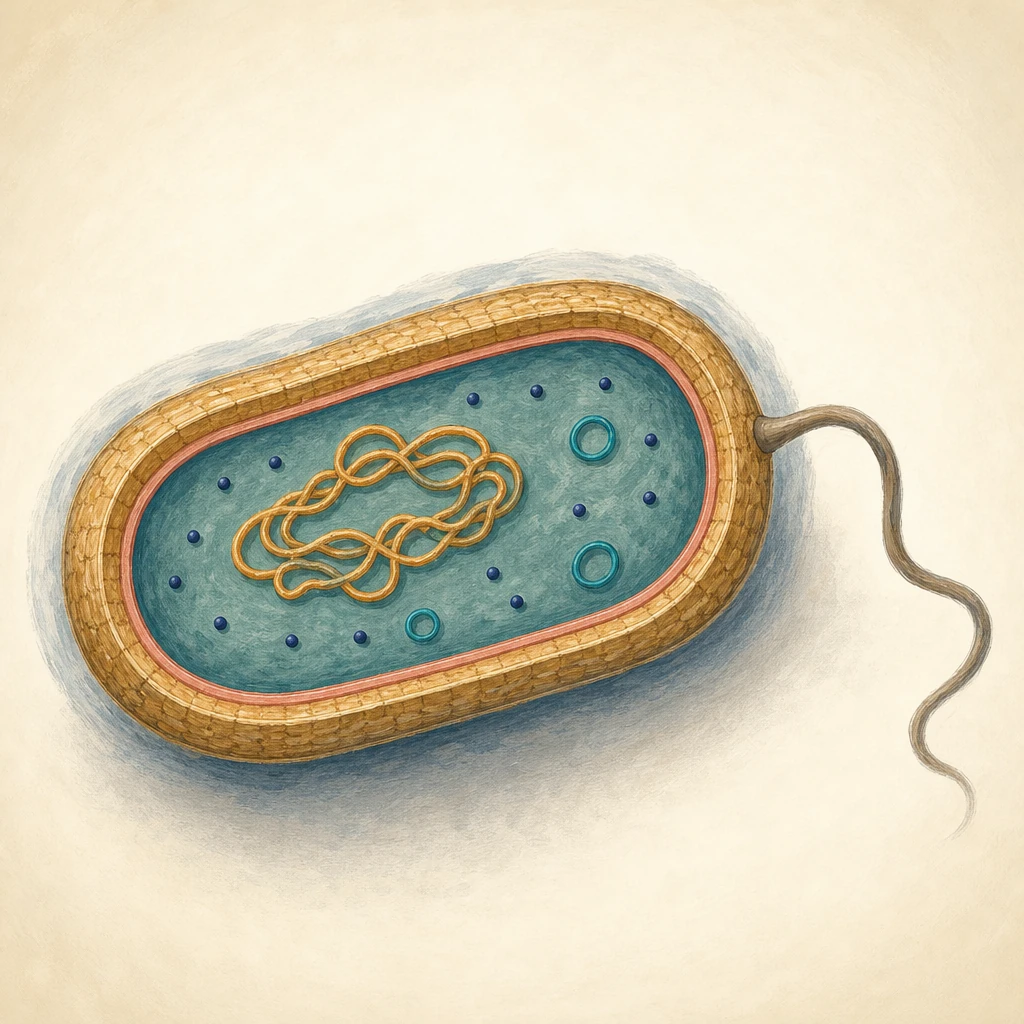
- 1Cell wall — Tough outer casing — not cellulose
- 2Cell membrane — Gateway controller — same job as in your cells
- 3Cytoplasm — Where chemistry happens — and where proteins are built
- 4Chromosomal DNA — One circular chromosome — no nuclear envelope
- 5Plasmids — Bonus DNA rings — often carry antibiotic resistance
- 6Flagellum — Propeller tail — moves the bacterium
- 7Capsule — Outer slime coat — helps avoid the immune system
Tap any label to zoom into the bacterial structure.
Biology glossary
- What is a pathogen?
- A microorganism that causes disease in living organisms
- What is direct transmission?
- When pathogens are passed directly from one person to another through physical contact
Earn the mark scheme marks
Disease Prevention Strategies
Personal Hygiene
- Hand washing: Soap removes pathogens and breaks down protective membranes
- Respiratory etiquette: Cover coughs and sneezes to prevent airborne transmission
- Food safety: Cook food thoroughly, wash fruits and vegetables
- Personal items: Don't share towels, razors, or other personal items
Medical Interventions
- Vaccination: Trains immune system to recognize specific pathogens
- Antibiotics: Kill bacteria but not viruses, fungi, or protists
- Antifungal medications: Target fungal infections
- Isolation: Separate infected individuals to prevent spread
Environmental Control
- Vector control: Eliminate breeding sites (standing water for mosquitoes)
- Sanitation: Clean water supplies and sewage treatment
- Food safety systems: Hygiene standards in food preparation
- Quarantine: Restrict movement of potentially infected individuals
Now try it yourself
Quiz · Question 1 of 24
What is a pathogen?
Tap an answer to check it
This topic in real past papers
Every real exam question we've found on pathogens and disease transmission, with a full worked answer.