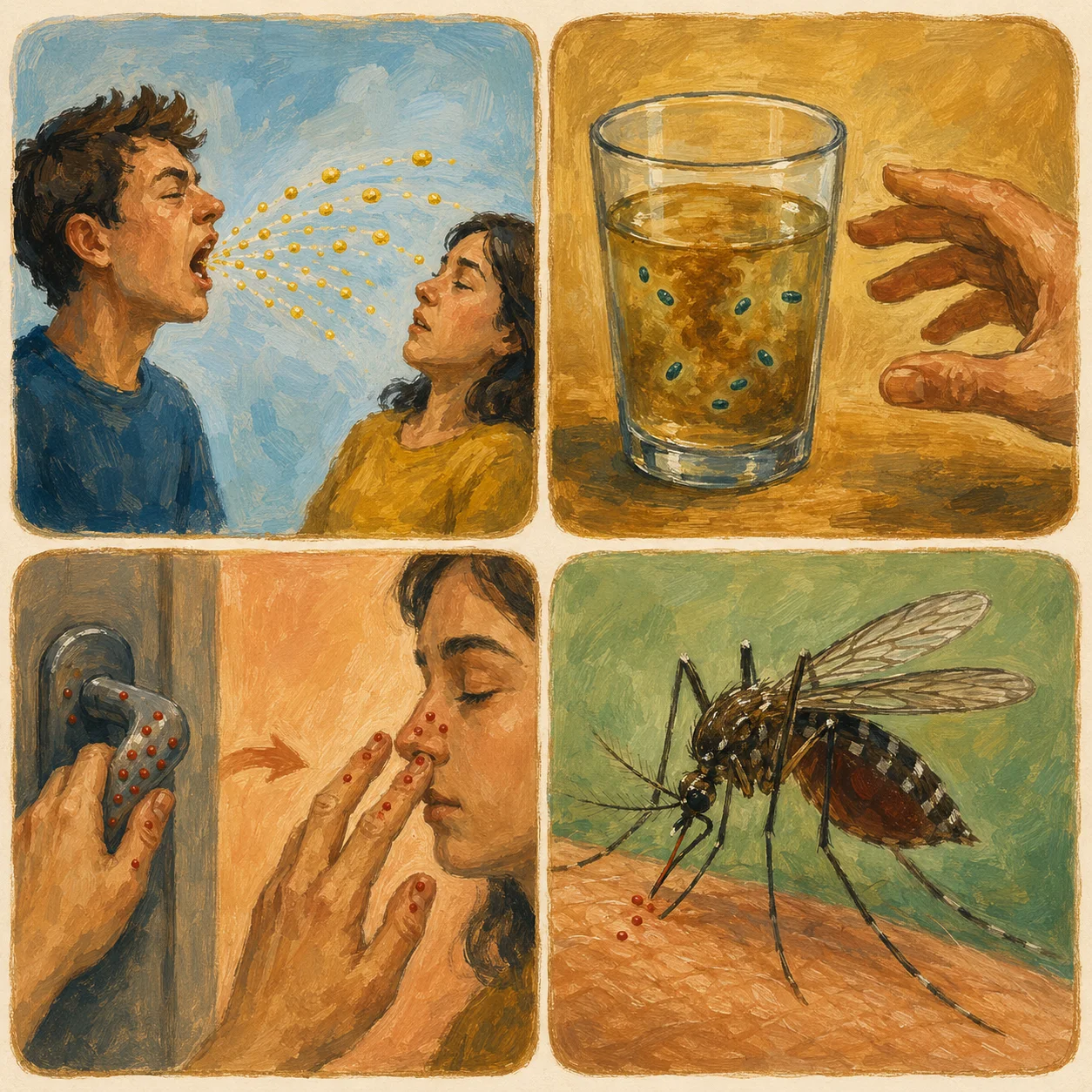
Infection & ResponseDiagram

Disease Transmission Methods

Part of Pathogens and Disease TransmissionGCSE Biology

This diagram covers Disease Transmission Methods within Pathogens and Disease Transmission for GCSE Biology. Types of pathogens, how diseases spread, transmission methods, and prevention strategies It is section 4 of 18 in this topic. Focus on the labels, the relationships between parts, and the explanation that turns the diagram into an exam-ready answer.

Topic position

Section 4 of 18

Practice

18 questions

Recall

20 flashcards

Disease Transmission Methods

Person A Person B Direct Contact Touching, kissing, sexual contact Infected Healthy Airborne Droplets from coughing/sneezing Infected Mosquito Healthy Vector Transmission Animal carries pathogen Contaminated Water/ Food Person Contaminated Sources Drinking/eating contaminated items

Keep building this topic

Read this section alongside the surrounding pages in Pathogens and Disease Transmission. That gives you the full topic sequence instead of a single isolated revision point.

Practice Questions for Pathogens and Disease Transmission

What is a pathogen?

  • A. A microorganism that causes disease
  • B. A type of white blood cell
  • C. An antibody produced by the immune system
  • D. A nutrient required for growth
1 markfoundation

Explain why viruses need to infect host cells in order to reproduce.

3 marksstandard

Quick Recall Flashcards

What is direct transmission?
When pathogens are passed directly from one person to another through physical contact
What is a pathogen?
A microorganism that causes disease in living organisms

Want to test your knowledge?

PrepWise has 18 exam-style questions and 20 flashcards for Pathogens and Disease Transmission — with adaptive difficulty and instant feedback.

Join Alpha