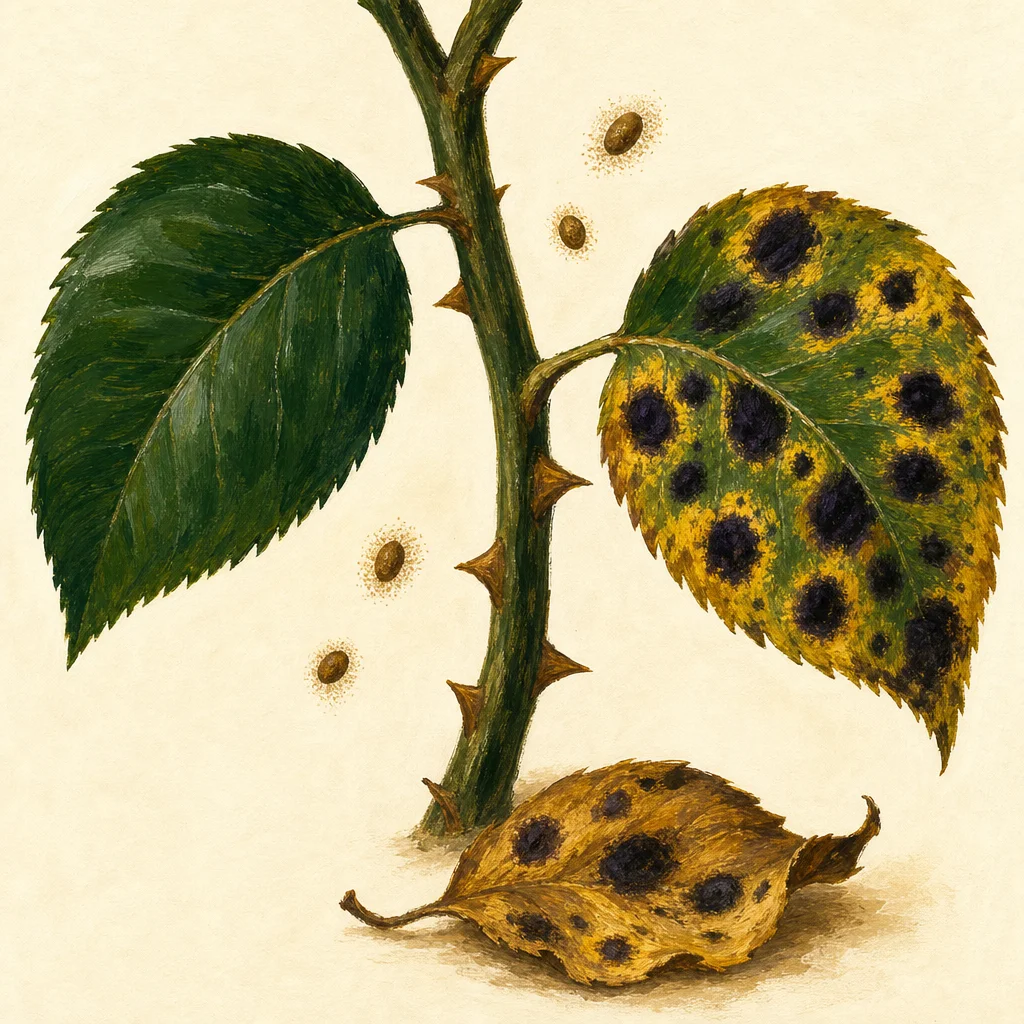
Rose Black Spot Disease Process
- Spore landing: Fungal spores land on leaf surface
- Infection: Spores penetrate leaf and establish fungal growth
- Symptom development: Black/purple spots appear, leaves turn yellow
- Spread: More spores produced, spread to other leaves/plants
- Impact: Reduced photosynthesis, weakened plant, early leaf drop
This diagram covers Case Study 1: Rose Black Spot within Plant Diseases and Defenses for GCSE Biology. Plant pathogens, defense mechanisms, disease identification, crop protection It is section 4 of 18 in this topic. Focus on the labels, the relationships between parts, and the explanation that turns the diagram into an exam-ready answer.
Practice questions for Plant Diseases and Defenses
What type of pathogen causes rose black spot disease?
Explain how rose black spot affects the growth of infected plants.
Quick recall flashcards
What is a plant pathogen?
A microorganism that causes disease in plants, such as fungi, bacteria, or viruses.
What is rose black spot?
A fungal disease that affects roses, causing black or purple spots on leaves, which turn yellow and drop off, reducing photosynthesis.