AlgorithmsDiagram

Linear Search vs Binary Search Comparison

Part of Linear SearchGCSE Computer Science

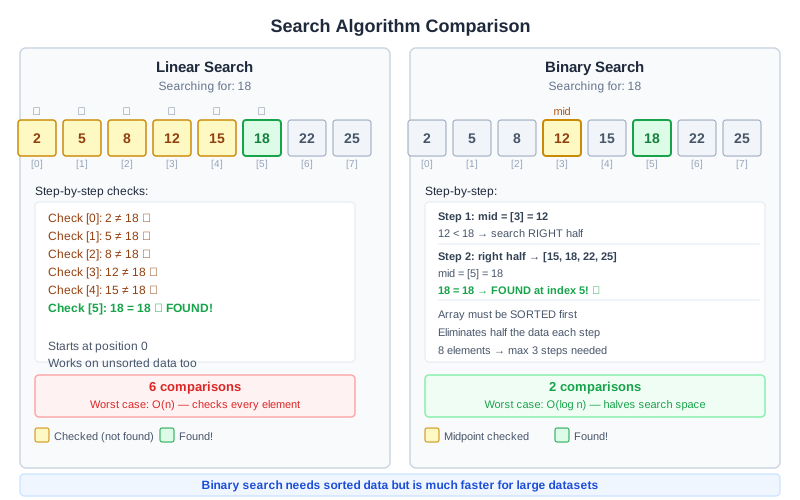
This diagram covers Linear Search vs Binary Search Comparison within Linear Search for GCSE Computer Science. Revise Linear Search in Algorithms for GCSE Computer Science with 15 exam-style questions and 8 flashcards. This topic appears less often, but it can still be a useful differentiator on mixed-topic papers. It is section 3 of 7 in this topic. Focus on the labels, the relationships between parts, and the explanation that turns the diagram into an exam-ready answer.

Topic position

Section 3 of 7

Practice

15 questions

Recall

8 flashcards

Linear Search vs Binary Search Comparison

Search algorithms comparison diagram: Linear Search on the left showing sequential checking of each element from start to end (worst case: n comparisons), Binary Search on the right showing a sorted list being divided in half at each step (worst case: log2 n comparisons), with a side-by-side time complexity comparison showing binary search is much faster for large datasets

Keep building this topic

Read this section alongside the surrounding pages in Linear Search. That gives you the full topic sequence instead of a single isolated revision point.

Practice Questions for Linear Search

How does a linear search work?

  • A. It divides the list in half repeatedly until the item is found
  • B. It checks each element in the list one at a time, from start to end
  • C. It sorts the list first, then jumps directly to the target item
  • D. It starts from the middle of the list and works outwards
1 markfoundation

Describe how a linear search works on a list of n items. [3 marks]

3 marksstandard

Quick Recall Flashcards

What does linear search do?
Checks each item from start to end until found
What does binary search require?
Data must be sorted

Want to test your knowledge?

PrepWise has 15 exam-style questions and 8 flashcards for Linear Search — with adaptive difficulty and instant feedback.

Join Alpha