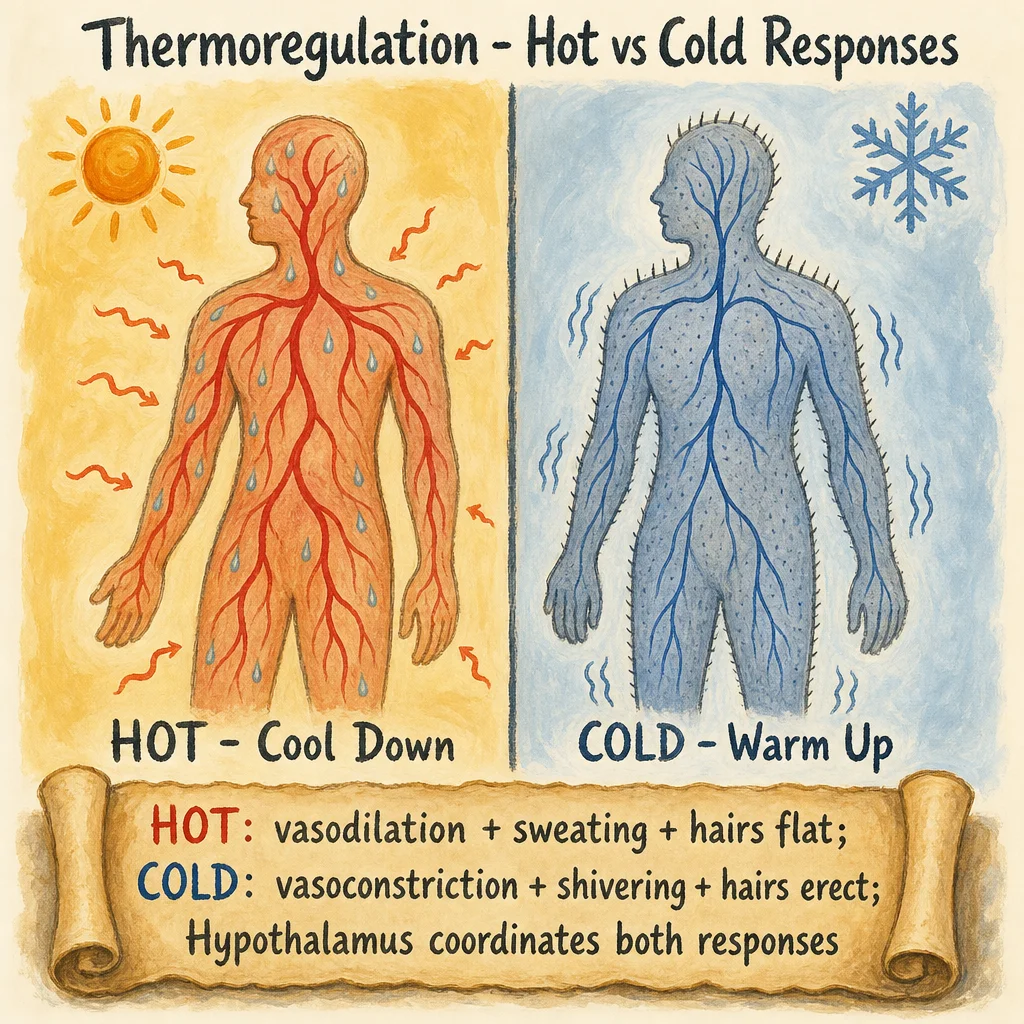
This diagram covers Visual: Thermoregulation within Temperature Regulation for GCSE Biology. Topic 5: Temperature Regulation It is section 4 of 13 in this topic. Focus on the labels, the relationships between parts, and the explanation that turns the diagram into an exam-ready answer.
Practice questions for Temperature Regulation
What is the normal core body temperature in humans?
Explain how sweating helps to reduce body temperature.
Quick recall flashcards
How does sweating cool the body?
Sweat glands release sweat onto the skin. As sweat evaporates, it takes heat energy away from the skin, cooling the body. More sweating occurs when the body is too hot.
What is thermoregulation?
Thermoregulation is the process of maintaining a constant core body temperature of 37°C, regardless of changes in the external environment.