Mostly Empty Space
⚛️ Mostly Empty Space
The nuclear model of the atom — click each part to explore its properties
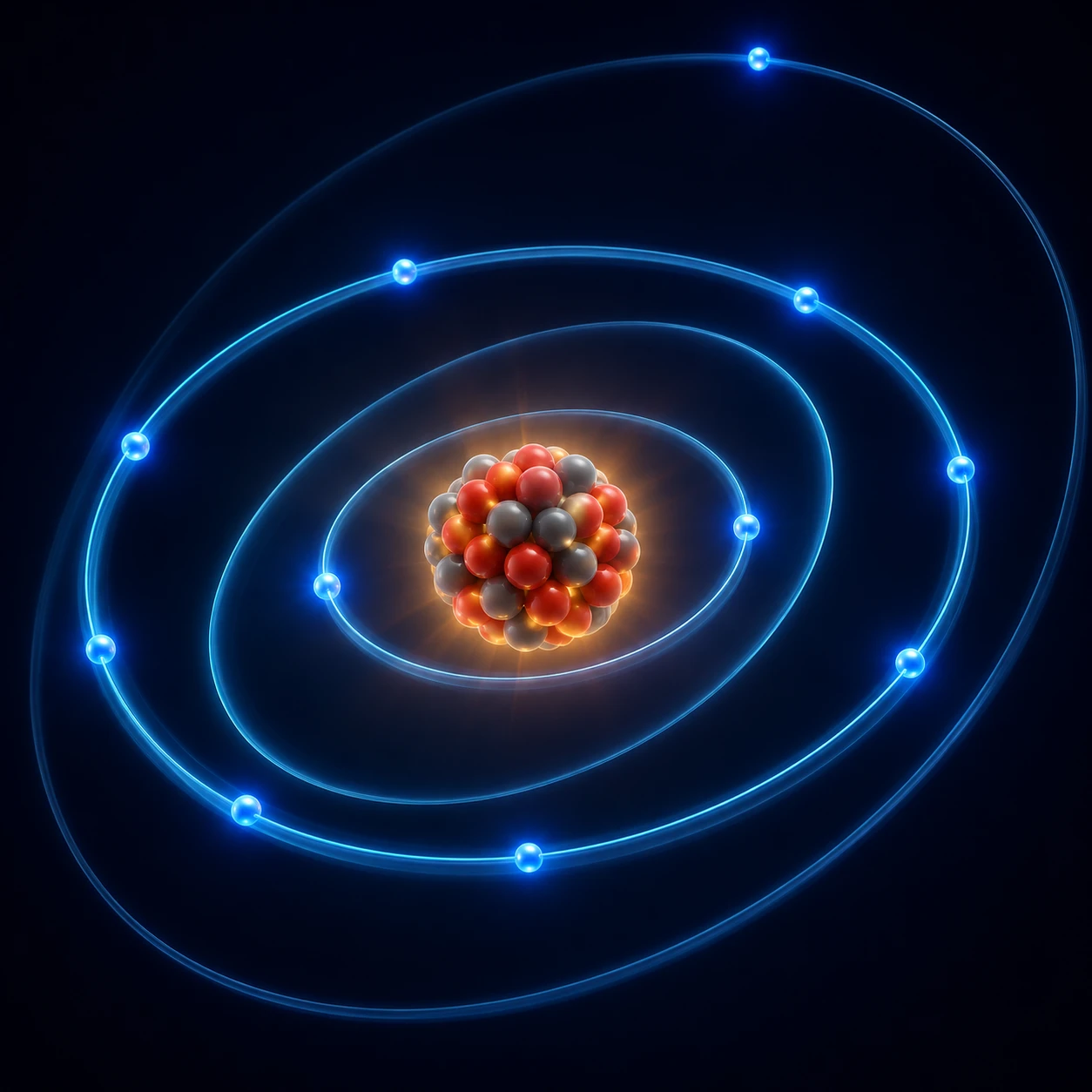
- 1Proton —
- 2Neutron —
- 3Electron —
- 4Electron shell —
Figure 1: The nuclear model of the atom — click each part to explore its properties
Physics glossary
- What are isotopes?
- Isotopes are atoms of the same element (same number of protons) with different numbers of neutrons. This means they have the same atomic number but different mass numbers.
An atom is made of three types of subatomic particles: protons, neutrons, and electrons. Protons and neutrons cluster together in a tiny, dense nucleus at the centre. Electrons orbit the nucleus in shells (energy levels) at relatively vast distances.
Earn the mark scheme marks
🧠 Memory Aids
Particles and charges: "ProTons are PosiTive" — both have the letter T. Neutrons are Neutral (no charge). Electrons are negative (they're on the outside, "ex" means out, and they're negative).
Atomic notation: "Big number on top = Mass (more letters = top), Small number below = atomic (Z = proton count)." Think: Z is at the bottom of the alphabet, and the atomic number is at the bottom of the symbol.
Neutrons formula: N = A − Z. Think "Neutrons Are (A) Zapped (minus Z)."
Now try it yourself
Quiz · Question 1 of 16
What does the atomic number of an element tell you?
Tap an answer to check it
This topic in real past papers
Every real exam question we've found on atomic structure, with a full worked answer.