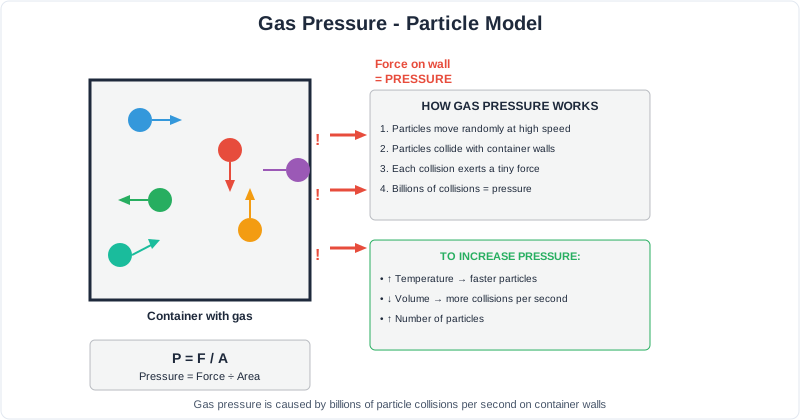
Figure 1: Gas particles colliding with container walls create pressure. More energy = harder and more frequent collisions = higher pressure.
KEY POINT: Gas pressure is caused by particles hitting container walls. Heat the gas → faster particles → more frequent AND harder collisions → pressure increases!
This diagram covers How Temperature Affects Gas Pressure within Gas Pressure & Temperature for GCSE Physics. Revise Gas Pressure & Temperature in Particle Model for GCSE Physics with 29 exam-style questions and 30 flashcards. This topic appears regularly enough that it should still be part of a steady revision cycle. It is section 2 of 11 in this topic. Focus on the labels, the relationships between parts, and the explanation that turns the diagram into an exam-ready answer.
Practice questions for Gas Pressure & Temperature
A sealed gas container is heated. What happens to the pressure of the gas inside?
A sealed gas cylinder is heated. Explain, using particle theory, why the pressure of the gas increases when the temperature increases.