EnergyDiagram

Specific Heat Capacity Comparison

Part of Specific Heat CapacityGCSE Physics

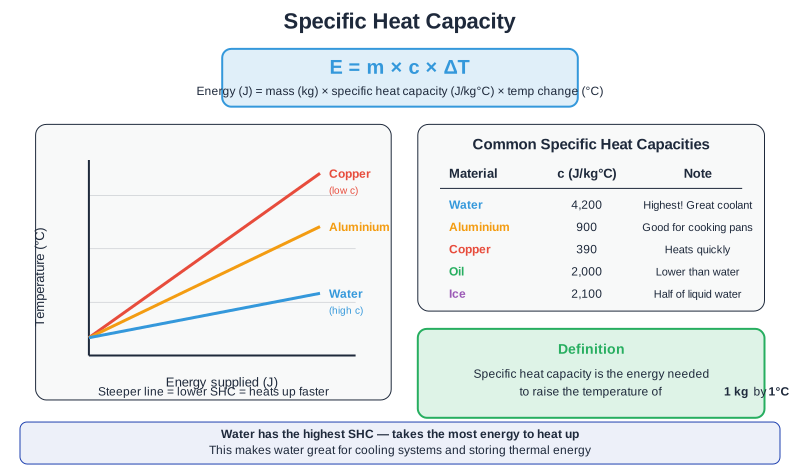
This diagram covers Specific Heat Capacity Comparison within Specific Heat Capacity for GCSE Physics. Revise Specific Heat Capacity in Energy for GCSE Physics with 15 exam-style questions and 13 flashcards. This is a high-frequency topic, so it is worth revising until the explanation feels precise and repeatable. It is section 4 of 15 in this topic. Focus on the labels, the relationships between parts, and the explanation that turns the diagram into an exam-ready answer.

Topic position

Section 4 of 15

Practice

15 questions

Recall

13 flashcards

📊 Specific Heat Capacity Comparison

Graph comparing specific heat capacity of different materials showing water with the highest value at 4200 J/kg°C and metals with much lower values

Figure 1: Specific heat capacity comparison. Water's value is approximately 11 times that of copper.

Keep building this topic

Read this section alongside the surrounding pages in Specific Heat Capacity. That gives you the full topic sequence instead of a single isolated revision point.

Practice Questions for Specific Heat Capacity

What does the specific heat capacity of a substance measure?

  • A. The energy needed to change 1 kg of a substance from solid to liquid
  • B. The energy needed to raise the temperature of 1 kg of a substance by 1 °C
  • C. The maximum temperature a substance can reach before it boils
  • D. The rate at which a substance loses heat to its surroundings
1 markfoundation

Water has a specific heat capacity of 4200 J/kg°C, much higher than most other common substances. Explain why this makes water useful in central heating systems.

3 marksstandard

Quick Recall Flashcards

Central heating
water carries lots of thermal energy around your house
Define:
The specific heat capacity (c) of a material is the amount of energy needed to raise the temperature of 1 kilogram of the substance by 1 degree Celsius.

Want to test your knowledge?

PrepWise has 15 exam-style questions and 13 flashcards for Specific Heat Capacity — with adaptive difficulty and instant feedback.

Join Alpha