Blood has four main components: (1) Plasma — the liquid (mostly water) that transports dissolved substances including glucose, hormones, and urea; (2) Red blood cells — biconcave cells containing haemoglobin that carry oxygen around the body; (3) White blood cells — which defend against infection (phagocytes engulf pathogens; lymphocytes produce antibodies); and (4) Platelets — cell fragments that trigger blood clotting when a vessel is damaged.
1. Plasma (55% of blood volume)
Plasma is the liquid component of blood, consisting of 90% water plus dissolved substances:
- Proteins: Albumin (maintains osmotic pressure), fibrinogen (blood clotting), antibodies (immune defense)
- Nutrients: Glucose, amino acids, fatty acids, vitamins
- Waste products: Urea, carbon dioxide, lactic acid
- Hormones: Chemical messengers transported to target organs
- Ions: Sodium, chloride, calcium, potassium for cellular function
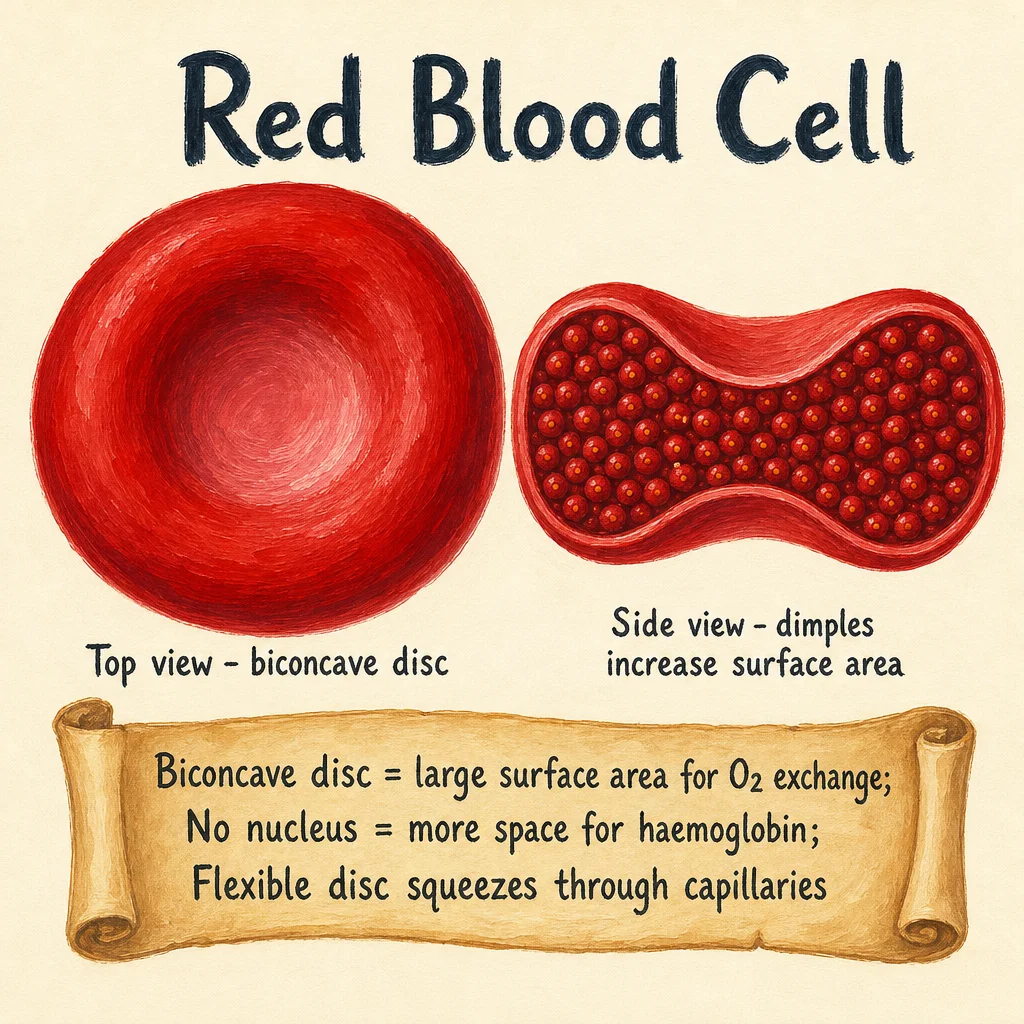
2. Red Blood Cells (Erythrocytes)
Red blood cells are specialized for oxygen transport with remarkable adaptations:
- Biconcave shape: Increases surface area for gas exchange by 20-30%
- No nucleus: More space for hemoglobin (95% of dry weight)
- Flexible membrane: Allows passage through tiny capillaries (3 micrometers)
- Hemoglobin protein: Contains iron that binds reversibly with oxygen
- Small size (7 micrometers): Maximizes surface area to volume ratio
3. White Blood Cells (Leukocytes)
White blood cells defend against infection and disease with two main types:
Phagocytes (neutrophils and macrophages):
- Engulf and digest pathogens by phagocytosis
- Form pus at infection sites
- First line of cellular defense (innate immunity)
- Can move out of blood vessels to infection sites
Lymphocytes (B cells and T cells):
- B cells: Produce specific antibodies against antigens
- B cells also produce antitoxins — chemicals that neutralise the poisonous toxins released by pathogens
- T cells: Coordinate immune response and kill infected cells
- Provide specific immunity and immunological memory
- Smaller than phagocytes but live much longer
4. Platelets (Thrombocytes)
Platelets are cell fragments essential for blood clotting:
- No nucleus, produced by bone marrow megakaryocytes
- Release clotting factors when activated by vessel damage
- Form temporary platelet plug at wound site
- Lifespan of 8-10 days in circulation
This deep dive covers Blood Composition and Components within Blood Components and Vessels for GCSE Biology. Blood composition, red and white blood cells, platelets, plasma, blood vessel structure and function, adaptations for transport It is section 2 of 16 in this topic. Use this deep dive to connect the idea to the wider topic before moving on to questions and flashcards.
Practice questions for Blood Components and Vessels
What is the main function of red blood cells?
Explain how red blood cells are adapted for their function of transporting oxygen.