Test yourself on Development Gap and Global Development with exam style questions, marked instantly.
Flashcards that come back just before you would forget them.
A revision plan that remembers what you know and shows what to do next.
See which topics you have nailed and which need another look.
Quiz yourself on Development Gap and Global DevelopmentGet your flashcardsBuild my revision planTrack my progress⚖️ Development Indicators — Comparing Four Countries
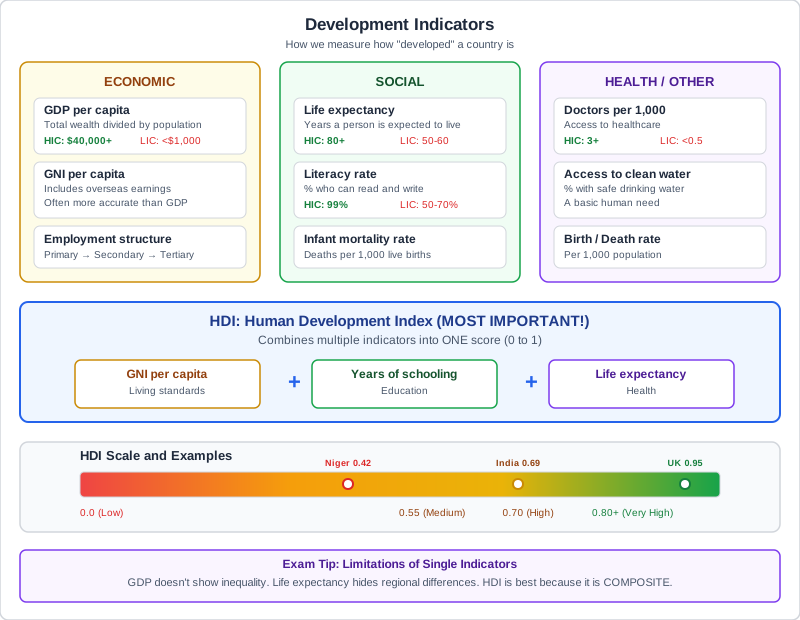
Figure 2: Development Indicators — how LIDCs, NEEs, and HICs compare across key measures
| Indicator | Ethiopia (LIDC) | Nigeria (NEE) | Brazil (NEE) | UK (HIC) |
|---|---|---|---|---|
| HDI (2023) | 0.497 (low) | 0.560 (medium) | 0.786 (high) | 0.946 (very high) |
| GNI per capita (USD) | ~$1,000 | ~$2,000 | ~$14,000 | ~$46,000 |
| Life expectancy | 67 years | 54 years | 76 years | 81 years |
| Adult literacy rate | ~51% | ~62% | ~93% | ~99% |
| Infant mortality (per 1,000) | ~38 | ~55 | ~13 | ~4 |
| % below $3.20/day | ~68% | ~42% | ~9% | <1% |
| Development category | LIDC | NEE | NEE | HIC |
Note: LIDC = Low-Income Developing Country; NEE = Newly Emerging Economy; HIC = High-Income Country. Statistics are approximate and change year to year — use these as approximate anchors in your exam answers.
Quick Check: Explain why GNI per capita is an incomplete measure of development. Use an example in your answer.
GNI per capita is an average that hides inequality within a country. Nigeria's GNI per capita of approximately $2,000 suggests a moderate standard of living, but this figure masks extreme inequality: oil wealth is concentrated among a small elite while over 42% of Nigerians live below $3.20 per day. A country can have high average income and deep poverty at the same time. The HDI is more useful because it combines income with life expectancy and education into a single composite score — though even this does not fully capture inequality within countries or environmental sustainability.
Make this stick
Signing in gives access to all PrepWise features.