
Pressure — surface area and depth
Part of Gas Pressure & Temperature · GCSE GCSE Physics revision
This study notes covers Pressure — surface area and depth within Gas Pressure & Temperature for GCSE Physics. Revise Gas Pressure & Temperature in Particle Model for GCSE Physics with 13 exam-style questions and 30 flashcards. This is a high-frequency topic, so it is worth revising until the explanation feels precise and repeatable. It is section 2 of 13 in this topic. Use this study notes to connect the idea to the wider topic before moving on to questions and flashcards.
Topic position
Section 2 of 13
Practice
13 questions
Recall
30 flashcards
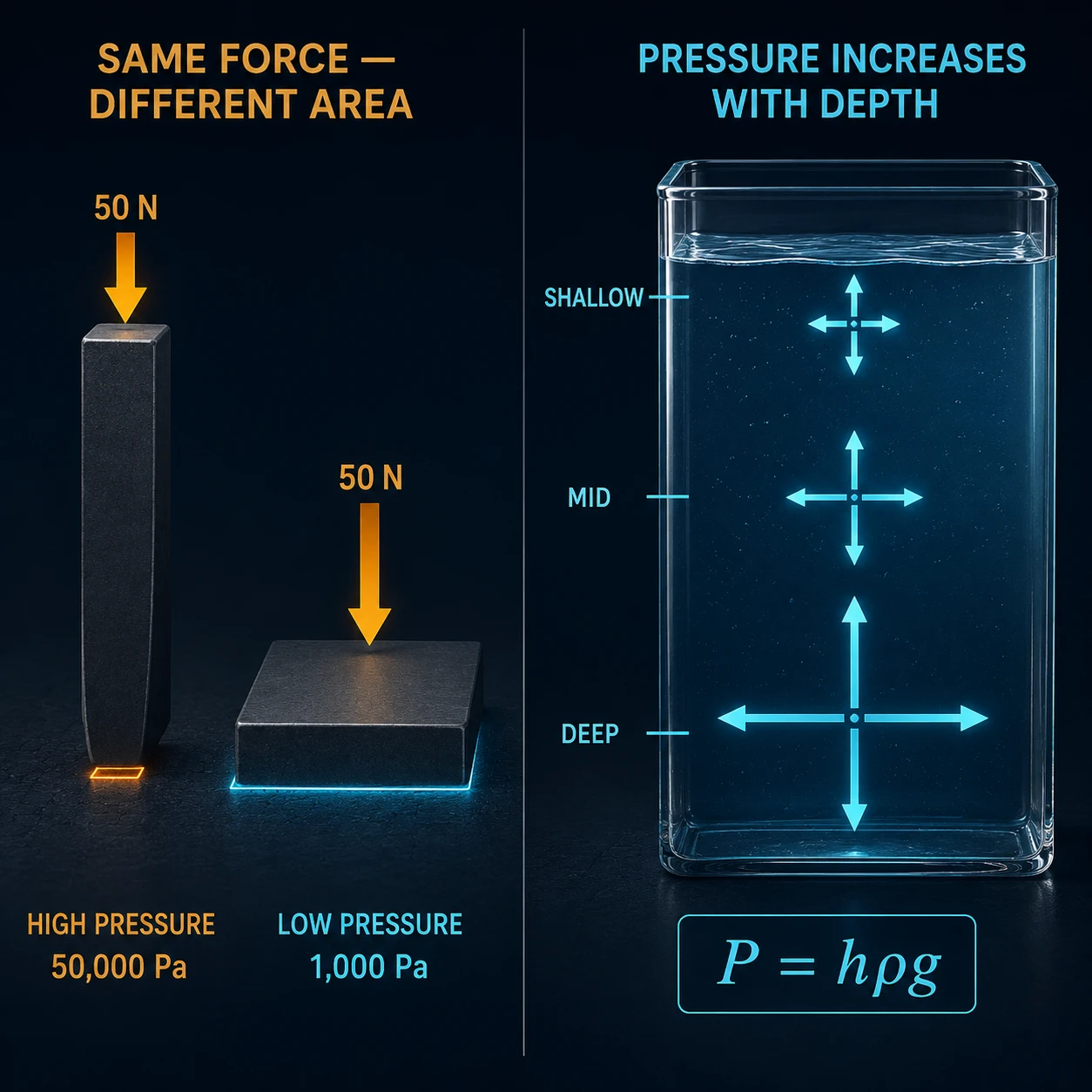
Figure: Pressure — surface area and depth
Keep building this topic
Read this section alongside the surrounding pages in Gas Pressure & Temperature. That gives you the full topic sequence instead of a single isolated revision point.
Practice Questions for Gas Pressure & Temperature
A sealed gas container is heated. What happens to the pressure of the gas inside?
A sealed gas cylinder is heated. Explain, using particle theory, why the pressure of the gas increases when the temperature increases.
Quick Recall Flashcards
13 questions on Gas Pressure & Temperature — practise free
Instant marking, adaptive difficulty, and 30 spaced repetition flashcards. Free until your GCSEs.
Try PrepWise Free