Conflict and Tension 1918-1939Diagram

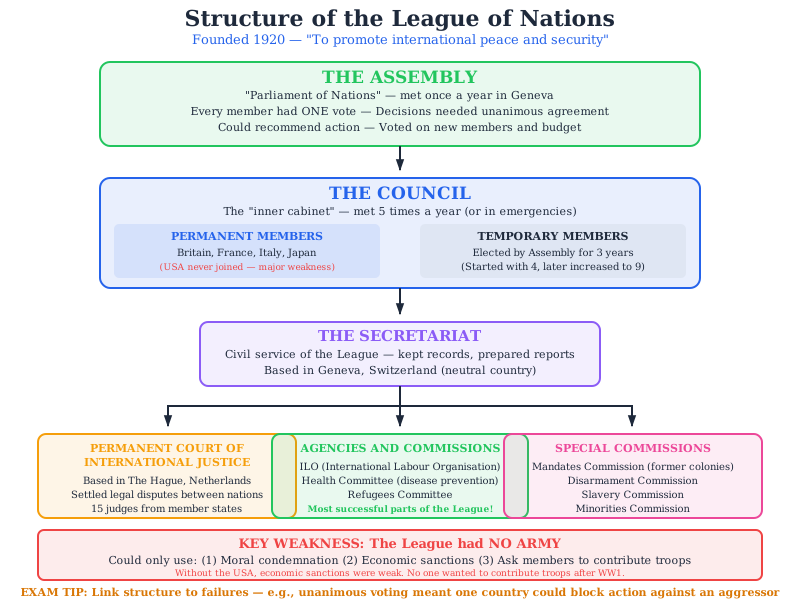
Structure of the League of Nations

Part of League of Nations StructureGCSE History

This diagram covers Structure of the League of Nations within League of Nations Structure for GCSE History. Revise League of Nations Structure in Conflict and Tension 1918-1939 for GCSE History with 8 exam-style questions and 5 flashcards. This topic shows up very often in GCSE exams, so students should be able to explain it clearly, not just recognise the term. It is section 2 of 11 in this topic. Focus on the labels, the relationships between parts, and the explanation that turns the diagram into an exam-ready answer.

Topic position

Section 2 of 11

Practice

8 questions

Recall

5 flashcards

📊 Structure of the League of Nations

League of Nations structure diagram

Note the key weakness: the League had NO ARMY to enforce its decisions

Keep building this topic

Read this section alongside the surrounding pages in League of Nations Structure. That gives you the full topic sequence instead of a single isolated revision point.

Practice Questions for League of Nations Structure

Which major country never joined the League of Nations?

  • A. Britain
  • B. France
  • C. The USA
  • D. Italy
1 markfoundation

What was meant by 'collective security' in the League of Nations?

  • A. Each country would build up its own army for protection
  • B. All members would unite against any country that attacked another
  • C. Britain and France would protect all other countries
  • D. Countries would sign individual defence treaties with each other
1 markfoundation

Quick Recall Flashcards

Where was the League based?
Geneva, Switzerland (neutral country)
League's biggest weakness?
USA never joined + no army of its own

Want to test your knowledge?

PrepWise has 8 exam-style questions and 5 flashcards for League of Nations Structure — with adaptive difficulty and instant feedback.

Join Alpha