Setting the Scene
📖 Setting the Scene
In 1660, England was becoming a trading nation. Ships sailed to India, West Africa, the Caribbean, and the American colonies, bringing back spices, sugar, tobacco, and, increasingly, enslaved people. The Company of Royal Adventurers into Africa, chartered in 1660 and reorganised as the Royal African Company in 1672, held the monopoly on English slave trading. London was growing as a commercial centre. Coffee houses opened (the first had appeared in the 1650s), becoming centres for business deals and news. This was an economy in transition, from medieval farming to early capitalism, from local markets to global trade.
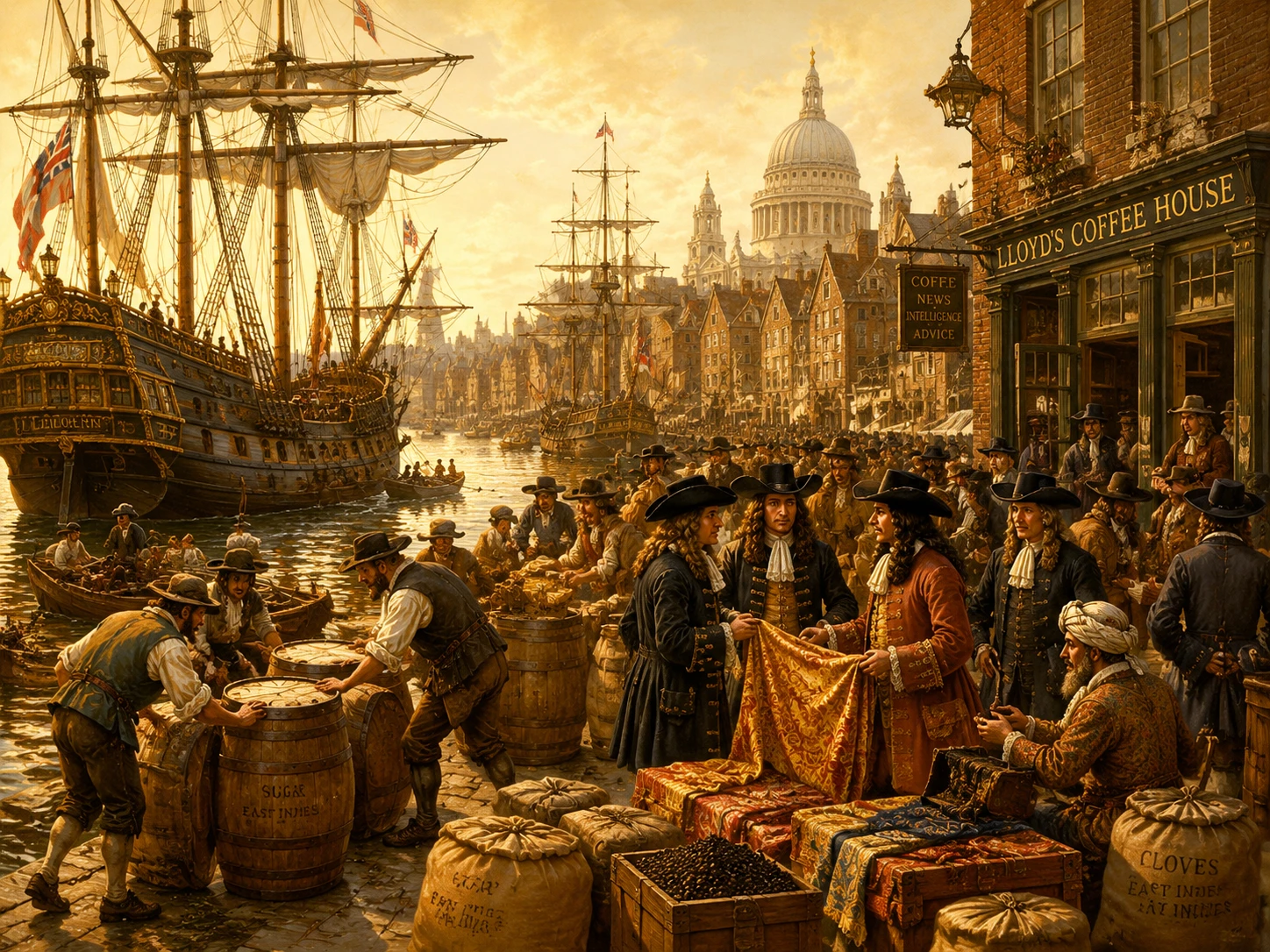
Illustration (created by AI, not a painting of the day): London's quays in the Restoration period, when trade with the colonies grew.
History glossary
- What was the East India Company?
- English trading company (founded 1600) with monopoly on trade with Asia. Under Charles II it expanded significantly, establishing permanent trading posts (factories) in India at Bombay (part of Catherine of Braganza's dowry, agreed in 1661). The basis of England's future Indian empire.
Earn the mark scheme marks
📝 Exam Connection: The Slave Trade
The Royal African Company is significant:
Now try it yourself
Quiz · Question 1 of 10
Which company, first chartered in 1660 as the Royal Adventurers and renamed in 1672, was given a monopoly on the English slave trade?
Tap an answer to check it