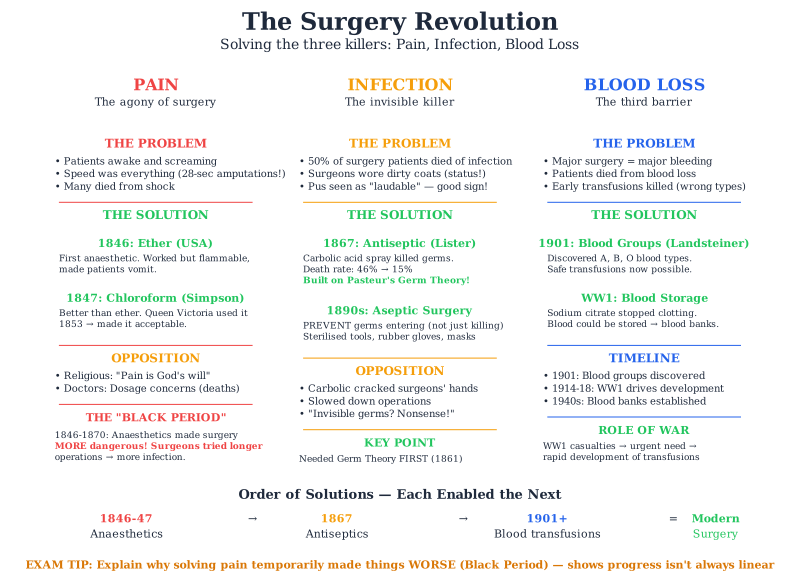
Solving the three barriers: pain (anaesthetics), infection (antiseptics), and blood loss (transfusions)
This diagram covers The Surgery Revolution within The Surgery Revolution for GCSE History. Revise The Surgery Revolution in Medicine Through Time for GCSE History with 8 exam-style questions and 15 flashcards. This is a high-frequency topic, so it is worth revising until the explanation feels precise and repeatable. It is section 2 of 16 in this topic. Focus on the labels, the relationships between parts, and the explanation that turns the diagram into an exam-ready answer.
Practice questions for The Surgery Revolution
Who introduced chloroform as an anaesthetic in 1847?
What antiseptic did Joseph Lister use in surgery from 1867?
Quick recall flashcards
When did Simpson introduce chloroform?
1847
What did Lister use as an antiseptic?
Carbolic acid spray (from 1867)