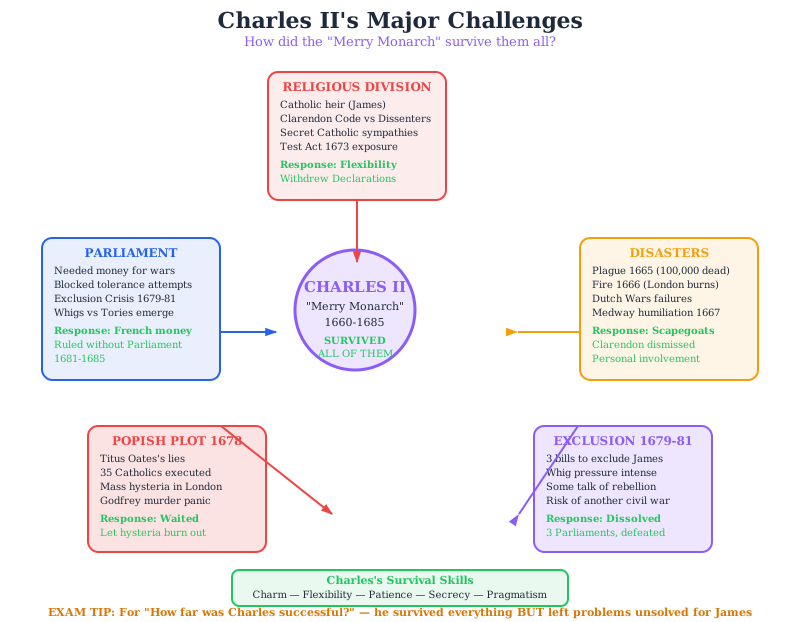
Five major challenges — and he survived them all
This diagram covers Charles II's Major Challenges within Charles II's Legacy for GCSE History. Revise Charles II's Legacy in Restoration England 1660-1685 for GCSE History with 10 exam-style questions and 15 flashcards. Use this page as part of a wider topic revision path rather than treating it as an isolated fact. It is section 1 of 18 in this topic. Focus on the labels, the relationships between parts, and the explanation that turns the diagram into an exam-ready answer.
Practice questions for Charles II's Legacy
On what date did Charles II die?
What was the immediate cause of the Glorious Revolution in 1688?
Quick recall flashcards
What happened to James II?
James II succeeded peacefully in February 1685. He initially seemed secure — the Monmouth Rebellion (June 1685) was crushed at the Battle of Sedgemoor (his only one). But James then pursued the exact Catholic policies Whigs had feared: suspending the Test Acts, appointing Catholics to army and government posts, issuing a Declaration of Indulgence (1688). By November 1688, William of Orange had invaded and James fled to France — the Glorious Revolution.
When did Charles II die and how?
6 February 1685, aged 54. After a sudden stroke on 2 February, he lingered for four days. On his deathbed he secretly converted to Catholicism, receiving last rites from Father John Huddleston — the same priest who had sheltered him after the Battle of Worcester in 1651. His last known words included 'Let not poor Nelly starve' — protecting his mistress Nell Gwyn.