The Island That Runs the World (A Little)
🌍 The Island That Runs the World (A Little)
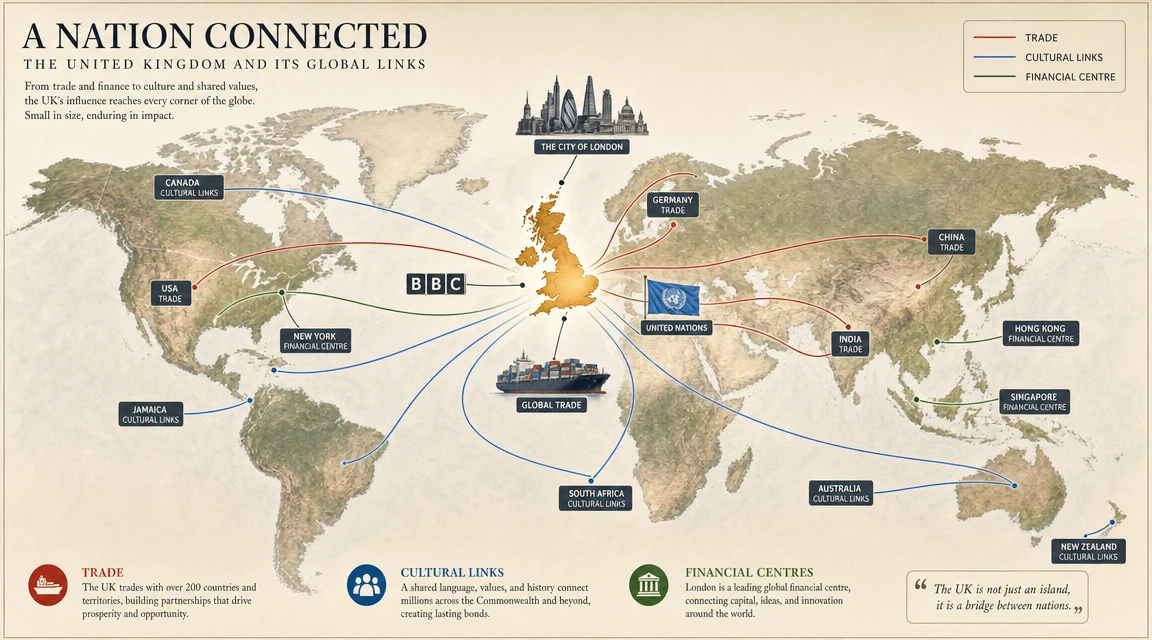
How does a medium-sized island that lost its empire, left the world's largest trading bloc, and manufactures relatively little maintain this extraordinary global footprint? The answer is soft power — the ability to influence through attraction, culture, and reputation rather than through force or money alone. And it is a story that has a colonial past, an uncertain Brexit present, and a climate-shaped future.
This topic asks you to understand where UK global significance actually comes from, why it remains so large relative to the UK's physical size, and what might cause it to grow or decline in the coming decades. Those are exactly the questions GCSE examinations set.
Geography glossary
- What is hard power?
- The use of military force or economic sanctions to influence other countries. The UK retains hard power through Trident, its armed forces and NATO membership.
- What is soft power in geography?
- The ability to influence other countries through cultural attraction, values and persuasion — not military force. Examples: BBC, English language, Premier League.
The UK's political influence extends far beyond what its population or economic size would suggest, primarily through membership of key global institutions. These institutions were largely shaped and built in the post-World War 2 period when the UK was still a major imperial power — and the UK has retained its position
Earn the mark scheme marks
🧠 Mnemonic: GREAT UK
Use this to remember the seven pillars of UK global significance:
Now try it yourself
Quiz · Question 1 of 15
Which of the following is an example of the UK's HARD power?
Tap an answer to check it