The Exclusion Crisis 1679-81

Part of The Exclusion Crisis · Section 1 of 18

DiagramUnit: Restoration England 1660-1685GCSE

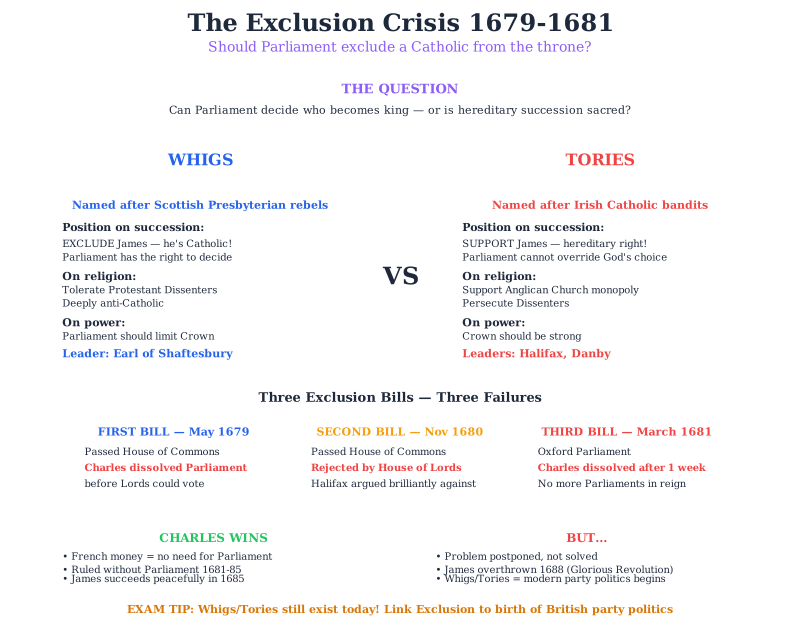
This diagram covers The Exclusion Crisis 1679-81 within The Exclusion Crisis for GCSE History. Revise The Exclusion Crisis in Restoration England 1660-1685 for GCSE History with 10 exam-style questions and 15 flashcards. This topic appears regularly enough that it should still be part of a steady revision cycle. It is section 1 of 18 in this topic. Focus on the labels, the relationships between parts, and the explanation that turns the diagram into an exam-ready answer.

📊 The Exclusion Crisis 1679-81

Exclusion Crisis and birth of party politics

Whigs vs Tories — the birth of British party politics

Practice questions for The Exclusion Crisis

Why did Whig MPs attempt to pass the Exclusion Bills between 1679 and 1681?

  • A. They wanted to give Parliament the power to raise its own taxes without royal consent
  • B. They feared that James, Duke of York, as a Catholic, would threaten Protestant liberties if he became king
  • C. They believed Charles II had broken the terms of the Restoration Settlement by tolerating Dissenters
  • D. They wanted to replace James with Charles II's illegitimate son, the Duke of Monmouth, who was already widely popular
1 markfoundation

What did Charles II do at the Oxford Parliament in March 1681?

  • A. He agreed to limit James's powers as king once he succeeded to the throne
  • B. He called a general election to seek a more favourable Parliament before the bill could be voted on
  • C. He dissolved Parliament after just one week, before a third Exclusion Bill could be passed, and called no more Parliaments for the rest of his reign
  • D. He accepted a compromise that placed regency powers with a Protestant council during any future Catholic reign
1 markfoundation

Quick recall flashcards

Who led the Whigs?
Anthony Ashley Cooper, Earl of Shaftesbury — nicknamed 'Little Sincerity' by his enemies. Led the campaign to exclude James from the succession. After the Oxford Parliament's dissolution (1681) he fled to Holland, where he died in 1683.
What was the Exclusion Crisis?
1679-81: three successive Parliaments tried to pass Exclusion Bills to bar Catholic James, Duke of York, from succeeding to the throne. Charles dissolved all three Parliaments rather than allow the bills to pass. This was the most serious constitutional crisis of his reign.

10 questions on The Exclusion Crisis — practise free

Instant marking, adaptive difficulty and spaced-repetition flashcards — all aligned to your exam board.

Start revising free →