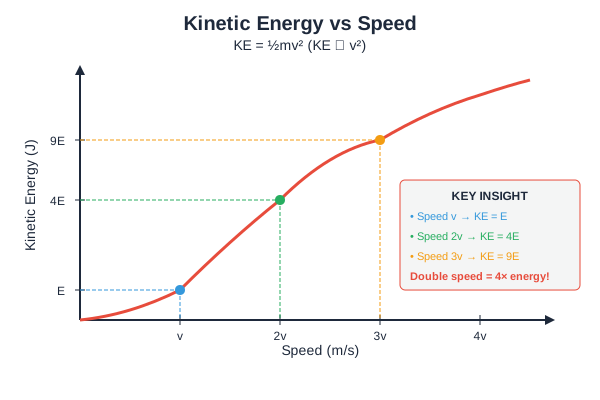
Figure 1: KE vs speed graph. Note the parabolic (curved) shape — this is the hallmark of a squared relationship.
Tennis ball (0.057 kg) served at 70 m/s:
KE = ½ × 0.057 × 70² = ½ × 0.057 × 4900 = 139.65 J
Bowling ball (7 kg) rolling at 5 m/s:
KE = ½ × 7 × 5² = ½ × 7 × 25 = 87.5 J
The tiny tennis ball has MORE kinetic energy! Even though the bowling ball is 120× heavier, the tennis ball's much higher speed (70 vs 5 m/s, 14× more) wins because velocity is SQUARED (14² = 196× effect).
This diagram covers The v² Effect — Kinetic Energy vs Speed within Kinetic Energy for GCSE Physics. Revise Kinetic Energy in Energy for GCSE Physics with 15 exam-style questions and 30 flashcards. This topic appears regularly enough that it should still be part of a steady revision cycle. It is section 4 of 15 in this topic. Focus on the labels, the relationships between parts, and the explanation that turns the diagram into an exam-ready answer.
Practice questions for Kinetic Energy
Which of the following objects has kinetic energy stored in its kinetic energy store?
A car travels at 20 m/s. The driver then doubles their speed to 40 m/s. Explain what happens to the kinetic energy of the car and by what factor it changes.