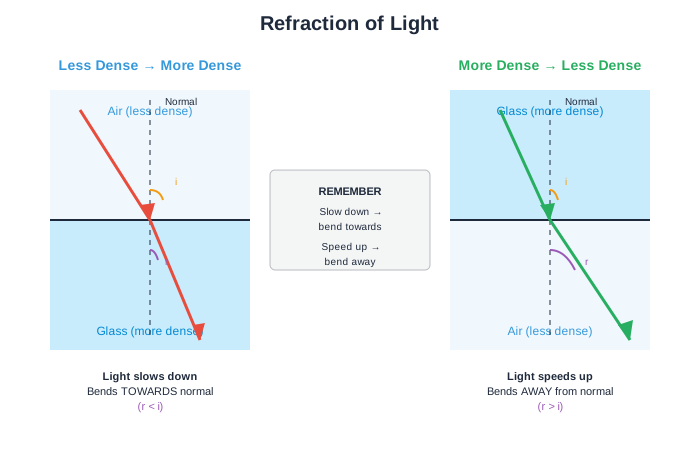
Figure 2: Refraction at an air-glass boundary — light bends toward the normal when slowing down
RULES: Fast → Slow = bends toward normal (e.g., air to glass). Slow → Fast = bends away from normal (e.g., glass to air). At 90° (perpendicular) = no bending, but speed still changes.
This diagram covers Refraction — Bending at Boundaries within Reflection & Refraction for GCSE Physics. Revise Reflection & Refraction in Waves for GCSE Physics with 17 exam-style questions and 15 flashcards. This topic shows up very often in GCSE exams, so students should be able to explain it clearly, not just recognise the term. It is section 3 of 13 in this topic. Focus on the labels, the relationships between parts, and the explanation that turns the diagram into an exam-ready answer.
Practice questions for Reflection & Refraction
According to the law of reflection, the angle of incidence is:
Explain why a ray of light bends when it passes from air into water.