Bonding & StructureDiagram

Graphite Structure — Layered Giant Covalent

Part of Giant Covalent Structures · GCSE GCSE Chemistry revision

This diagram covers Graphite Structure — Layered Giant Covalent within Giant Covalent Structures for GCSE Chemistry. Revise Giant Covalent Structures in Bonding & Structure for GCSE Chemistry with 20 exam-style questions and 20 flashcards. This is a high-frequency topic, so it is worth revising until the explanation feels precise and repeatable. It is section 2 of 12 in this topic. Focus on the labels, the relationships between parts, and the explanation that turns the diagram into an exam-ready answer.

Topic position

Section 2 of 12

Practice

20 questions

Recall

20 flashcards

🔬 Graphite Structure — Layered Giant Covalent

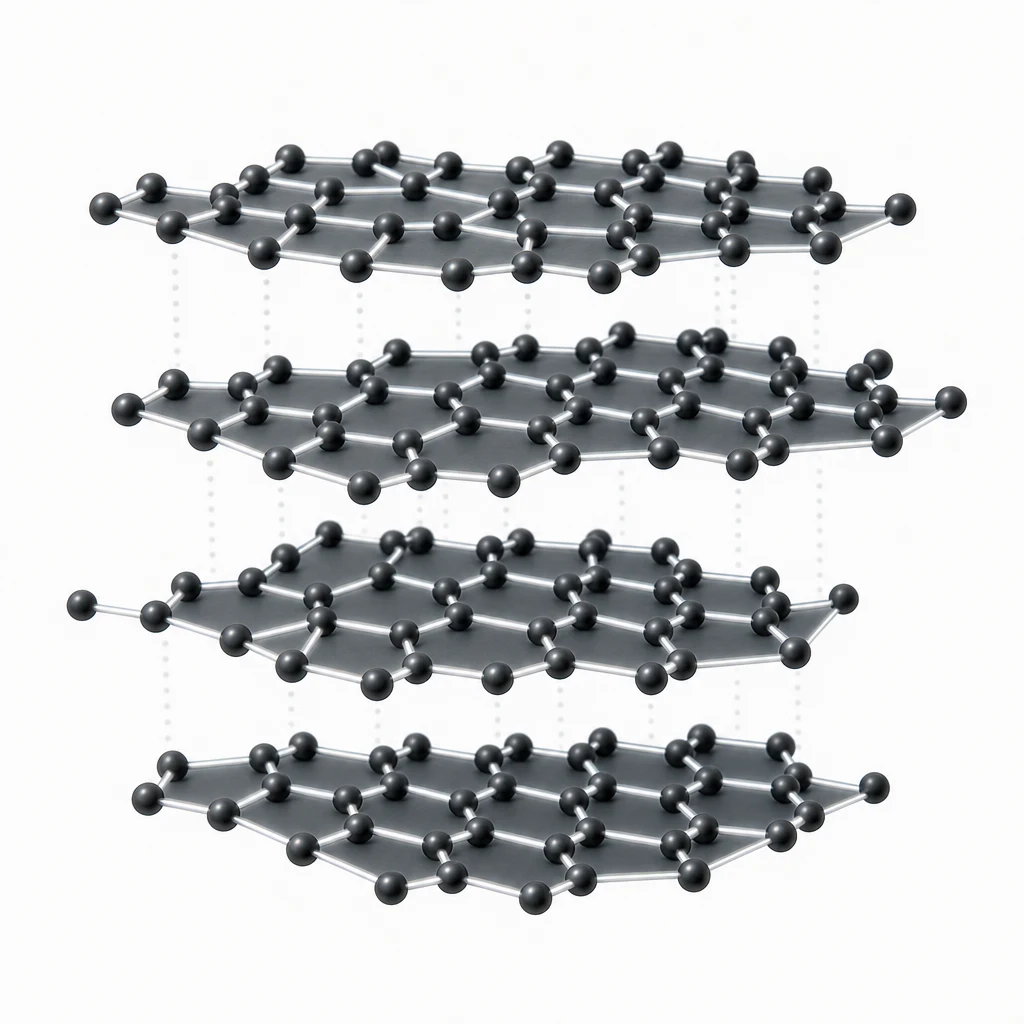
Graphite crystal structure showing stacked hexagonal layers of carbon atoms. Strong covalent bonds within each layer, weak van der Waals forces between layers allow layers to slide.

Figure 2: Graphite — hexagonal carbon layers stacked with weak forces between them. Layers can slide over each other, making graphite soft and a good lubricant.

Keep building this topic

Read this section alongside the surrounding pages in Giant Covalent Structures. That gives you the full topic sequence instead of a single isolated revision point.

Practice Questions for Giant Covalent Structures

Why do giant covalent structures have very high melting points?

  • A. They contain ionic bonds that are difficult to break
  • B. They contain weak forces between separate molecules
  • C. They contain delocalised electrons that require a lot of energy to remove
  • D. They contain many strong covalent bonds that require a lot of energy to break
1 markfoundation

Explain why graphite conducts electricity but diamond does not.

3 marksstandard

Quick Recall Flashcards

What are fullerenes?
Hollow carbon cages (like C₆₀) — used to deliver drugs in medicine
What is graphene?
A single layer of graphite — extremely strong, conducts electricity

20 questions on Giant Covalent Structures — practise free

Instant marking, adaptive difficulty, and 20 spaced repetition flashcards. Free until your GCSEs.

Try PrepWise Free