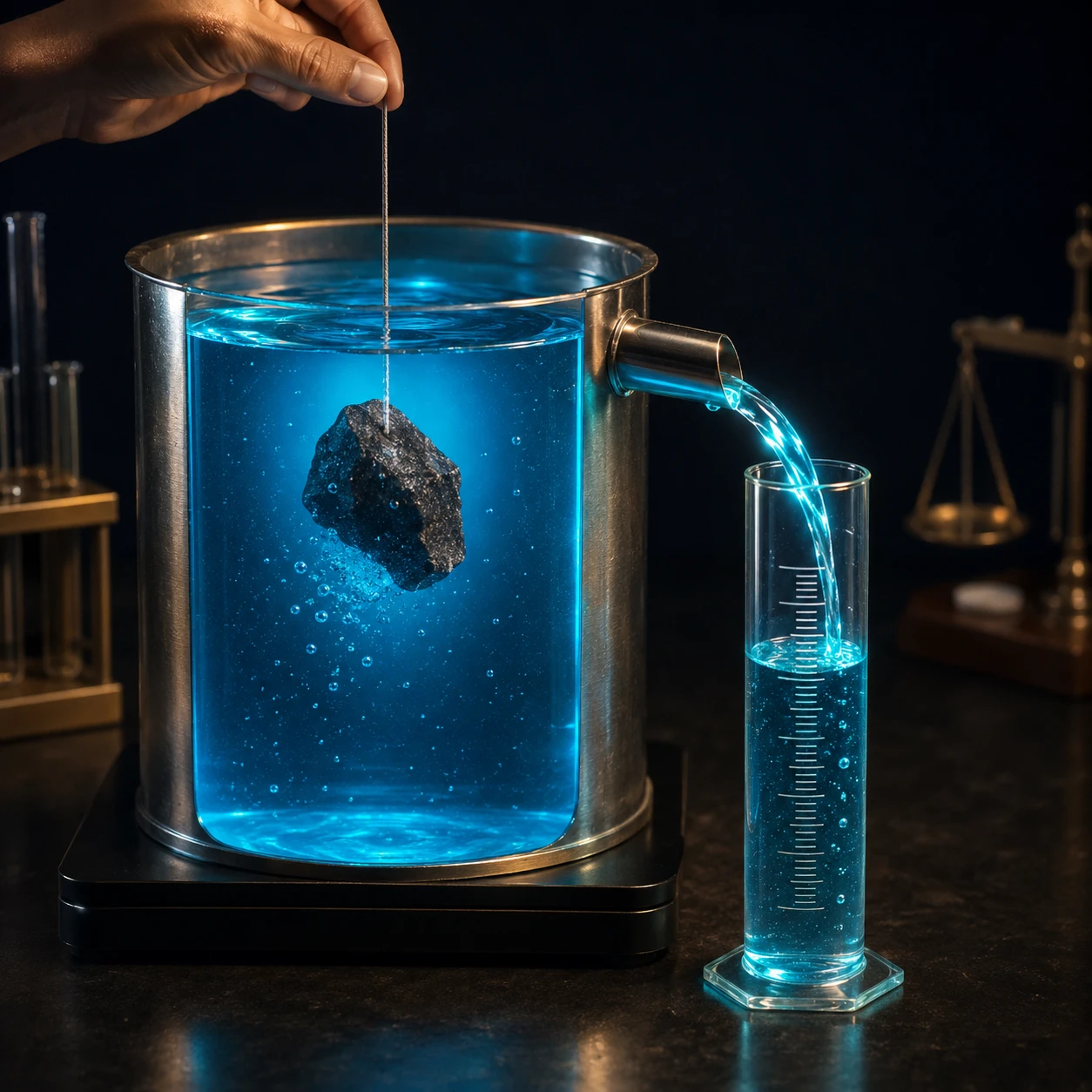
Figure 1: Eureka can method — the volume of water displaced into the measuring cylinder equals the volume of the irregular solid.
This diagram covers Displacement Method Visualised within Density for GCSE Physics. Revise Density in Particle Model for GCSE Physics with 13 exam-style questions and 30 flashcards. This topic shows up very often in GCSE exams, so students should be able to explain it clearly, not just recognise the term. It is section 5 of 13 in this topic. Focus on the labels, the relationships between parts, and the explanation that turns the diagram into an exam-ready answer.
Practice questions for Density
What is the correct equation for density?
Explain why gases have a much lower density than solids, using ideas about particles.
Quick recall flashcards
Density equation
ρ = m/V
What is density?
Mass per unit volume of a substance. How much 'stuff' is packed into a given space.