Bonding & StructureDiagram

Shared Electron Pairs: Single Bond, Double Bond, and H₂O

Part of Covalent Bonding · GCSE GCSE Chemistry revision

This diagram covers Shared Electron Pairs: Single Bond, Double Bond, and H₂O within Covalent Bonding for GCSE Chemistry. Revise Covalent Bonding in Bonding & Structure for GCSE Chemistry with 25 exam-style questions and 20 flashcards. This is a high-frequency topic, so it is worth revising until the explanation feels precise and repeatable. It is section 2 of 13 in this topic. Focus on the labels, the relationships between parts, and the explanation that turns the diagram into an exam-ready answer.

Topic position

Section 2 of 13

Practice

25 questions

Recall

20 flashcards

🔗 Shared Electron Pairs: Single Bond, Double Bond, and H₂O

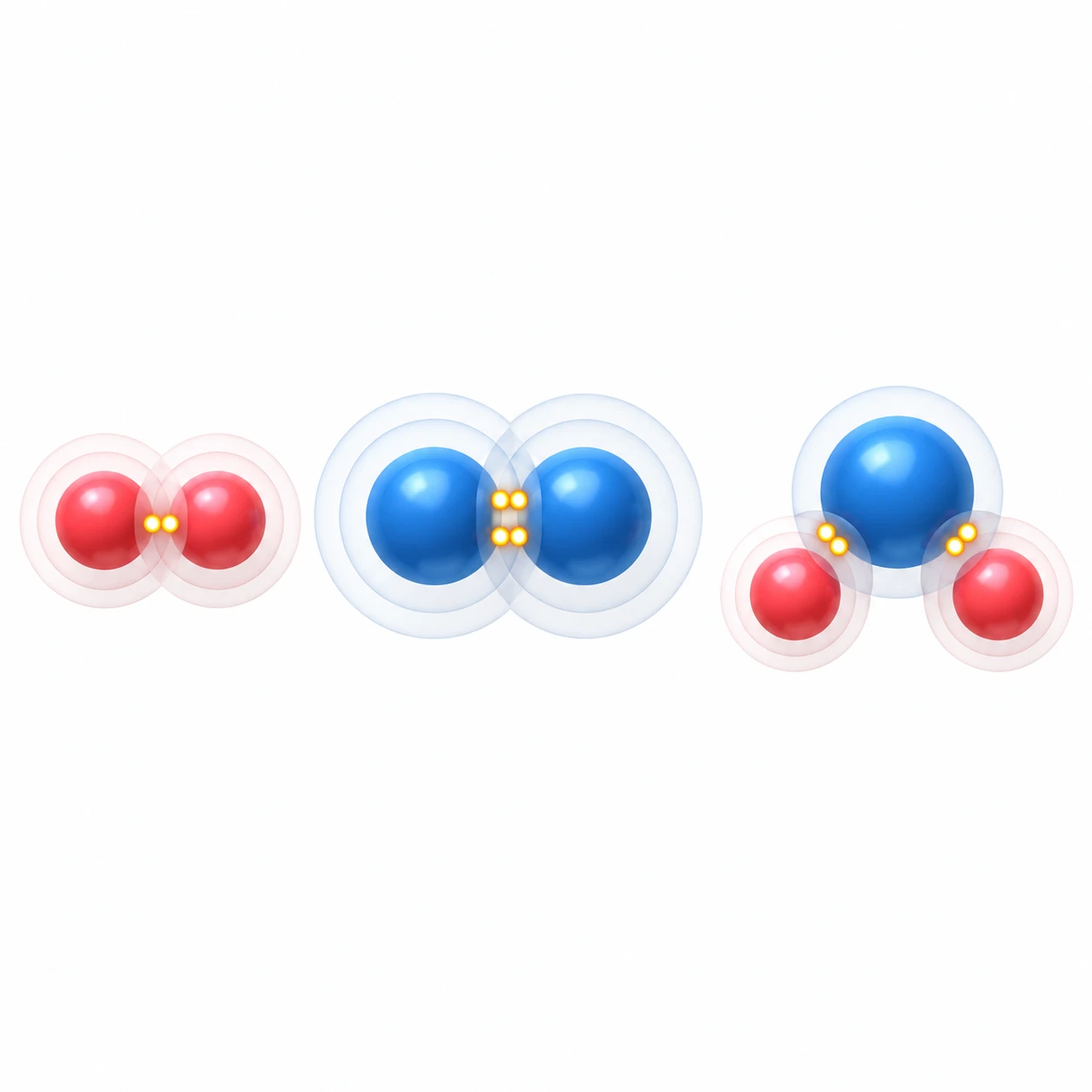
Three molecular models: H₂ molecule (two small red hydrogen spheres sharing one electron pair), O₂ molecule (two large blue oxygen spheres sharing two electron pairs — double bond), and H₂O molecule (one blue oxygen sphere bonded to two red hydrogen spheres in a V-shape at 104°). GCSE Chemistry revision — covalent bonding.

Figure 1: Covalent bonding — H₂ (single bond), O₂ (double bond), and H₂O (two single bonds, bent shape)

Keep building this topic

Read this section alongside the surrounding pages in Covalent Bonding. That gives you the full topic sequence instead of a single isolated revision point.

Practice Questions for Covalent Bonding

Which of the following best describes a covalent bond?

  • A. A shared pair of electrons between two non-metal atoms
  • B. The transfer of electrons from a metal to a non-metal
  • C. The electrostatic attraction between oppositely charged ions
  • D. A sea of delocalised electrons surrounding positive metal ions
1 markfoundation

Explain the difference between a bonding pair and a lone pair of electrons in a covalent molecule.

2 marksstandard

Quick Recall Flashcards

What is a single covalent bond?
One shared pair of electrons between two atoms
What is a covalent bond?
A shared pair of electrons between two non-metal atoms

25 questions on Covalent Bonding — practise free

Instant marking, adaptive difficulty, and 20 spaced repetition flashcards. Free until your GCSEs.

Try PrepWise Free