The Periodic Table — Key Features

Part of The Periodic Table · Section 2 of 13

DiagramUnit: Atomic StructureGCSE

This diagram covers The Periodic Table — Key Features within The Periodic Table for GCSE Chemistry. Revise The Periodic Table in Atomic Structure for GCSE Chemistry with 22 exam-style questions and 24 flashcards. This is a high-frequency topic, so it is worth revising until the explanation feels precise and repeatable. It is section 2 of 13 in this topic. Focus on the labels, the relationships between parts, and the explanation that turns the diagram into an exam-ready answer.

📊 The Periodic Table — Key Features

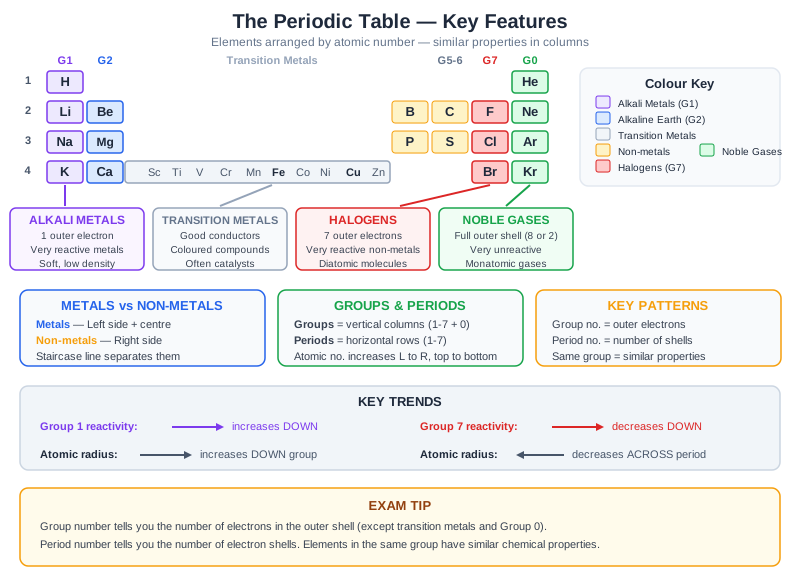
Annotated periodic table showing groups (vertical columns) and periods (horizontal rows). Group 1 alkali metals are highlighted in purple, Group 7 halogens in red, Group 0 noble gases in green, and transition metals in grey. Includes key information about metals vs non-metals and important trends.

KEY: Elements are arranged by atomic number (not mass!). The table reveals patterns — elements in the same group have similar chemical properties.

Practice questions for The Periodic Table

How are elements arranged in the modern periodic table?

  • A. In order of increasing atomic number
  • B. In order of increasing relative atomic mass
  • C. Alphabetically by element name
  • D. In order of decreasing density
1 markfoundation

Mendeleev's periodic table was eventually accepted by other scientists. Explain why scientists were convinced that his table was correct.

3 marksstandard

Quick recall flashcards

What are the Group 1 elements called?
Alkali metals (Li, Na, K, Rb, Cs, Fr)
Where are non-metals found?
On the right side of the periodic table

22 questions on The Periodic Table — practise free

Instant marking, adaptive difficulty and spaced-repetition flashcards — all aligned to your exam board.

Start revising free →