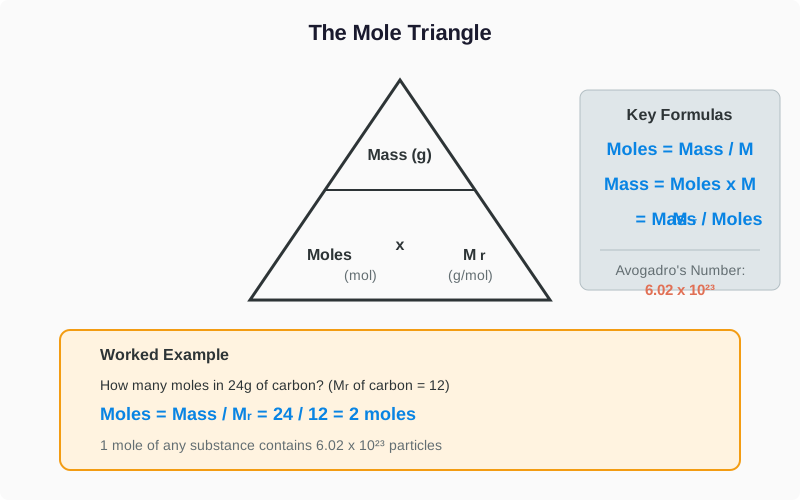
Figure 2: Step-by-step mole calculation flow
This diagram covers Worked Calculation Flow within Moles & Calculations for GCSE Chemistry. Revise Moles & Calculations in Quantitative Chemistry for GCSE Chemistry with 27 exam-style questions and 20 flashcards. This topic shows up very often in GCSE exams, so students should be able to explain it clearly, not just recognise the term. It is section 3 of 17 in this topic. Focus on the labels, the relationships between parts, and the explanation that turns the diagram into an exam-ready answer.
Practice questions for Moles & Calculations
One mole of any substance contains how many particles?
Explain why the percentage yield of a reaction is never 100% in practice.
Quick recall flashcards
Define 'one mole'
The amount of substance containing 6.02 × 10²³ particles
One mole of any element weighs exactly its Ar in grams
What is Avogadro's constant?
6.02 × 10²³ particles per mole
This is the number of particles in one mole of any substance.