A skydiver has jumped out of an aircraft and has been falling for some time. Figure 3 shows the two forces on the skydiver at one moment: air resistance acting upwards and weight acting downwards.
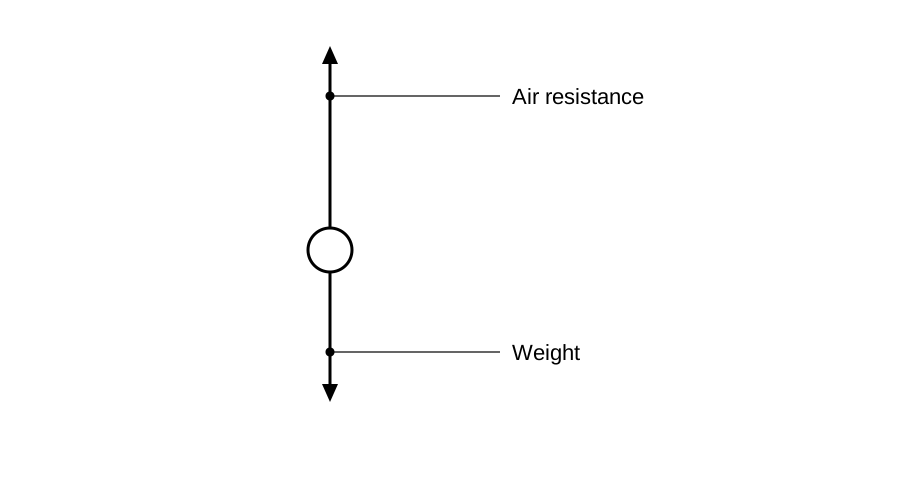
Use Figure 3 to pick how the skydiver's speed is changing and which way they are moving.
Our own questions on this topic, marked straight away, so you see what to revise. Free now.
Show model answerHide model answer
In Figure 3 the upward air resistance arrow is longer than the downward weight arrow, so the resultant force points up. The skydiver fell out of a plane, so they are moving down, and an upward force acts against that motion, slowing them down. That is the first option. Speeding up while moving downwards would need the weight arrow to be the longer one, as it is early in a jump. A resultant force upwards changes the speed, but it does not turn a falling skydiver into one who is moving upwards, so both the upward options fail.
How the marks are earned
- Choose slowing down while moving downwards: the air resistance arrow is longer than the weight arrow, so the resultant force is upwards, against the downward motion.
- One answer only: two answers earn nothing, and a circled or underlined right option counts if the box is blank.