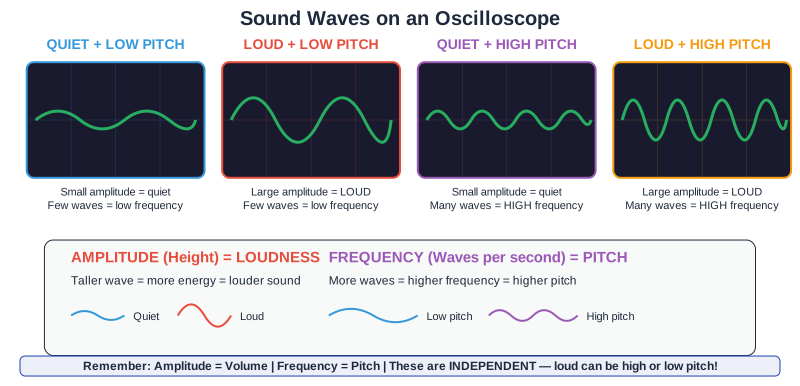
Figure 1: Oscilloscope traces comparing loud/quiet and high/low pitch sounds
KEY CONNECTIONS: Taller waves = LOUDER (higher amplitude) | More waves per screen = HIGHER PITCH (higher frequency) | Wave shape = sound quality (timbre)
This diagram covers Sound Wave Traces within Sound Waves for GCSE Physics. Revise Sound Waves in Waves for GCSE Physics with 16 exam-style questions and 15 flashcards. Use this page as part of a wider topic revision path rather than treating it as an isolated fact. It is section 4 of 13 in this topic. Focus on the labels, the relationships between parts, and the explanation that turns the diagram into an exam-ready answer.
Practice questions for Sound Waves
What type of wave is sound?
Describe how a sound wave is produced and how energy is transferred by a longitudinal wave.