Series vs Parallel โ€” Visual Comparison

Part of Series & Parallel Circuits ยท Section 2 of 16

DiagramUnit: ElectricityGCSE
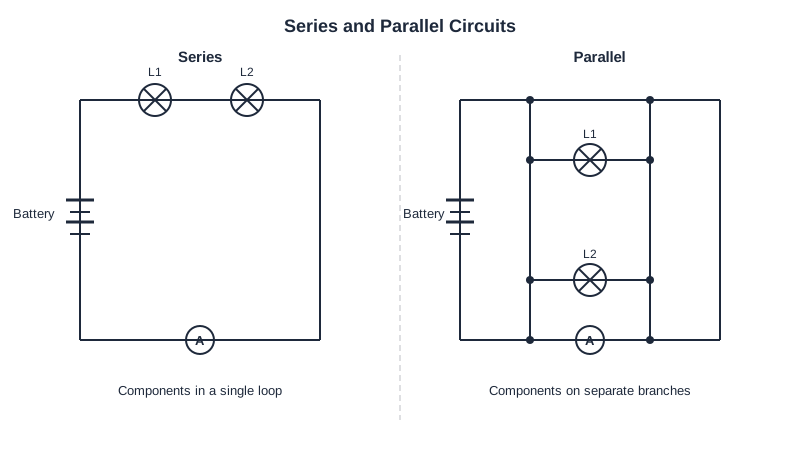
Comparison of series circuits (one path, same current, shared voltage) and parallel circuits (multiple paths, shared current, same voltage)

Figure 1: Series circuit (left) โ€” one path for current; parallel circuit (right) โ€” multiple branches for current to split.

This diagram covers Series vs Parallel โ€” Visual Comparison within Series & Parallel Circuits for GCSE Physics. Revise Series & Parallel Circuits in Electricity for GCSE Physics with 20 exam-style questions and 30 flashcards. This topic appears less often, but it can still be a useful differentiator on mixed-topic papers. It is section 2 of 16 in this topic. Focus on the labels, the relationships between parts, and the explanation that turns the diagram into an exam-ready answer.

Practice questions for Series & Parallel Circuits

In a series circuit, what is true about the current at all points?

  • A. The current is the same at all points
  • B. The current decreases after each component
  • C. The current is largest near the positive terminal
  • D. The current splits at each component
1 markfoundation

A student adds an extra lamp to a parallel circuit. Explain how this affects the total current from the supply and the brightness of the original lamps.

2 marksstandard

Quick recall flashcards

Voltage in series circuits?
ADD UP to equal supply voltage (V_supply = Vโ‚ + Vโ‚‚ + Vโ‚ƒ)
Current in series circuits?
SAME everywhere (Iโ‚ = Iโ‚‚ = Iโ‚ƒ) โ€” only one path for current

20 questions on Series & Parallel Circuits: practise free

Instant marking, adaptive difficulty and spaced-repetition flashcards โ€” all aligned to your exam board.

Start revising free โ†’