EcologyRequired Practical

Required Practical: Measuring Decomposition Rate

Part of Decomposition · GCSE GCSE Biology revision

This required practical covers Required Practical: Measuring Decomposition Rate within Decomposition for GCSE Biology. Topic 4: Decomposition It is section 4 of 12 in this topic. Revise both the method and the reason for each step, because practical questions often test understanding rather than pure recall.

Topic position

Section 4 of 12

Practice

15 questions

Recall

20 flashcards

🧪 Required Practical: Measuring Decomposition Rate

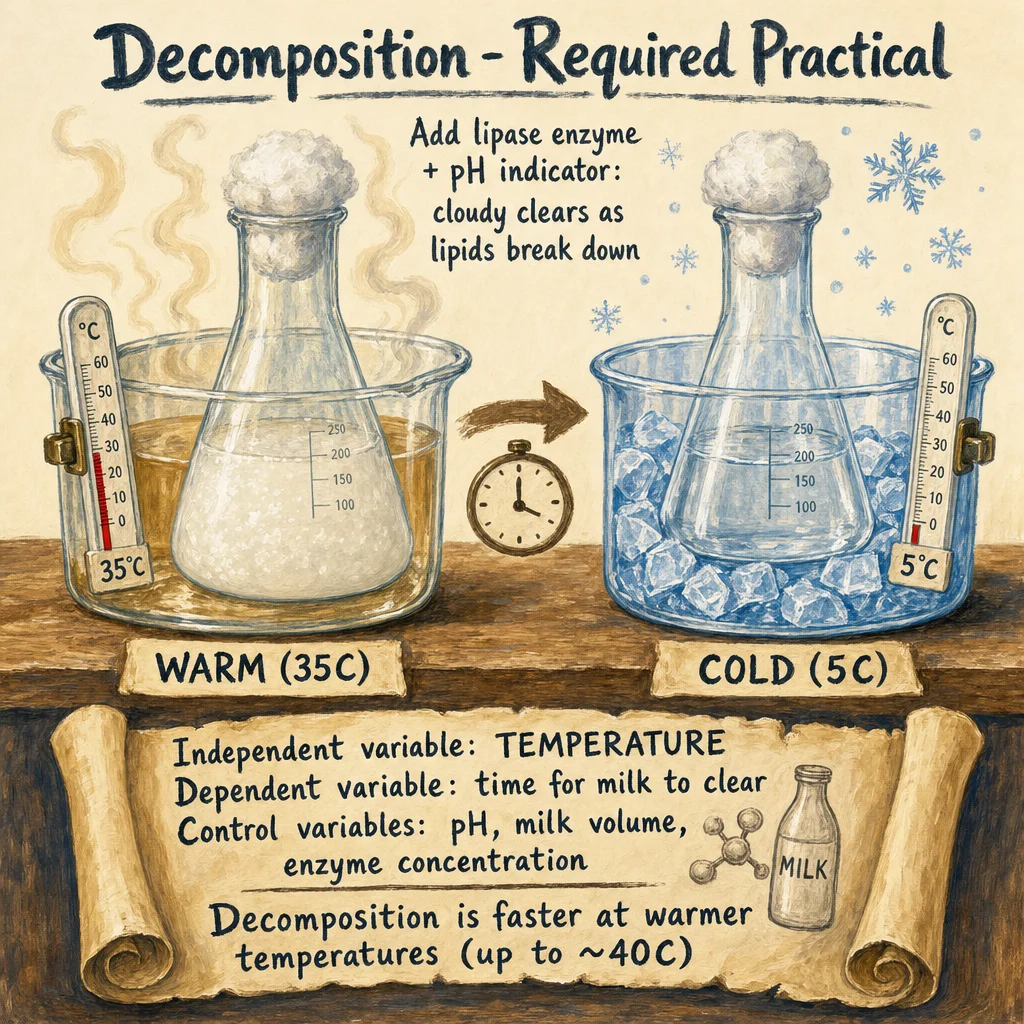
Painted lab apparatus for the decomposition required practical: two conical flasks side by side, each with a cotton wool plug and containing cloudy milk with lipase enzyme and a pH indicator. LEFT flask sits in a warm water bath at 35°C with steam rising. RIGHT flask sits in an ice bath at 5°C with snowflakes drifting. Painted parchment lists the experimental design — independent variable: temperature; dependent variable: time for milk to clear; control variables: pH, milk volume, enzyme concentration. Decomposition is faster at warmer temperatures up to around 40°C.

This practical investigates how temperature affects decomposition by measuring the time taken for lipase enzyme to break down the lipids in milk. A pH indicator (e.g., cresol red) changes colour as fatty acids are released, allowing the rate of decomposition to be timed at different temperatures.

Keep building this topic

Read this section alongside the surrounding pages in Decomposition. That gives you the full topic sequence instead of a single isolated revision point.

Practice Questions for Decomposition

Which organisms are the main decomposers?

  • A. Plants and algae
  • B. Bacteria and fungi
  • C. Earthworms and insects
  • D. Herbivores and carnivores
1 markfoundation

Explain how temperature affects the rate of decomposition.

3 marksstandard

Quick Recall Flashcards

How do decomposers feed? (saprotrophic nutrition)
Decomposers use saprotrophic nutrition: 1. Secrete enzymes onto dead material (extracellular digestion) 2. Enzymes break down large molecules 3. Decomposer absorbs the small soluble products
What is decomposition and who carries it out?
Decomposition is the breakdown of dead organisms and waste into simpler substances. Carried out by decomposers: mainly bacteria and fungi. This releases nutrients back into the soil for plants to use.

15 questions on Decomposition — practise free

Instant marking, adaptive difficulty, and 20 spaced repetition flashcards. Free until your GCSEs.

Try PrepWise Free