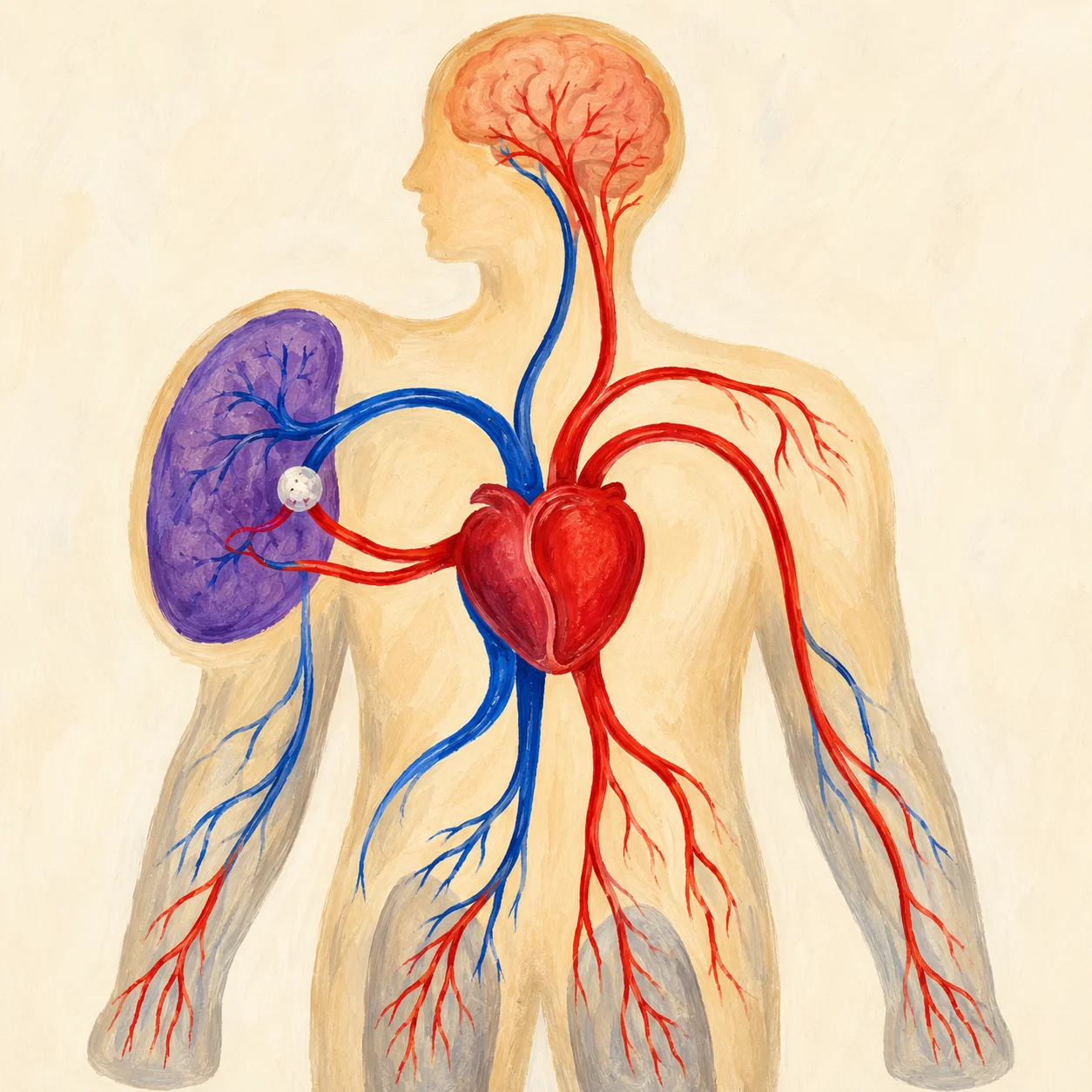
Advantages of Double Circulation:
- Complete Separation: Oxygenated and deoxygenated blood never mix
- High Pressure Maintained: Blood reaches body organs at high pressure for efficient delivery
- Efficient Oxygenation: All blood returning to body is fully oxygenated
- Metabolic Support: Can support high metabolic rates needed for active warm-blooded life
This diagram covers Double Circulatory System within The Heart and Circulation for GCSE Biology. Heart structure, cardiac cycle, blood vessels, double circulation, heart rate control, and cardiovascular health It is section 4 of 15 in this topic. Focus on the labels, the relationships between parts, and the explanation that turns the diagram into an exam-ready answer.
Practice questions for The Heart and Circulation
How many chambers does the human heart have?
Explain how the structure of an artery is related to its function.
Quick recall flashcards
What is diastole?
When the heart relaxes and the chambers fill with blood
What is systole?
When the heart contracts and pumps blood out of the ventricles