BioenergeticsComparison

Aerobic vs Anaerobic Respiration

Part of Respiration · GCSE GCSE Biology revision

This comparison covers Aerobic vs Anaerobic Respiration within Respiration for GCSE Biology. Topic 2: Respiration It is section 7 of 17 in this topic. Use this comparison to connect the idea to the wider topic before moving on to questions and flashcards.

Topic position

Section 7 of 17

Practice

29 questions

Recall

14 flashcards

⚖️ Aerobic vs Anaerobic Respiration

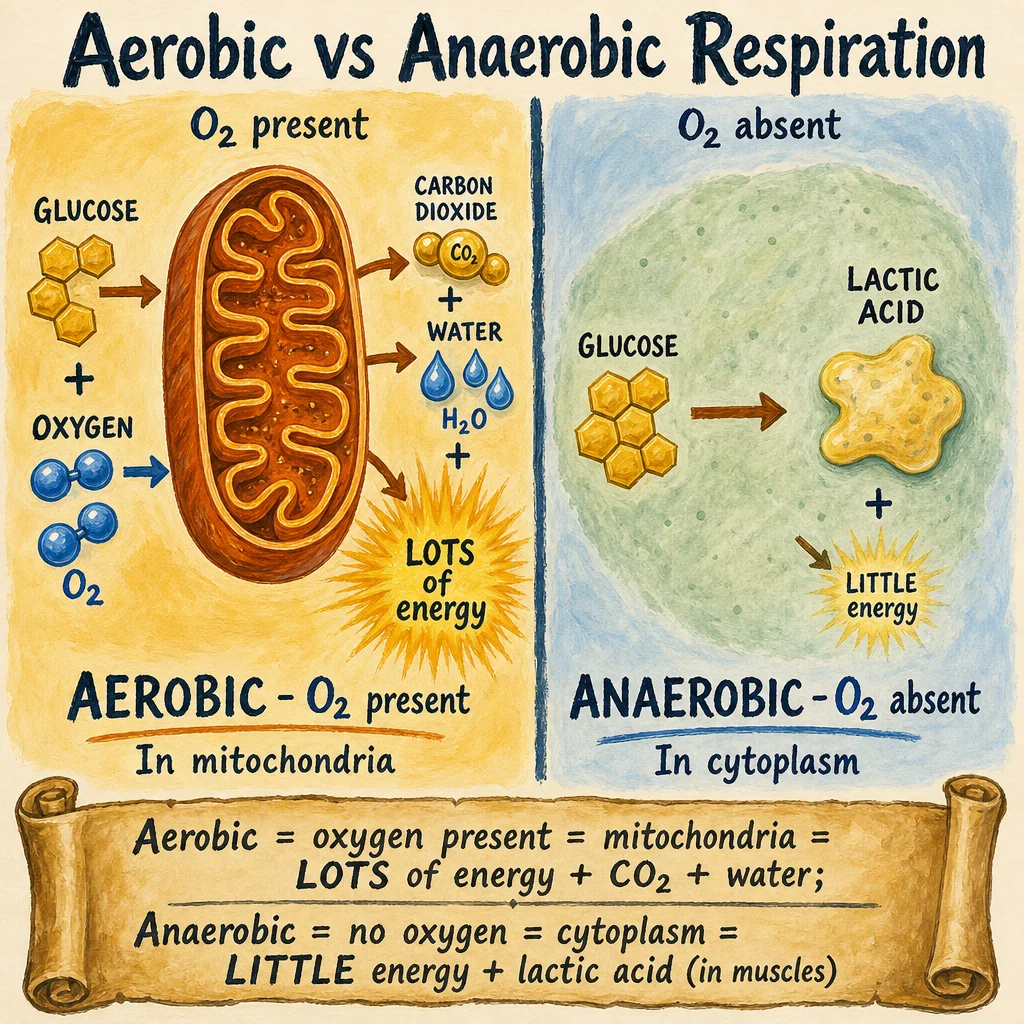
Painted side-by-side comparison of aerobic versus anaerobic respiration. LEFT (aerobic, warm-amber background, O2 present): glucose + oxygen enter a painted mitochondrion, producing carbon dioxide, water, and a LARGE energy burst — labelled 'In mitochondria'. RIGHT (anaerobic, cool-blue background, O2 absent): glucose enters the cytoplasm zone producing lactic acid and a SMALL energy burst — labelled 'In cytoplasm'. Parchment summary lists the trade-off: aerobic = lots of energy + CO2 + water; anaerobic = little energy + lactic acid in muscles.
Feature Aerobic Anaerobic (Animals) Anaerobic (Yeast/Plants)
Oxygen needed? Yes No No
Products CO₂ + H₂O Lactic acid Ethanol + CO₂
ATP yield High (~36-38) Low (2) Low (2)
Location Mitochondria Cytoplasm Cytoplasm
Sustainable? Long periods Short bursts Hours to days

Keep building this topic

Read this section alongside the surrounding pages in Respiration. That gives you the full topic sequence instead of a single isolated revision point.

Practice Questions for Respiration

Where in the cell does aerobic respiration take place?

  • A. Nucleus
  • B. Mitochondria
  • C. Chloroplasts
  • D. Cytoplasm
1 markfoundation

Give three uses of energy released from respiration.

3 marksstandard

Quick Recall Flashcards

Word equation for aerobic respiration?
glucose + oxygen → carbon dioxide + water (+ energy released)
Is respiration endothermic or exothermic?
Exothermic — it releases energy from glucose. This energy is used for movement, growth, and keeping warm.

29 questions on Respiration — practise free

Instant marking, adaptive difficulty, and 14 spaced repetition flashcards. Free until your GCSEs.

Try PrepWise Free