Inheritance & EvolutionKey Facts

Punnett Squares

Part of Genetic Inheritance · GCSE GCSE Biology revision

This key facts covers Punnett Squares within Genetic Inheritance for GCSE Biology. Genetic inheritance patterns, alleles, and inheritance diagrams It is section 2 of 9 in this topic. Use this key facts to connect the idea to the wider topic before moving on to questions and flashcards.

Topic position

Section 2 of 9

Practice

26 questions

Recall

12 flashcards

Punnett Squares

A Punnett square shows possible offspring from two parents:

Example: Eye colour (Brown = B, Blue = b)

Parent 1: Bb (heterozygous brown)

Parent 2: Bb (heterozygous brown)

B b
B BB Bb
b Bb bb

Result: 3 Brown (BB, Bb, Bb) : 1 Blue (bb) = 3:1 ratio

Probability of blue eyes: 1 in 4 = 25%

Visual: Punnett Squares and Genetic Crosses
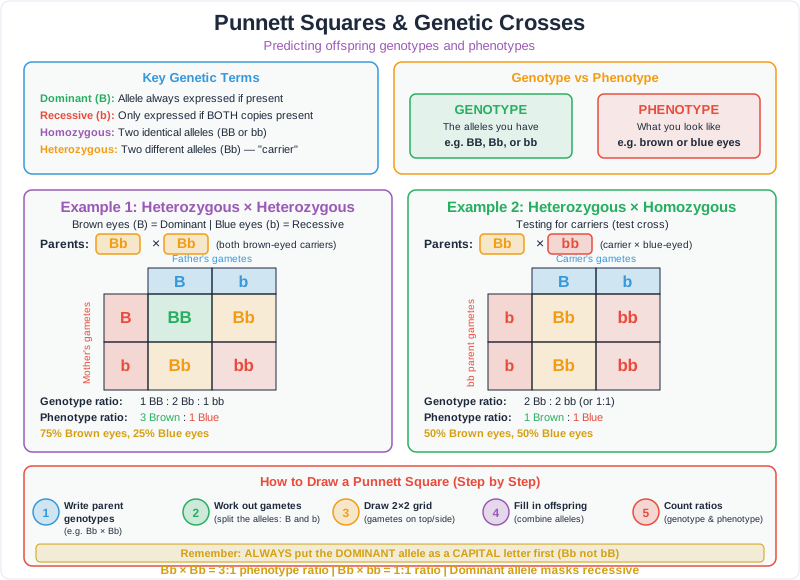
Punnett square diagram showing key genetic terms, genotype vs phenotype, examples of Bb x Bb and Bb x bb crosses with 3:1 and 1:1 ratios, and step-by-step guide to drawing Punnett squares

Remember: Bb x Bb = 3:1 phenotype ratio | Bb x bb = 1:1 ratio | Dominant allele (capital) masks recessive (lowercase)

Keep building this topic

Read this section alongside the surrounding pages in Genetic Inheritance. That gives you the full topic sequence instead of a single isolated revision point.

Practice Questions for Genetic Inheritance

What is the term for an allele that is always expressed when present?

  • A. Recessive allele
  • B. Dominant allele
  • C. Homozygous genotype
  • D. Recessive phenotype
1 markfoundation

What is the purpose of a Punnett square in genetic inheritance?

3 marksstandard

Quick Recall Flashcards

What is a recessive allele?
An allele that is only expressed when two copies are present (homozygous recessive). Represented by a lower-case letter (e.g. b). It is 'hidden' by a dominant allele.
What is a dominant allele?
An allele that is always expressed in the phenotype, even if only one copy is present. Represented by a capital letter (e.g. B). Think of it as the 'bossy' allele.

26 questions on Genetic Inheritance — practise free

Instant marking, adaptive difficulty, and 12 spaced repetition flashcards. Free until your GCSEs.

Try PrepWise Free