The Story: The Postal Service
The Story: The Postal Service
If the nervous system is like a phone call (instant but short), the hormonal system is like sending a letter. It takes longer to arrive, but the message lasts longer. Hormones are chemical messengers, released by glands into the blood, traveling to target organs where they trigger effects that can last hours, days, or even years.
The human endocrine system. Tap any gland to learn more.
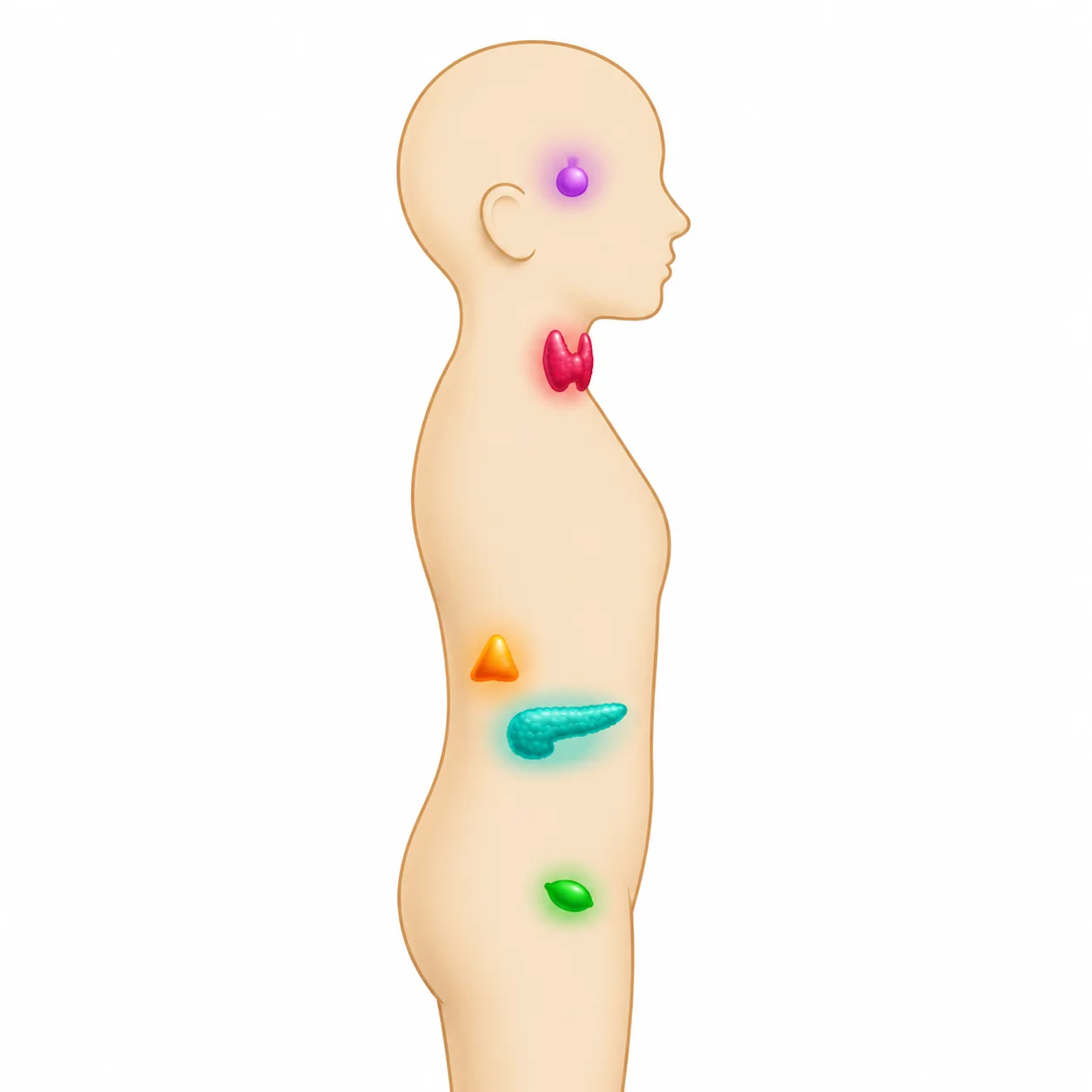
- 1Pituitary gland — The 'master gland' at the base of the brain — controls other endocrine glands by releasing FSH, LH and other hormones.
- 2Thyroid gland — Butterfly-shaped gland on the neck. Produces thyroxine, which sets the body's metabolic rate.
- 3Adrenal glands — Two small caps on top of the kidneys. Release adrenaline for fight-or-flight responses.
- 4Pancreas — Monitors blood glucose. Releases insulin (lowers glucose) or glucagon (raises glucose).
- 5Ovaries — Female sex glands in the lower pelvis. Produce oestrogen and progesterone (testes are the male equivalent, producing testosterone).
Figure 1: The human endocrine system. Tap any gland to learn more.
Biology glossary
- What is a hormone?
- A hormone is a chemical messenger produced by a gland, released into the blood, and carried to a target organ where it causes a response.
- What is the endocrine system?
- The endocrine system is a network of glands that produce and release hormones directly into the bloodstream. Hormones travel to target organs to trigger a response.
Earn the mark scheme marks
Memory Aids
"Pituitary = Master gland": The pituitary controls other glands. Think of it as the "boss" sending instructions to the "workers" (thyroid, adrenal glands, ovaries, testes) to do their jobs.
Nervous vs Hormonal — "Fast and Short" vs "Slow and Long":
- Nervous: Fast, Short, Specific (FSS)
- Hormonal: Slow, Long, Widespread (SLW) — remember "SLow and Widespread"
Key glands to memorise — "Pretty Tall People Are Often Thin":
- Pituitary — master gland, FSH/LH
- Thyroid — thyroxine, metabolic rate
- Pancreas — insulin and glucagon, blood glucose
- Adrenal — adrenaline, fight or flight
- Ovaries — oestrogen/progesterone, female reproduction
- Testes — testosterone, male reproduction
Target organ logic: Only cells with the RIGHT receptor respond to a hormone — like a lock and key. Insulin is the key; only liver and muscle cells have the lock (insulin receptor).
Quick Check: A student claims that the hormonal system is inferior to the nervous system because it is slower. Evaluate this claim, considering the advantages that the hormonal system's characteristics provide.
The claim is not fully correct. While the hormonal system is slower than the nervous system — hormones travel via the bloodstream rather than along dedicated nerve fibres — this does not make it inferior. The hormonal system's slower speed is accompanied by long-lasting effects (hours or days compared to milliseconds for nerve impulses), which is ideal for regulating sustained processes such as blood glucose levels, puberty, and metabolic rate. Hormones also have a widespread effect, simultaneously influencing large numbers of cells across multiple organs. This makes the hormonal system appropriate for regulating slow, sustained processes, while the nervous system handles rapid, short-term responses. Both systems have complementary strengths.
Quick Check: Adrenaline is released by the adrenal glands but does not affect all cells equally. Explain why only certain organs respond to adrenaline.
Adrenaline travels in the blood to all parts of the body, but only cells in target organs respond because only those cells have specific receptor proteins on their surface that are complementary in shape to the adrenaline molecule. When adrenaline binds to its receptor on a target cell, it triggers a response (such as increased heart rate or raised blood glucose). Cells that lack the adrenaline receptor cannot bind the hormone and therefore show no response. This receptor-based targeting allows the body to produce a coordinated response in specific tissues without affecting every cell in the body.
Quick Check: Describe TWO differences between how the nervous system and the endocrine system transmit information to effectors.
First, the nervous system transmits information as electrical impulses along neurones, whereas the endocrine system transmits information using chemical hormones carried in the bloodstream. Second, the nervous system produces rapid, short-lasting responses in specific, precisely targeted effectors (due to dedicated nerve pathways), whereas the endocrine system produces slower but longer-lasting responses that affect a wider range of tissues (because hormones travel throughout the entire blood supply and reach all organs, with only those bearing specific receptors responding).
Now try it yourself
Quiz · Question 1 of 12
Which gland is known as the 'master gland' because it controls other endocrine glands?
Tap an answer to check it